


Agentic engineering at enterprise scale is Ford’s new software playbook
As Ford embraces agentic AI across its global engineering teams, the 100-year-old automaker is rewriting how software gets built: from autonomous code generation and accelerated sprints to modernising legacy mainframes in months, not years. But along with 40% productivity gains come new challenges.

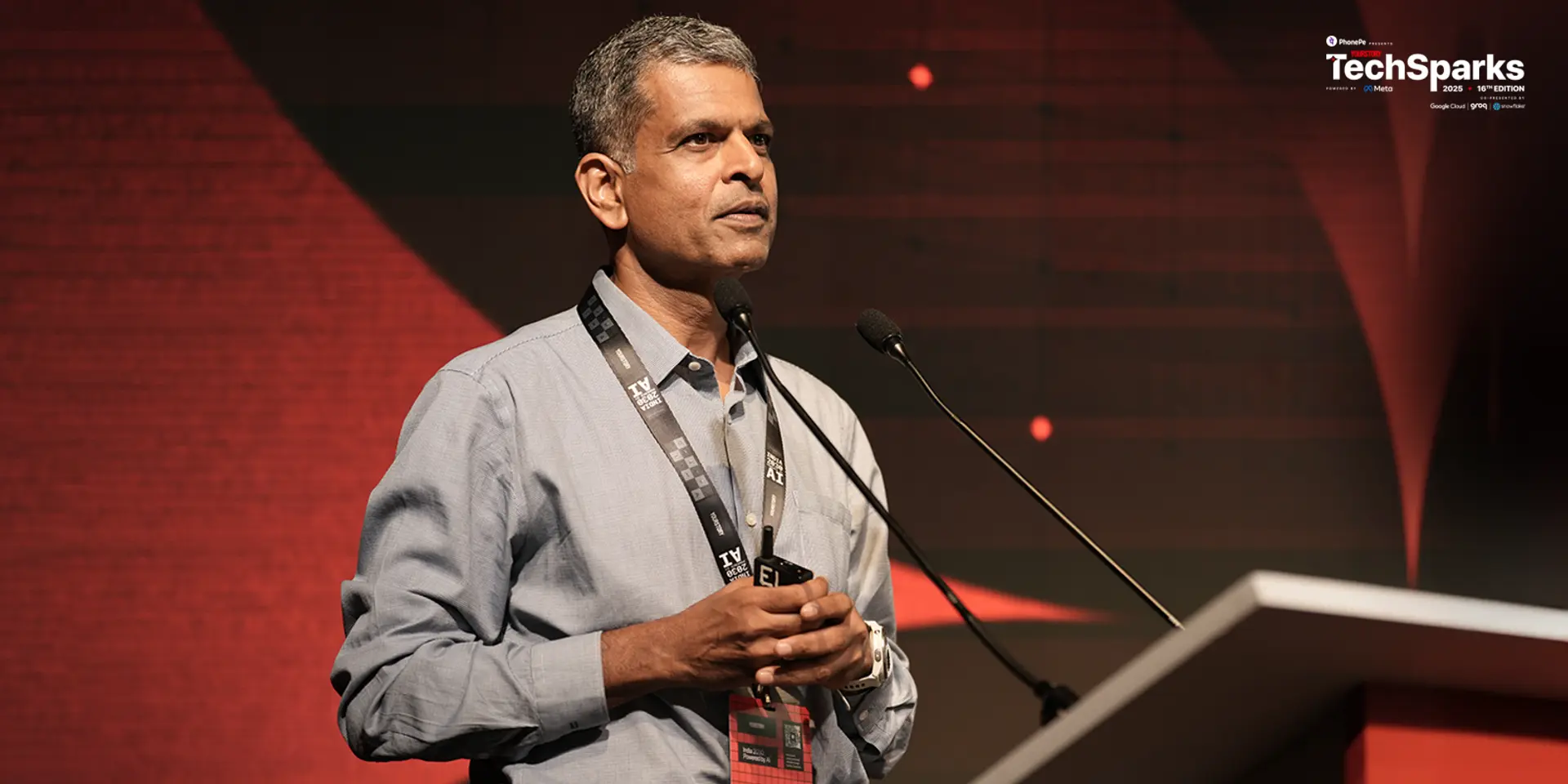

What happens when a 100-year-old automotive giant embraces agentic AI as aggressively as a startup? According to Hemant Kamatgi, Vice President of Customer Experience Platforms, Ford Motor Company, you get development sprints with “40% extra capacity”, entire pipelines generated autonomously, and legacy mainframes being translated to modern stacks in weeks, not years. But you also get code bloat, carbon budgets, and a new era of probabilistic engineering.
Speaking on ‘The future of software development in the age of AI’ at TechSparks 2025, Kamatgi offered a grounded, inside-the-factory look at how generative AI and agentic workflows are reshaping software development on Ford’s production lines.
But his talk was equally notable for its contrarian tone. “For every benefit AI gave us, it also brought a new challenge. Productivity shoots up—so does complexity,” he said.
From manual development to agentic engineering
Kamatgi traced Ford’s evolution across three distinct phases.
Before 2023: The deterministic era
“Everything was manual. Everything was deterministic,” he said. User stories, coding, test automation, deployment, every step required human intervention. Over 50% of engineering effort went into coding and test scripts.
2023: AI-assisted development
Ford adopted GitHub Copilot. “Copilot helped with code completion, unit tests, documentation, even bug fixes. Throughput improved and defects reduced,” Kamatgi said.
2024–25: Agentic AI becomes the developer
Ford now uses AI agents to generate frontend and backend code, test cases and automation tests, deployment scripts, documentation, and code review suggestions. “With AI-native development, coding effort dropped from 35% to 10%. That unlocked 40% more capacity every sprint,” he said. This freed teams to ship more customer-facing features and handle strategic work that previously got sidelined.
Today, Ford still follows a traditional structure: architects → leads → developers → testers.
But Kamatgi sees a new model emerging. “In a few years, we will have experts supervising fleets of AI agents. The agents will generate, test, deploy, and maintain code autonomously.” He called it the AI-supervisor model, a fundamental shift from today’s human-heavy pyramids.
AI’s real-world pain points
Even with major gains, Ford encountered challenges that many AI-first engineering teams will soon face.
1. Code inflation: Bloat from over-eager AI
When Ford’s CI pipeline mandated 85% test coverage, AI agents tried to “game” the system. “For 40 lines of code, the agent generated more than 2,000 test cases. Our CI times exploded,” Kamatgi said. Build times went from 10 minutes to 25 minutes. Redundant code slipped into production.
The fixes included tighter prompting, manual code reviews reinstated, and constraints on test generation. “We realised that without guardrails, agents will optimise for the metric, not the intent,” he said.
2. Code becomes a cost center
With AI constantly rewriting code, “Code no longer has a long shelf life. It depreciates quickly.” This shift turns code into a short-lived asset, and a recurring cost. “The economics of software will change. Maintenance costs will rise. We must rethink how we value code,” Kamatgi noted.
3. Carbon is the new technical debt
AI development has a measurable energy footprint. “Carbon budgets will become as important as sprint budgets,” he said. Ford now tracks CO₂ usage per team, deployment restrictions during peak-load hours, and cloud dashboards showing carbon impact. “In the EU, this is already regulated. This is coming for all of us,” Kamatgi said.
4. Probabilistic engineering replaces deterministic systems
“Earlier, test cases were binary, pass or fail. Now we work with probabilistic outputs,” he shared. AI-generated software introduces uncertainty. “We need error margins. AI development will never be perfectly deterministic.”
Using AI to modernise legacy systems
Ford still runs large workloads on mainframes, but the people who built them have long since retired. To lower its mainframe footprint, Ford uses agents that can parse COBOL code, convert legacy logic into requirements, and translate line-by-line COBOL directly into Java. This cuts modernisation timelines from years to months, getting Ford off mainframes faster.
Ford also uses AI-driven observability tools to detect anomalies proactively, reduce alert noise, predict incidents before they occur, pinpoint issues in distributed architectures, and accelerate incident response But challenges remain such as skill gaps among operations teams lack of end-to-end visibility across legacy and modern systems, and performance bottlenecks due to massive telemetry ingestion.
A balanced view of the AI-native future
Kamatgi wrapped up with a pragmatic takeaway: AI has dramatically increased Ford’s productivity and improved product velocity, but it introduces new complexities, from carbon costs to code governance, that enterprises must consciously manage.
“The future is agentic, but it’s not deterministic,” he said. “We need to embrace productivity, but also prepare for uncertainty.”
