



AI must be used responsibly, combining speed and scale, concur experts at TechSparks 2025
A session at TechSparks 2025 explored how cloud-native AI helps enterprises scale quickly, stay compliant, and innovate responsibly, thus balancing agility with governance as AI becomes central to business transformation.

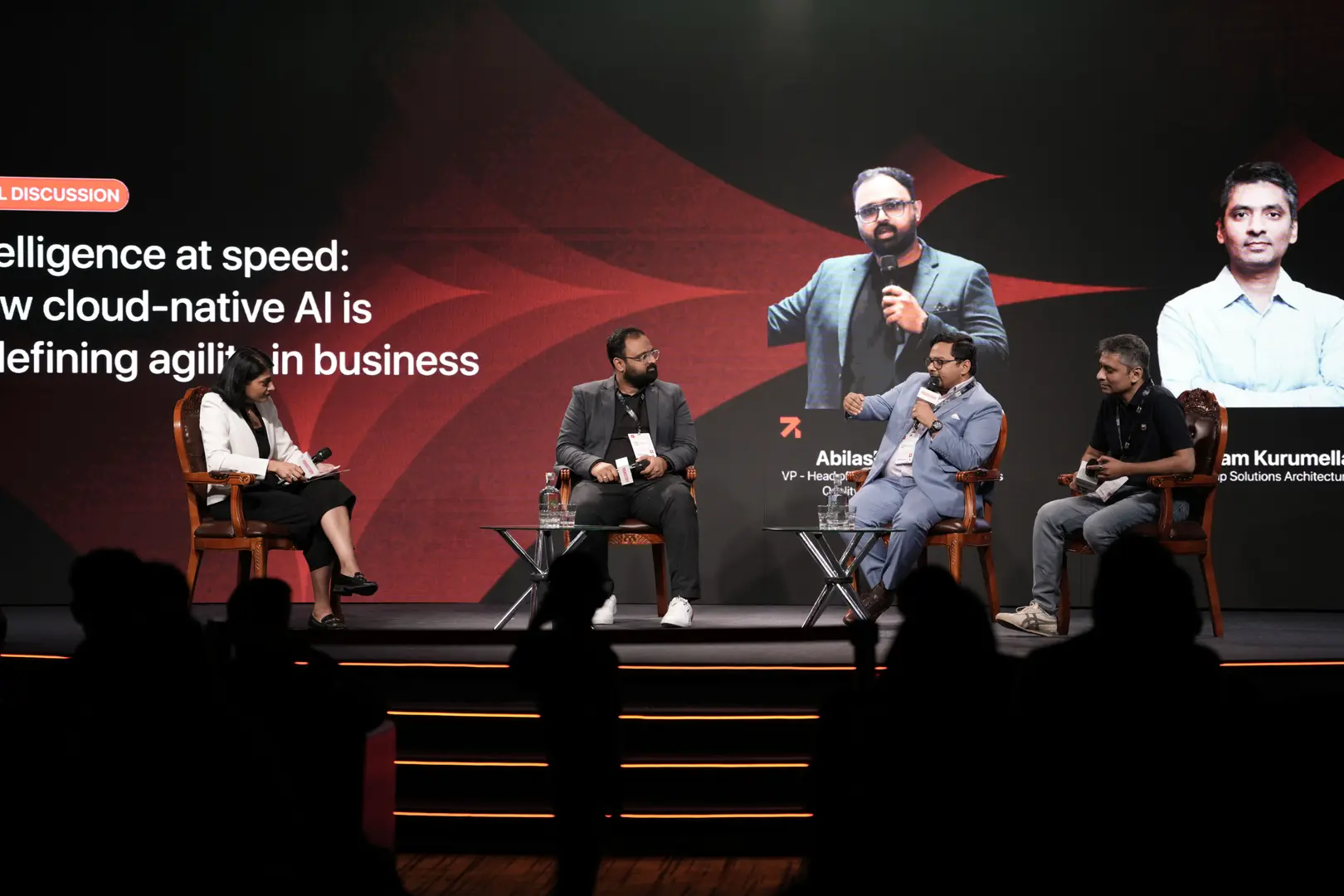

Artificial intelligence has become a key driver of innovation for enterprises but the real challenge lies in using it responsibly, with speed and at scale. Industry leaders discussed how the fusion of AI and cloud technologies is transforming agility, governance, and trust across businesses, at TechSparks 2025.
The panel titled 'Intelligence at Speed: How Cloud-Native AI is Redefining Agility in Business' brought together Soumyajit Ghosh (COO, Balancehero India), Goutam Kurumella (Head of Startup Solutions Architecture, AWS), and Abhilash Narahari (VP – Head of Technology & Digital Natives, QualityKiosk Technologies).
For Soumyajit Ghosh, operating in the fintech and lending space requires balancing speed with compliance every single day. “In small-ticket lending, speed is critical; even a few seconds of delay can mean losing a customer. But when you operate in a regulated space, you must ensure every model version, every data input, and every parameter change is fully auditable,” he said.
He shared that fintech platform Balancehero processes around 1.4 lakh applications a day, using AI and cloud-native systems to automate decisions while maintaining oversight. “Our models undergo continuous learning and auto-tuning,” he said, highlighting the long maturity cycles of credit models that demand constant optimisation.
The cloud-native approach builds, deploys, and manages modern applications in cloud computing environments.
From AWS’s perspective, Goutam Kurumella explained how cloud-native AI environments are redefining speed for startups and enterprises alike. “A five-person team today can build and deploy products that earlier took hundreds. Cloud-native AI removes infrastructure complexity, letting teams focus on outcomes, not overhead,” he said.
He cited an example of an Indian startup from AWS’s accelerator that built an AI-driven English learning app entirely on AWS.
“We’ve seen automation reduce finance reconciliation times by 80%. The ability to experiment, test, and switch models quickly is what gives businesses their edge,” he noted.

Abhilash Narahari of QualityKiosk emphasised that speed and trust must evolve together for AI to succeed at scale. “Data governance is now the backbone of every AI program. When pilots scale to production, messy real-world data often leads to drift or hallucination. That’s where synthetic data and real-time feedback loops come in,” he said.
He added that integrating observability and governance through tools like AWS Bedrock allows enterprises to automate model fine-tuning and reduce release cycles by nearly 50%. “Enterprises want agility, but not at the cost of accountability. The next phase of AI will be defined by real-time, industry-specific governance models,” he said.
“Great coding isn’t enough. Your tech teams must understand the business, the customer, and the accountability behind every prediction,” he said.

Edited by Swetha Kannan