



Debabrata Nayak: Building Platforms That Serve a Billion
Debabrata Nayak, CTO of Digital India Corporation, has witnessed India’s digital journey end to end—from digitising land records in Naxal-affected regions in the 1990s to building platforms like DigiLocker, UMANG, API Setu, and leading CoWIN. His next mission: scaling AI for citizen services broad

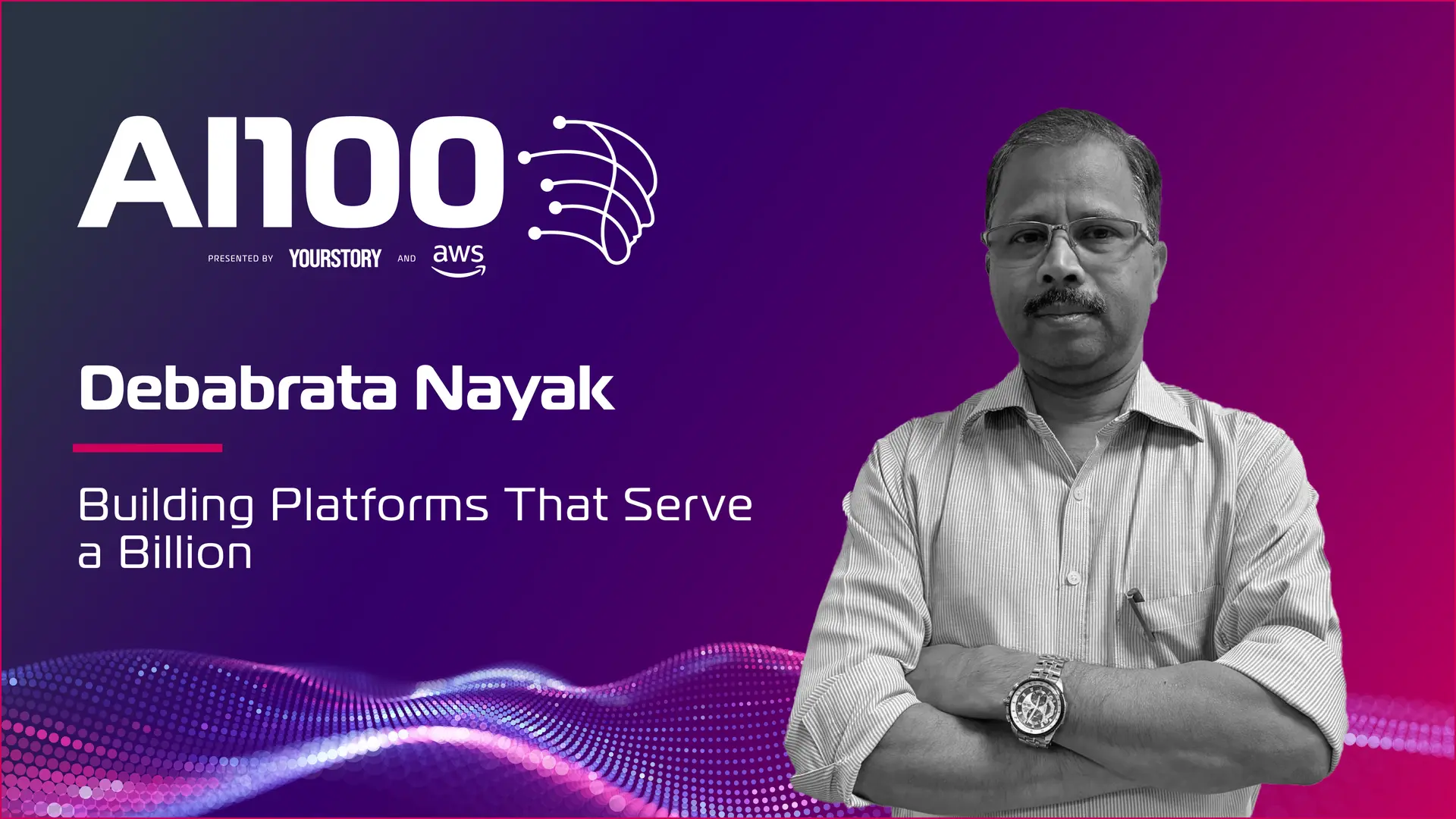

Debabrata Nayak, Chief Technology Officer of Digital India Corporation, began his government career in 1994 in a Naxal-affected district. Electricity was scarce, offices ran on punch machines and registers, and computers were just beginning to arrive. Many employees feared they would lose their jobs to automation. “At that time, people thought computerization would vanish their jobs, the same way people talk about AI today,” he recalls.
For Nayak, though, technology was never about redundancy but efficiency. Even a single desktop could speed up licenses, land records, or treasury work that once took days.
Three decades on, that early conviction has scaled nationally. Nayak has helped build some of India’s most critical digital platforms: DigiLocker, UMANG, API Setu, and CoWIN, which powered one of the world’s largest vaccination drives. He has lived the full arc of India’s digital journey: from hesitant rural offices in the 1990s to today’s debates about AI in governance.
Digitization in the 1990s
Nayak frames his career in three phases: a decade each at the district, state, and central levels. Each taught him a different lesson.
The first, in the 1990s, was about introducing computers into places that had never seen them. His early projects focused on digitizing land records, transport offices, and treasury systems.
Resistance was inevitable. But once results were visible, attitudes shifted. A driving license that once took days to issue manually could be processed in hours on a desktop. Productivity gains made the case for change more convincingly than persuasion ever could.
These experiments left him with two enduring insights: adoption depends on visible efficiency, and even small improvements can reduce corruption by curbing discretion and delays.
From 2006 to 2015, Nayak worked at the state level, where his focus shifted from isolated computerization to web-based systems that citizens could use directly. He helped implement online tax filing, vehicle registration systems, and modernization projects in excise, policing, and transport.
For the first time, citizens could file commercial tax returns or register vehicles online. Departments no longer spent time entering data; they focused instead on reviewing and approving applications. These projects became testbeds for moving government services from queues and paper forms to digital interactions at scale.
These years convinced Nayak that systems had to be designed for both efficiency and reach. What worked for a district office of a few thousand users would collapse in a state with millions. That meant architecture had to anticipate growth.
DigiLocker: Foundation for platforms
In April 2015, Nayak moved to Delhi with a national mandate: build DigiLocker. At first, he wasn’t convinced. “I knew about Google Drive and OneDrive. I wasn’t sure what DigiLocker would add,” he says.
The distinction became clear quickly. DigiLocker was never about generic storage; it was about digital documents, issued and verified by government agencies. A student’s mark sheet, a driver’s license, or a KYC document could now be shared digitally with confidence.
The hardest part wasn’t technical but regulatory. Ministries and regulators had to accept digital documents as legally valid. RBI, insurance authorities, and transport departments all had to amend frameworks. That acceptance turned DigiLocker from a clever idea into a nationwide platform.
By the late 2010s, Nayak was thinking in terms of platforms rather than projects; shared infrastructure that could be reused and scaled across ministries. DigiLocker’s success was proof that such thinking worked.
CoWin: Building for a billion
In 2020-21, as COVID-19 spread across India, the country needed a platform that could handle hundreds of millions of vaccine registrations, slot bookings, and certificate downloads in real time.
Nayak joined the project just days before its public launch, only to find that the system could not handle expected volumes.
The pressure was immense. Citizens, media, and policymakers doubted the platform would survive the surge. “There was pressure from everywhere that it would fail,” he recalls. “We patched daily, tested daily, and when load hit, we fixed what cracked.”
The solution was architectural discipline. CoWin was broken into modules: registration, slot booking, certificate generation, each independently scalable. During peak demand, the team rolled out four to five patches a day, reinforcing whichever component strained under load.
Against the odds, CoWin became the backbone of India’s vaccination drive, scaling to serve hundreds of millions. The lesson, Nayak emphasizes, is that systems attempting to do everything at once often fail. Resilience comes from modular design, strong fundamentals, and relentless iteration.
Policy, cloud, and cultural shifts
Nayak says technology alone doesn’t guarantee adoption. Policy and mindset matter just as much.
When DigiLocker was launched, government IT was still dominated by on-premise servers purchased via one-time capital expenditure. Cloud computing required a shift to operating expenditure, recurring bills tied to usage.
“Cloud is like electricity. The more people use it, the higher the bill. That’s not a bad thing; it means more citizens are benefiting, but it took time for finance teams to accept,” he says.
Regulatory change was equally important. Without RBI or insurance bodies accepting DigiLocker documents, its utility would have been limited. Success depended on aligning technology with legal frameworks.
Security and privacy were always at the forefront of Nayak’s mind. Usability mattered; systems had to be simple enough for citizens and frontline staff, but never at the expense of trust. Zero-trust architectures, encryption, and auditing became non-negotiable. “At national scale, even one leak damages credibility,” Nayak warns.
AI in governance: three tracks
When Nayak talks about AI in public services, he doesn’t see it as a buzzword, he sees practical use cases. One is in the development process itself. AI can help engineers generate test cases, catch bugs, and even flag potential security flaws before deployment. For overstretched government teams, this means shipping more reliable systems faster.
The second is in service delivery. Instead of waiting for every application to be reviewed by a human officer, AI agents can do the first round of screening, checking completeness, routing approvals, and reducing bottlenecks. Officers step in only where judgment is required, speeding up the entire process.
The third is in targeting benefits more effectively. With multiple welfare databases now digitized, AI can cross-check records to confirm that subsidies or entitlements actually reach the right people, while reducing fraud and duplication. In a country of India’s size, even small improvements in accuracy can impact millions.
Nayak is optimistic but realistic about timelines. In the next two to three years, he expects ministries and departments to adopt mature AI-enabled systems for citizen services, health, education, and agriculture. In five to 10 years, he sees AI woven into daily life, identity verification, entitlement tracking, predictive public services, AI-assisted healthcare, and gamified education experiences.
Leadership and culture
Behind every platform is a team. For Nayak, culture mattered more than hierarchy. During CoWin, he encouraged developers to take responsibility and move quickly. “Your push should be pushing to production; I will back you,” he told them. That sense of ownership enabled speed under pressure.
Transparency was another deliberate choice. Codebases were shared across private partners, enabling collaboration rather than secrecy. “If you keep your code locked away, you can’t grow,” he says. Vendors were treated as partners, equally accountable for success.
Building what lasts
For engineers considering careers in government technology, Nayak doesn’t hide the reality. Bureaucracy and scale make progress slow, and the work is rarely glamorous. But the impact, he insists, is long-lasting. “If you want to build something that outlives you, do this,” he says.
He believes the real reward is not recognition but endurance, platforms that keep serving citizens long after their creators have moved on. “The real reward is not personal accolades but knowing your grandchildren will benefit from what you built.”
From digitizing land records in a Naxal-affected district to stabilizing CoWin under the global pressure of the pandemic, his career shows that digital governance isn’t measured in quick wins. It is built patiently, block by block, policy by policy, and system by system. As India steps into the age of AI, Nayak’s advice to the next generation is simple: focus on building what lasts.