



India is keen to build commercial aircraft, says Minister of Civil Aviation
In a fireside chat, Kinjarapu Rammohan Naidu, Union Minister of Civil Aviation, said India is now focused on mission manufacturing, building aviation ecosystems, supporting startups, and ensuring that aircraft made in India eventually take to the skies.

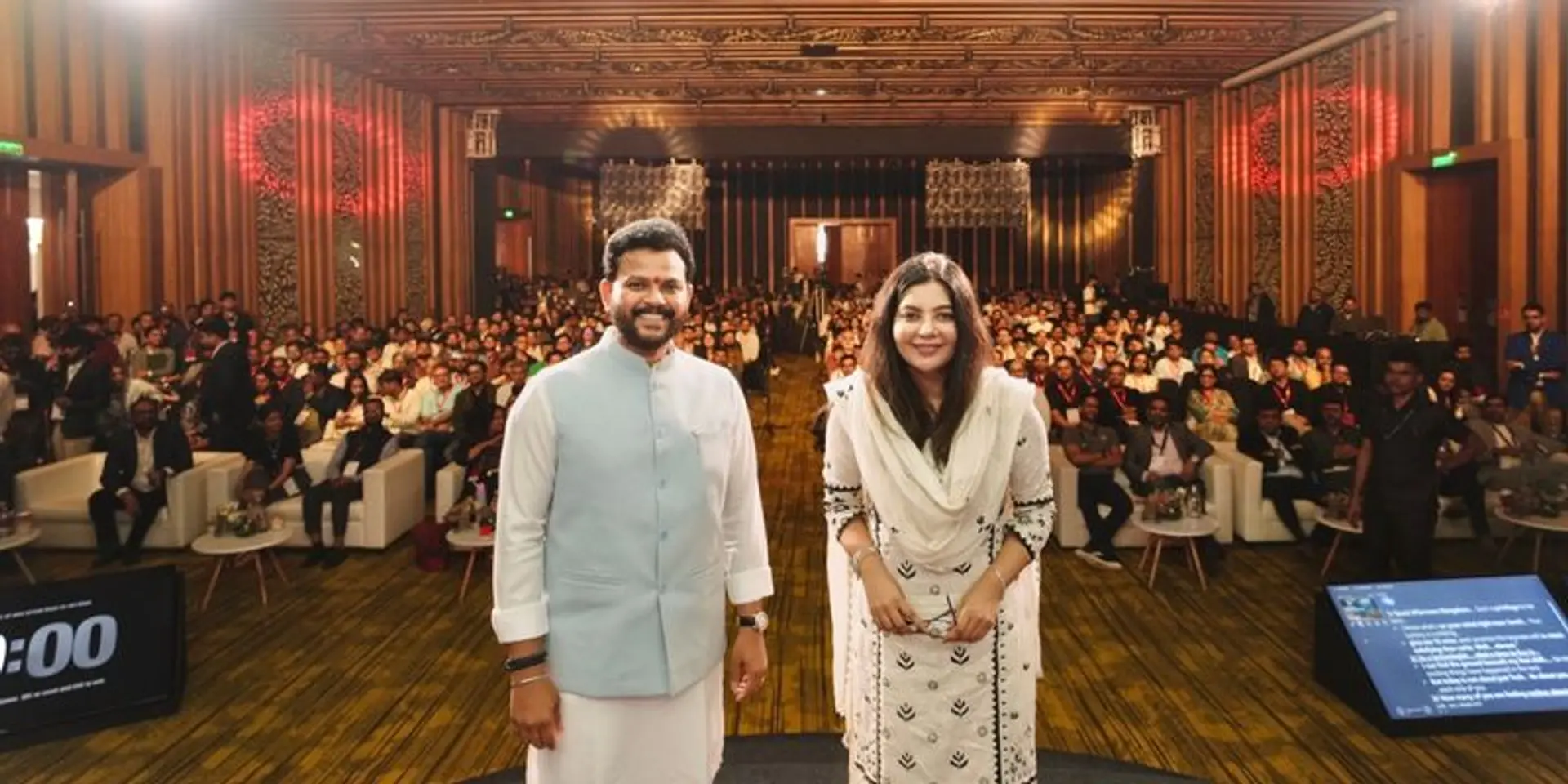

When we talk about aviation, people often say, "the sky is the limit". Union Minister of Civil Aviation Kinjarapu Rammohan Naidu echoed this sentiment during a conversation where he spoke about pushing those very limits and envisioning a future where we proudly board a commercial aircraft designed and built in India.
“I want to see commercial aeroplane being built in this country and the people of this country flying in that plane, and very soon we are going to do it,” Naidu remarked during a fireside chat with Shradha Sharma, Founder and CEO, YourStory and The Bharat Project, at TechSparks 2025, as he painted the picture of “mission manufacturing”.
The minister highlighted that mission manufacturing is now at the centre of the sector’s vision. This covers the aircraft itself, the components that go into it, and the technologies of tomorrow. The goal, he said, is for all of it to be manufactured in India.
“All the other countries are doing it and we are going to them and saying that this is an order that I have given, please give it to me fast, and while waiting, we are at the mercy of those countries, but we have the capacity, we have the talent pool, we have all the resources to do it. just that we have to connect all of them,” Naidu added.
The minister pointed to Bengaluru, Hyderabad, and Pune as examples of cities that have grown into thriving aerospace and aviation hubs, creating ecosystems in which MSMEs are able to grow and compete.
He added that the world’s two largest aircraft manufacturers, Airbus and Boeing, are procuring $1.4 billion and $1 billion worth of components from India. This market is expected to grow to around $4 billion in the next five years.
“They (Airbus and Boeing) are operating with around 400 to 600 MSMEs right now; they are directly dealing with these MSMEs and they are directly dealing with the startups also. They believe India is the next destination for getting manufacturing done. We have created that kind of confidence globally, we have created that trust globally that we can create global standard products today,” the minister explained.
“Now, since that trust has already been established, it has to be taken as a positive sign for the new startups to engage with the big players, come up with these big solutions for them. The stage is set for them to come up, dream big, aspire big and start flying towards it,” he added.
When asked whether he envisions a day where the country will have companies like Boeing and Airbus, with planes made in India, he said, “We from the ministry, and especially myself, this is a challenge that I personally have taken up".
The minister explained that India already has the technical ability to build aircraft, as seen in HAL’s production of the Dornier 228. The challenge now is scale and economics, not engineering or talent. To move from producing one aircraft to one hundred, a private manufacturer must be brought in and a strong market must be secured.
He elaborated that a full ecosystem must be in place, including pilot training, certification, simulators, maintenance, and reliable component supply to ensure that operations remain viable. Building this ecosystem, he noted, is what takes time.
“It is not a question of engineering, question of talent, or question of what we can do. It is a question of economics, purely economics at this point of time,” Naidu said.
Multiplier for economy
Aviation is positioned as a driver that multiplies economic activity across sectors, according to the minister, who highlighted scale and domestic demand as core strengths that create cascading opportunities.
“I see 1.4 billion opportunities that are there waiting to create something, innovate something, and utilise this air travel network to aspire to something big. This is a multiplier effect... once you start doing something in aviation, there is a multiplier effect on the economy and all other sectors also,” Naidu said.
He also pointed out that aviation is a major job creating sector. “We miss out on the advantage that this sector has in providing these jobs and most of these jobs are right now being handled by the western companies because of the headstart that they had.”
The minister spoke about the large employment footprint of airports and related verticals. He named operations, manufacturing, maintenance, and R&D as job rich areas.
“One airport like Hyderabad, which is handling a capacity of 45 to 50 million per year, is creating five lakh jobs,” Naidu shared.
Innovation
The minister also described innovation as the foundation of aviation. At the same time, he insisted that safety is non-negotiable and must be embedded at the design stage, not bolted on afterwards.
“The foundation of aviation has always been innovation. Without innovation, there is no scope for growth in aviation… This industry itself is based on technology and these machines that we say as aircraft are complex engineering machines and there is a continuous process of innovation, experimentation, testing happening and new technologies coming in. So the innovation factor is the mother of this sector,” Naidu remarked.
Innovation grows where startups are encouraged. The minister shared that the government is examining ways to support new ventures in both aerospace and aviation, even though the two are handled as distinct sectors.
Drones
Drones are a major focus, Naidu said, as he spoke about PLI and other incentives and a plan for a drone act drafted with industry consultation. He highlighted agriculture and rural applications as early high impact uses.
“We want each and every nut and bolt that goes into the drone to be manufactured here. That is the ultimate objective for us and we will continuously push and work with the industry to achieve,” the minister noted.
Working with govt
The minister acknowledged that government processes can often be slow, and said digitisation is the practical lever to reduce friction. Citing examples of DGCA digital registration system and the online drone permission programme, he explained how technology can accelerate approvals and reduce paperwork.
He also gave some examples of low cost, high impact interventions at airports like Udan Yatri Cafes to improve passenger experience and access. These interventions are framed as practical innovation for ordinary travellers.
“Hawai chappalwala (a person of modest means wearing simple slippers) is today able to travel in a hawai jahaj (an aeroplane).”

Edited by Megha Reddy