



India should build AI models for public good, industry experts say
Industry experts at a TechSparks panel on AI agreed that India should focus on building AI models that use the country’s data, and the focus should be on the greater public good.

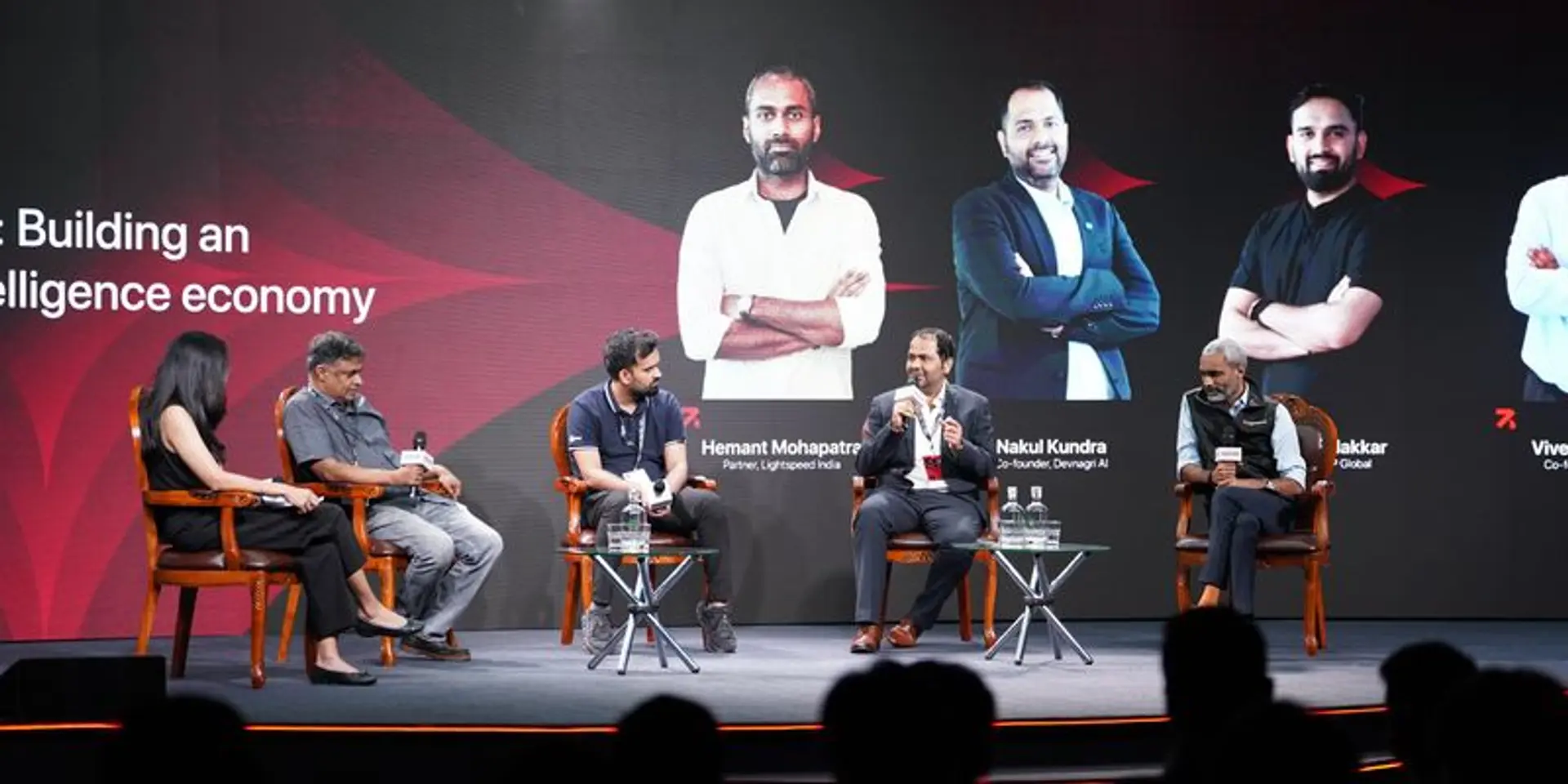

India has the opportunity to build artificial intelligence (AI) models for the public good and leverage the data which are culturally suited for the country, experts opined at the ongoing TechSparks 2025 summit in Bengaluru on Saturday.
At the panel discussion on the topic - Aatmanirbhar AI: Building an independent intelligence economy, moderated by YourStory COO Sangeeta Bavi, Hemant Mohapatra, Partner, Lightspeed India, said, “If you think AI is going to be an intelligence on tap, you absolutely have a responsibility to have it available for everybody. Because the more you keep it closed, the more you keep it expensive.”
According to Mohapatra, with the right approach, this can unlock nation-scale benefits in sectors like health, education, and legal systems, among others.
Seconding this opinion, Madhur Makkar, Principal, RTP Global, said the objective should be to move more towards the right things and to have more AI applications developed for the public good.
The discussion also focused on having the correct data going into the AI models, which, for now, largely those which have emerged from the West. Nakul Kundra, co-founder - Devnagri AI, said the AI models developed in Silicon Valley can be used in India, but they are not for the country.
He further noted that Indian data sets are culturally rich, and these models need to understand this information before they can create an impact.
This also brings forth the question of how India can develop a sovereign model of AI. Vivek Raghavan, co-founder, Sarvam AI, said the sovereign model will be the one where one can actually inspect the data that was used for the training. “We actually need to train these models from scratch,” he remarked.
The panellists were also of the view that AI today is a natural resource for the country, and the nation needs to take all measures to ensure that these are not wasted or ignored.
On the question of whether India has missed the bus on AI evolution, Raghavan said that the start has to be made somewhere, and as autonomously as possible, though he cautioned that it is going to take time and investment.
Given this environment, the country's R&D spending has been low compared to China or the United States, and the panellists hoped that there would be a pickup on this front, both from the government and large corporations.
Kundra said the AI activity in the country is happening in silos and called for certain standardisation where everyone can utilise this technology platform.
This is where deeptech startups come into play, as they are the ones leveraging these advanced technologies. Mohapatra said there are such startups in the country which are engaged in such work, and it is the responsibility of the investors to back such companies.

Edited by Jyoti Narayan