




Narendra Babu: Driving security, personalization, and speed with AI
From fraud prevention to personalized credit, PayU CTO Narendra Babu shares how AI has evolved from a niche tool to a company-wide enabler, driving security, efficiency, and innovation across fintech and beyond.

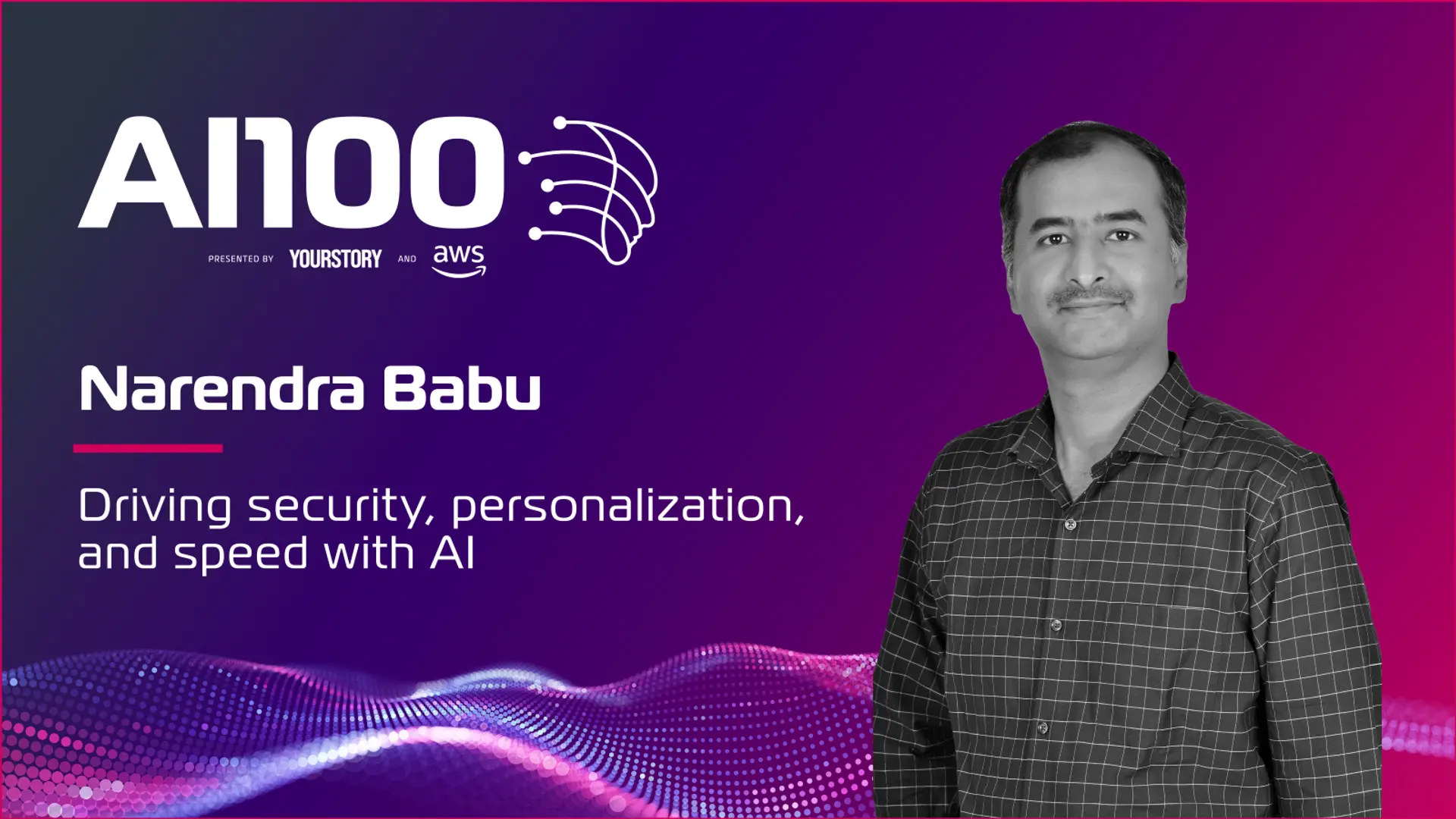

AI may have started as a niche tool at global payments and fintech company PayU, but is embedded across the organization, says Narendra Babu, Chief Technology Officer, PayU. From using AI for tasks like personalization and fraud prevention, AI has become accessible to a multitude of departments - beyond just the engineering team. It is helping sales teams move swiftly, marketing teams campaign smarter and developers solve problems faster, with ready-to-use solutions.
Babu shares that AI’s advancements in recent times - affordable compute, improved processing power and matured platforms – have democratized the technology. Training models and data management, previously complex and expensive endeavours, are simpler. The result? AI has become a practical, scalable tool that helps people across teams reimagine how they work.
This change at PayU wasn’t the result of sudden disruption but of steady change. PayU gradually moved from the selective use of AI to an environment where employees across the organization feel empowered to understand and leverage it. “While the tech and product teams together play a part in the AI transformation at the organization, it’s also a top-down approach from leadership,” Babu says.
PayU’s shareholder, Prosus, is also a big proponent of AI, and empowers the company with information about recent developments. “Our management team also provides us with tools, shares information, and encourages teams to envision how AI can transform their own functions.”
AI in payments: balancing seamlessness, security and personalization
AI is transforming digital payments—making transactions more secure, faster, personalized, and scalable, while automating processes across the entire payment journey.
Babu explains that challenges in the payments landscape boil down to two things: making digital transactions seamless and understanding the context of payments and providing personalized solutions around these transactions.
He says payments are typically a trade-off between ease and security - one needed to be sacrificed to ensure the other. In India, for example, two-factor authentication keeps things safe but may not be a smooth process.
But Babu believes that technologies like AI can bridge that gap. By analyzing device, merchant, and transaction history in real time, AI can make payments both smooth and secure—without compromising safety. The key is close collaboration with regulators and the broader ecosystem.
”I think for me, as a CTO, the question is how can we work hand in hand with regulators, private players, and the entire payment ecosystem to balance safety with seamlessness. AI could play a role in bringing that about,” he says.
The second opportunity for AI is in personalization. Payment failures aren’t limited to tech problems; they’re often the result of inadequate funds. But the intent to pay is still there. AI can help by offering instant, low-cost credit options, so a purchase can go through without the hassle of traditional borrowing. This is helpful for both customers and merchants, making transactions an opportunity to build trust.
AI at PayU
PayU uses AI in two big ways: powering customer-facing solutions and improving internal productivity. On the customer side, AI helps secure millions of transactions every day by spotting fraud in real time. The technology is built into PayU’s products, strengthening trust at scale. As a Non-Banking Financial Company (NBFC), PayU also supports credit risk assessments, ensuring safer merchant onboarding and reducing fraud.
Internally, AI is changing how teams work. Developers are using AI for faster coding, debugging, and testing—sometimes cutting effort by half. Customer care is smoother too: AI handles routine queries, freeing up human teams for complex issues.
The biggest change, though, is mindset. AI is no longer the domain of data scientists; it’s a company-wide expectation. Everyone, from engineers to business teams, is encouraged to use AI in daily work.
The challenges of AI: creating an organizational mindset
The toughest part of AI adoption isn’t the tech; it’s the mindset shift. In the past, only specialists dealt with AI. Today, employees across roles are expected to pick up new tools, but finding time to upskill in a fast-paced environment can be tough. PayU is tackling this with training, celebrating small wins, and creating a culture where teams feel encouraged to try AI. The goal: make AI awareness universal so every employee can apply it and unlock a real edge.
“We’re trying to showcase how different team members have been able to transform the way AI works in their specific function, so that the entire organization becomes aware of these tools,” Babu says. This has created a sense of competition, where everyone wants to learn more about AI and embrace the tools. “So, the challenge is mostly about training. Otherwise, the tools themselves, the frameworks and have evolved to make it easy for folks to use.”
AI for the world
Beyond payments, AI has the potential to make a real difference in critical areas like education and healthcare. In education, personalization at scale was once nearly impossible. Now, AI can deliver affordable, adaptive learning experiences tailored to language, context, and individual styles—opening doors for students everywhere.
In healthcare, access is often uneven—specialists cluster in cities while rural areas lack resources. AI can help bridge that gap with remote diagnostics, faster assessments, and scalable expertise. By cutting costs and expanding reach, AI can bring quality care to more people, making healthcare more inclusive.
At its heart, AI amplifies human potential—helping people learn better, stay healthier, and live more empowered lives.
Narendra Babu is particularly excited about how autonomous systems could speed up infrastructure building. In countries like India, roads, schools, and hospitals often take decades to develop. AI and automation could shrink those timelines dramatically, turning a 40-year journey into just four.
Faster infrastructure growth means real improvements in daily life, from better transport to wider healthcare access. For Babu, that’s the real promise of technology: reshaping lives for the better.
The AWS partnership
AWS has been the primary cloud partner for PayU, helping make AI accessible to those outside the niche tech teams. “AI is supposed to be a tool for everyone, right? In order to make this happen, players like AWS have done a great job in proving a framework that every engineer could easily plug into,” Babu says.
Platforms like Amazon Bedrock, a fully managed service that offers access to leading foundation models through a single API, make picking, choosing, fine-tuning and deploying models for a multi-agent solution seamless, allowing engineers at PayU to focus on the problem at hand.
Keeping up with AI advances
AI moves fast - tools that are new today are a matter of the past tomorrow. At PayU, there is a vibrant and enthusiastic team that keeps Babu updated on new tools, technologies and news. Leaders and engineers are also encouraged to participate in a variety of tech forums. Employees across PayU also congregate for informal discussions on AI, and Babu often reaches out to his peer group - both friends and colleagues from different companies - to stay fresh.
For Babu, it’s less about chasing every shiny new tool and more about building a culture that embraces change. That way, PayU can stay nimble and make the most of AI’s rapid evolution.