


Why Publicis Sapient’s Shubhradeep Guha believes AI alone won’t change the world, people will
Tracing innovation from ancient tools to the age of AI, Shubhradeep Guha, Chief Delivery Officer at Publicis Sapient argued that while technology evolves, true progress comes from how humans use it to create value, purpose, and lasting impact.

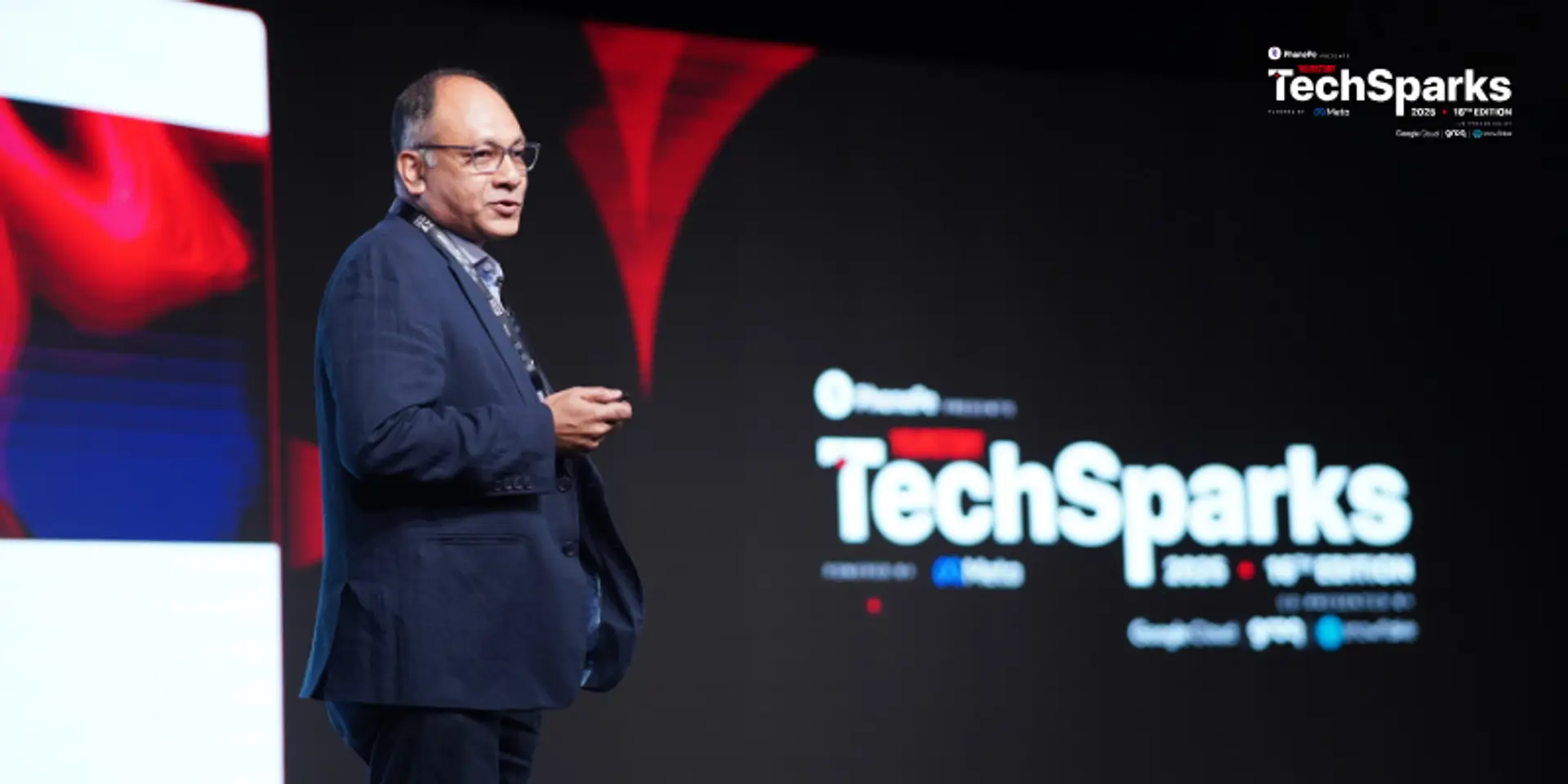

Technology trends come and go, but what persists are the principles that make them useful to people.
With that thought, Shubhradeep Guha, Chief Delivery Officer, Publicis Sapient opened his keynote at the 16th edition of YourStory’s flagship event, TechSparks 2025, by taking the audience on a journey through time. From the chair the design of which can be traced back to the reign of the pharaohs, leather shoes that were crafted in the last Ice Age, and the humble fork — which would have been a status symbol in Roman times — he reminded everyone that while technology evolves, some last for centuries because they serve enduring human needs. That idea of continuity, between invention and adoption, framed his exploration of how digital transformation, mobile computing, and now AI are reshaping the modern enterprise.
Speaking on the theme ‘Where product + people power the future,’ Guha drew a sweeping narrative that connected centuries-old innovations with today’s AI revolution, urging businesses to see beyond the hype and focus on human-centered transformation.
The three waves of disruption: Internet, mobile, AI
Looking back over 25 years of technological evolution, Guha identified three inflection points that transformed how enterprises operate:
- The Internet era introduced self-service and digital accessibility, making technology personal and pervasive.
- The smartphone revolution leveled the playing field, bringing computing power, once reserved for the elite, into everyone’s pocket.
- The AI wave, that we are riding today, is fundamentally different. Unlike previous software trends that spawned new services opportunities, AI is transforming the nature of services themselves.
“AI,” he said, “isn’t just a software trend; it’s a services trend. It takes aim at the quantum of human effort required and the time taken: the core of how services work.”
This shift challenges consulting, outsourcing, and technology services firms alike. The question Guha posed to founders and technologists in the audience was direct, “Do we really think that whatever made us successful before is what will make us successful now?”.
AI: From productivity to revenue
Guha highlighted an uncomfortable truth, that today’s discourse around AI is largely limited to productivity and cost efficiency. “We talk endlessly about AI saving time or improving efficiency,” he said. “But few are asking how it can drive revenue.” Scaling AI across the enterprise is the challenge at hand.
He argued that the real opportunity lies not only in cost-cutting but in creating new revenue streams through AI, by combining human expertise with intelligent products that can learn, adapt, and scale.
The firms that thrive, he predicted, will be those that move beyond “services powered by people” to “AI products powered by people.”
The case for ‘people + product’
To illustrate, Guha offered a striking analogy: Tony Stark and his suit.
“Without the suit, Tony Stark is just another man. And without Tony Stark, the suit is just a piece of technology. It’s only when people and product come together that you unleash something truly powerful.”
This, he said, is the future of AI-powered enterprises: where human creativity and machine capability amplify one another.
He cited Publicis Sapient’s own approach as an example: combining teams with proprietary products like Slingshot to reimagine firms into intelligent enterprises.
“There’s a lot of chatter on AI replacing people,” he said “We need to empower people with products”.
Building the next-gen enterprise
Guha closed with a challenge to the industry, “Every servicing firm must voluntarily disrupt itself, or risk being disrupted.”
In a world where AI is democratizing access to technology and shrinking the gap between ideation and implementation, enterprises that will endure are those that marry human insight with technological innovation.
Because as Guha reminded the audience, it’s not technology alone that changes the world. It’s the people who do.
The next phase of digital transformation won’t be about choosing between people and technology. It will be about bringing them together, to build organizations that are not just intelligent but also truly human at scale.
