



SoftBank is turning its assets into ammunition for its AI push
During its second quarter earnings call, the company said it has been liquidating legacy holdings and tapping secured financing to bankroll its escalating AI focus.
Sai Keerthi
Wednesday November 12, 2025 , 4 min Read

Between June and September, Japanese investment conglomerate SoftBank offloaded T-Mobile shares worth $9.17 billion and $2.37 billion in Deutsche Telekom stock. That’s nearly the total worth of Vodafone Idea—India’s third-largest telecom player.
That was just the beginning. During the Q2 earnings call, SoftBank revealed that it has fully exited American tech giant Nvidia, cashing out $5.83 billion, even as it expanded a margin loan against British semiconductor company Arm to $20 billion, leaving about $11.5 billion in dry powder.
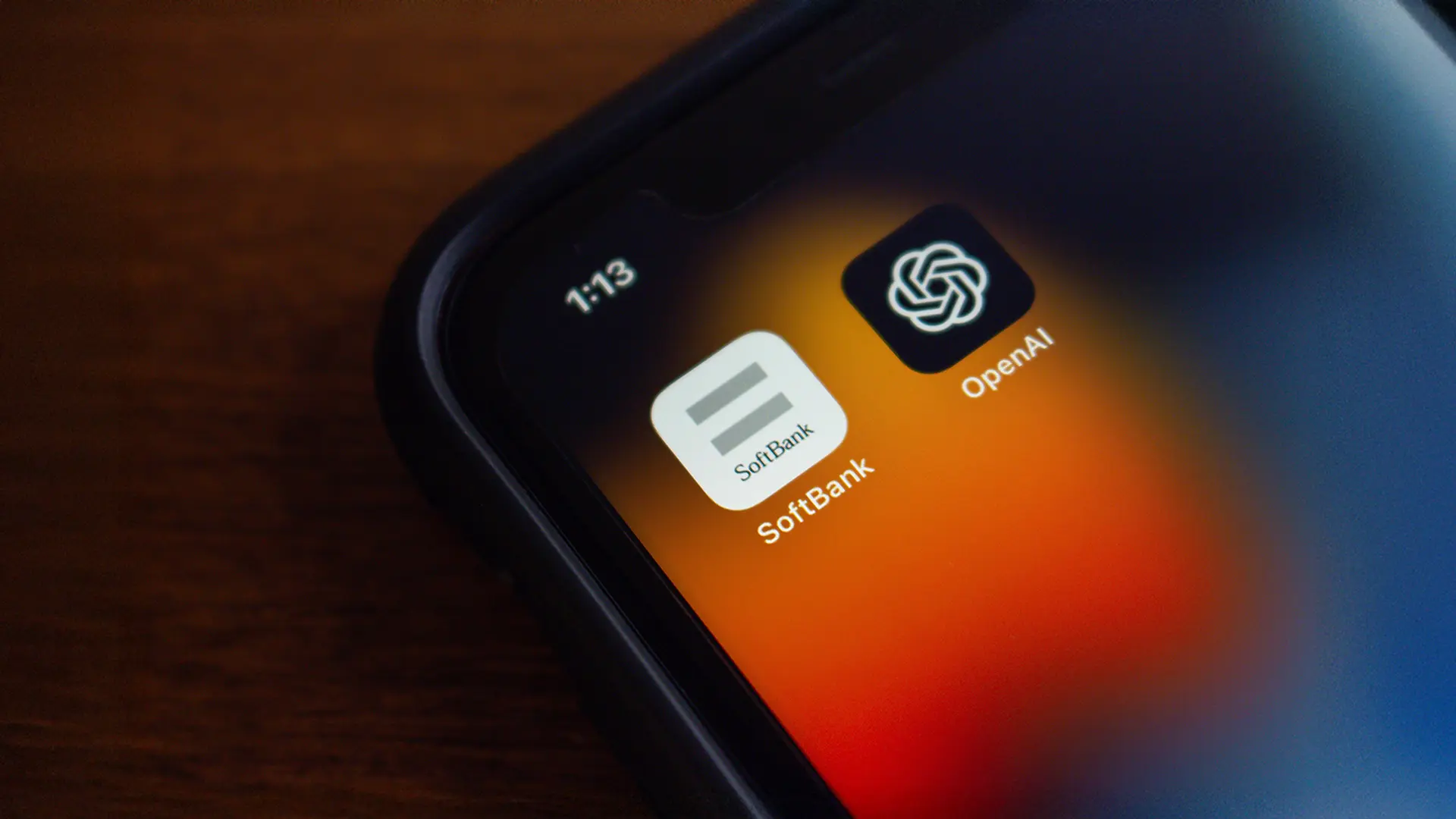
Piece by piece, Masayoshi Son, CEO of SoftBank, is monetising trophies, mortgaging crown jewels, and building a war chest for what he sees as the company's next great bet: an AI future he wants to help create with Sam Altman's OpenAI.
During its earnings presentation on Tuesday, CFO Yoshimitsu Goto said SoftBank is “ready for the funding” of around $30.5 billion as part of its planned third-quarter investments, including a $22.5-billion second closing for OpenAI and its acquisition of chip designer Ampere Computing in a $6.5-billion transaction expected to be completed by late 2025.
SoftBank has also struck a $5.38 billion deal to acquire industrial automation giant ABB’s robotics division, a key pillar in Son’s broader AI strategy. The transaction is expected to close between mid and late 2026.
Goto explained the company's playbook: use cash, raise money against holdings, and borrow in bond markets. He noted that the company has several options at its disposal, including its cash position, its net asset value, and asset bank finance.
“We sold T-Mobile… Nvidia… Deutsche Telekom… With Arm shares, we upsized a margin loan to $20 billion, and $11.5 billion remains undrawn.”
This is the second time that SoftBank has divested its stake in the chip-maker Nvidia. According to reports, SoftBank’s Vision Fund built a significant stake in the Jensen Huang-led company in 2017 and sold its entire stake in 2019. The company then began buying small shares in 2020, and gradually increased its position to $3 billion by March this year, before selling it in October.

When prodded about the divestment in Nvidia, Goto dismissed concerns. “As an investment company, we always repeat new investment activities and divestment activities.”
The message is clear: SoftBank is doubling down on OpenAI. “We need more than $30 billion investment to be made. For that, we do need to divest our existing portfolio.”
“We want to provide a lot of investment opportunities for investors while we can still maintain financial strength,” Goto said, listing bond markets, hybrid debt, and asset-backed financing as tools to keep the machine humming.
Goto was careful to draw the line between aggression and recklessness. He highlighted a loan-to-value ratio—leverage versus asset base—of 16.5%, and a cash pile of ¥4.2 trillion, calling it “a very good level” that keeps SoftBank in “investment mode” without stretching the balance sheet.
He also spelled out why SoftBank is pressing the accelerator: he sees OpenAI’s product lead widening and views the competitive gap as “harder to catch up,” provided execution stays strong.
OpenAI is the industry’s most visible demonstration that huge AI capex by investors like Softbank can eventually be monetised.
The gains are visible for Softbank. The investor now values OpenAI at around $500 billion, up from $260 billion barely six months ago. That jump alone added roughly $12 billion to the Vision Fund’s paper profits in just one quarter. CEO Altman projects OpenAI's annualised revenue run rate to exceed $20 billion by the end of 2025.
The Nvidia selloff by SoftBank comes at a time when famous contrarian Michael Burr is betting against the stock. The hedge fund manager, who predicted the 2008 financial crisis, recently disclosed put options on 1 million shares of Nvidia, positions that would gain if the stocks fall.
Only last week Nvidia became the first company in the world to cross a market capitalisation of $5 trillion, cementing its status as the face of the global artificial intelligence boom. The stock has already surged 55% this year, adding more than $1.6 trillion in market value as demand for its graphics processors explodes.
Edited by Swetha Kannan