



TechSparks 2025 grand finale: India's big AI opportunity and why NVIDIA, upGrad, Groq execs think time is now
Day 3 of TechSparks featured Pocket FM’s 180-degree shift to become an AI-first company, Rapido planning to onboard more women captains, and Zetwerk’s momentum in the manufacturing industry.


Every year, TechSparks, YourStory's flagship startup-tech summit, hosts entrepreneurs, investors, and aspiring startup founders under one roof, giving them a space to network and ideate—a flint to the spark of innovation. This year, the 16th edition of TechSparks could've also been called 'TechSparks.ai', as all conversations were anchored on what everyone, everywhere is talking about—artificial intelligence.
The third and final day of India's largest startup-tech conference opened with Ronnie Screwvala’s call to founders to keep reinventing themselves as they set up companies for the next decade—the era of AI. The co-founder and chairperson of upGrad and Swades Foundation also urged founders building AI companies to think about survivability.
“AI today is still at the product stage…This is not the time to go out and always look at raising money because there is so much that needs to be done in product development,” said Screwvala during a fireside chat with Shradha Sharma, Founder and CEO of YourStory.
Building on the theme of survival, Pocket FM’s co-founder and CEO, Rohan Nayak, in a candid discussion, spoke about how turning a profit in a sector like entertainment has been a hard task, given the high upfront costs. Amidst rising costs, Nayak spoke about how the company’s pivot to using AI in content was a game-changer.
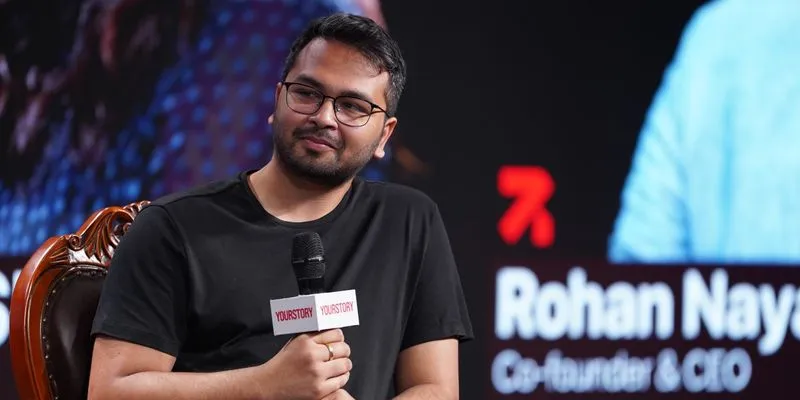
Rohan Nayak, Co-founder and CEO, Pocket FM
Today, more than 90% of the content on PocketFM’s platform is AI-generated. The company is growing at a healthy 80% year-on-year rate, with its annual recurring revenue touching $350 million.
Jonathan Ross, Founder and CEO of AI inferencing platform Groq, said that the company believes coding literacy, focused on artificial intelligence, will fuel the entrepreneurial spirit in India. “We don’t need 50 different foundational models on the planet. We need two or three,” Ross said in a fireside chat with Sangeeta Bavi, COO, YourStory.
Away from the glitz and glamour of AI and content, Zetwerk’s co-founders, Amrit Acharya and Srinath Ramakkrushnan, spoke about the momentum picking up in the manufacturing sector with investments pouring in and Indian companies expanding capacity and exploring new markets.
The entrepreneurs also stressed that they've only tapped into a small part of a very large market. There are many unexplored segments, and tapping into these opportunities requires a certain level of patience and domain knowledge.
Ramakkrushnan asserted there are big opportunities in the energy sector, as many legacy companies are not able to meet the surge in demand.
In the intensely competitive ride-hailing segment, Rapido is now pushing for a deeper presence in Tier II, III, and IV markets, which it believes will power the company’s next leg of growth. Co-founder and CEO Aravind Sanka said that the segment is no longer bleeding cash and that players are becoming operationally profitable.
Meanwhile, Ananth Narayanan, Founder and CEO of BRND.ME (formerly Mensa Brands), noted that consumer brands have never gone global from India in the past. However, with the ecommerce boom, it is now possible to understand global consumers.
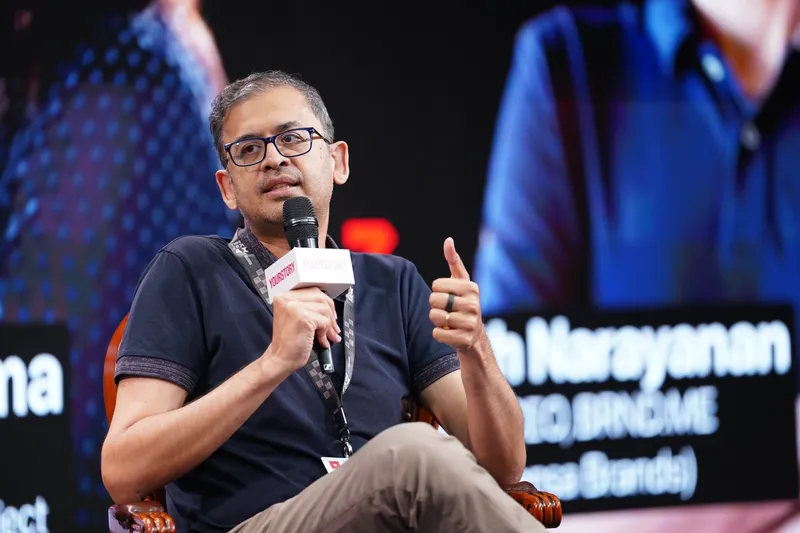
Ananth Narayanan, Founder and CEO, BRND.ME
He reminded founders that valuation is not the real measure of success, but how much of the company you have diluted that really matters. “You need capital to grow, but the key is using it wisely. Too often, startups confuse marketing spend with product–market fit, buying market share instead of earning it,” he said.
TechSparks 2025 ended with a pregnant question. “Why aren’t we building our own code generation model?” asked Vishal Dhupar, Managing Director, South Asia, NVIDIA.
Dhupar noted that India has one of the largest developer ecosystems in the world, strong digital infrastructure, and real, large-scale problems to solve. “Yet, we still rely on global models instead of building our own.”
The three-day conference had one clear message: India shouldn’t just be a user of AI, it should be a creator. The next big code model can come from India. The opportunity is here. Now, it’s about who decides to build it.

Edited by Kanishk Singh