



Recruitment is broken. Can AI fix it? Hyring CEO thinks it can
At TechSparks 2025, Adithyan RK, Co-founder and CEO of Hyring, reveals how AI can cut bottlenecks, curb cheating, reduce bias, and give recruiters their time back.

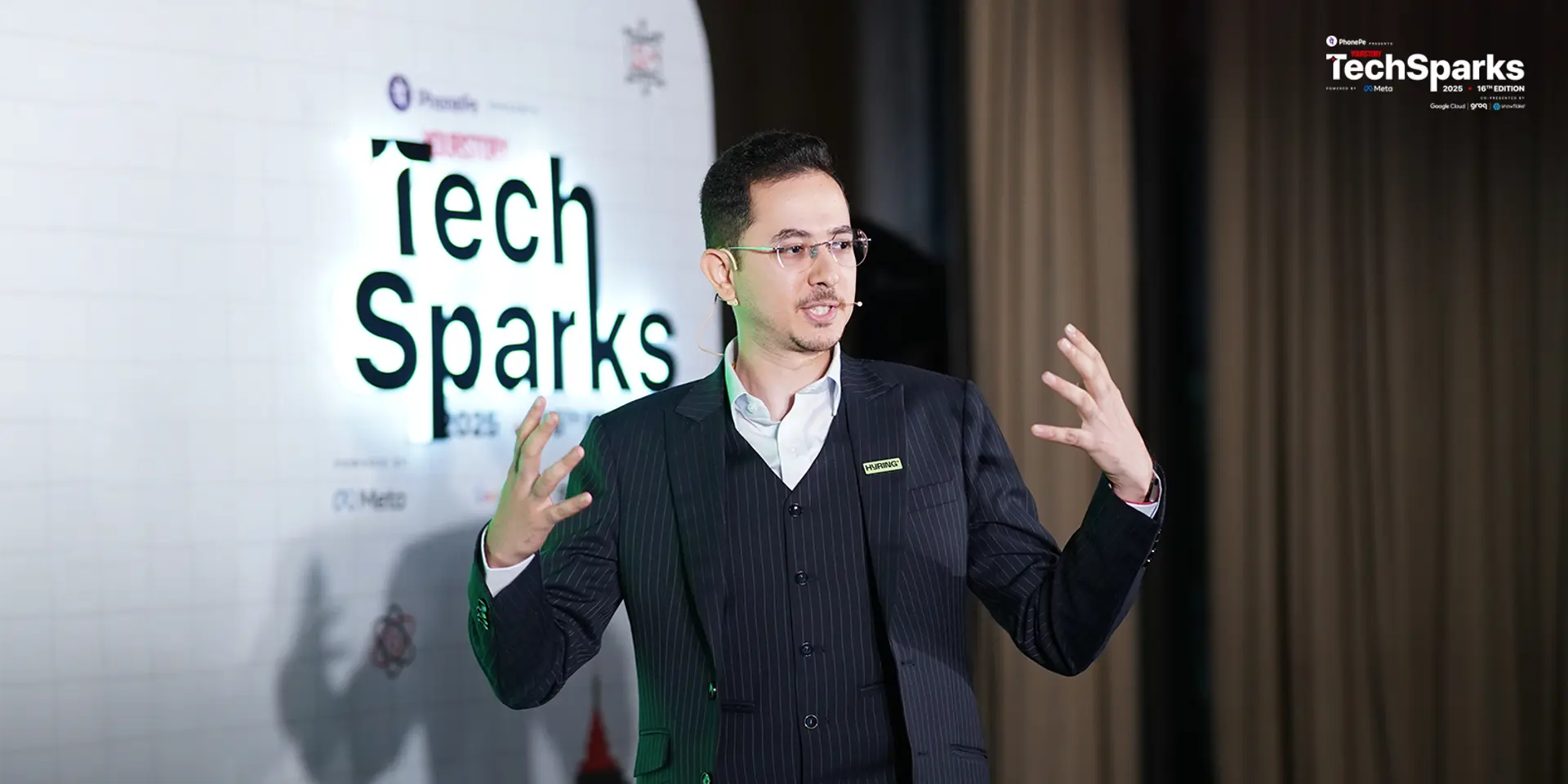

Building a recruitment function today is as much about speed as it is about fairness. Hiring remains one of the most dynamic yet stagnant business processes, caught between the need for efficiency and the responsibility to deliver equitable evaluations.
With AI reshaping entire industries, the question is simple: why does it still take 23 days to fill a single position?
At TechSparks 2025, YourStory’s flagship startup-tech summit, Adithyan RK, Co-founder and CEO of Hyring, explored what it really takes to transform recruitment in a fast-evolving environment.
Across organizations, technology has transformed how teams operate. Sales relies on CRMs, marketing leans on digital intelligence, and operations run on automation. Recruitment, however, remains tied to manual screening, repetitive phone calls, and endless scheduling loops that slow hiring down and restrict how many candidates even get evaluated.
“Sales and marketing changed completely,” Adithyan said. “But hiring still looks the same as it did decades ago.”
Despite new platforms, recruiters still spend close to 70% of their time on repetitive operational work. The result: a function that hasn’t evolved with the speed of modern talent.
The 23-day reality check
Hiring timelines make the problem obvious. Even today, organizations take an average of 23 days to close a single role. And these delays don’t come from thoughtful evaluation; most of the slowdown happens in the early stages: resume filtering, first-level calls, and coordination.
With thousands applying for a single role, only a small fraction move forward. The bottleneck isn’t talent; it’s human capacity.
Where traditional hiring breaks down
Most hiring workflows haven’t changed in decades. A job is posted on LinkedIn or Naukri, resumes flood in, and recruiters spend their days screening profiles, scheduling calls, and repeating the same introductory questions. These tasks are manual, predictable, and ideal for automation.
The question Adithyan asked: “Is AI taking our jobs, or have we been doing AI’s jobs all along?” A recruiter can realistically interview around 50 candidates. When thousands apply, nearly 95% never receive a fair evaluation, not due to lack of skills, but due to limited bandwidth. Interviewing even half the applicant pool is impossible without technology.
Letting AI handle the work humans shouldn’t
To bridge these gaps, Adithyan outlined how Hyring uses AI agents, resume screeners, phone screeners, coding interviewers, and video interviewers to take over the workflow that slows recruiters down. These agents operate asynchronously, allowing assessments to begin the moment someone applies.
A click on Apply triggers an immediate phone screen with objective, role-aligned questions. Candidates who qualify move straight into a structured video interview. The system can run thousands of interviews simultaneously, assessing clarity, confidence, and responses, while detecting potential cheating in minutes.
“We can conduct thousands of interviews before this keynote ends,” Adithyan said. “Every applicant gets evaluated fairly, not filtered out because a resume parser didn’t recognize their university.”
Each assessment generates a detailed report covering engagement cues, behavioral signals, and problem-solving patterns. Beyond speed, this gives many candidates, who would otherwise be ignored, their first genuine opportunity to be evaluated.
Fairness needs structure, not assumptions
Fairness depends on addressing two challenges: cheating and bias.
Before AI tools became mainstream, around 40% of virtual candidates cheated. Today, that number is closer to 60%, driven by system-level tools that auto-populate answers while staying invisible, even during screen-sharing.
“These tools have system-level access,” Adithyan said. “Imagine the damage when these candidates join your company and then build teams of their own.”
Hyring’s system flags unusual eye movements, lip-sync mismatches, unexpected tool usage, and suspicious screen activity. Candidates also cheat more when they know an AI is interviewing them. “They assume they can bend the rules with a machine,” he noted. “That’s exactly why companies like KPMG approached us.”
Bias forms the second challenge. Early screening often reflects unconscious assumptions, and while AI can’t erase bias entirely, structured, consistent evaluation reduces these variations and gives candidates a more equal starting point.
Where AI ends and humans matter
While AI can surface dishonesty and reduce bias in early screening, it also tackles the quick assumptions humans often make based on names, photos, education, or employment gaps. But Adithyan is clear about boundaries. “AI handles the first two rounds: the repetitive, scalable evaluations. It cannot replace empathy, cultural understanding, or the human judgment that determines long-term fit and success.”
During the Q&A, someone asked whether candidates know they’re being interviewed by AI. The answer: always. Hyring discloses this upfront and offers three options: voice-only, an animated avatar, or a trained AI model that can resemble the recruiter with about 15 minutes of input.
The hiring reset companies need
Recruitment tech is shifting rapidly. Companies like Mercer reaching $10 billion valuations show how established players view the category’s future. For startups and growing organizations, the equation is simple: hire faster without compromising quality, or lose talent to teams that do.
The 23-day hiring timeline is a result of using outdated, manual workflows in a world that demands speed and fairness. As Adithyan demonstrated, the technology to change this already exists. The real question is whether organizations are ready to let go of work machines that should have taken over years ago.
The human side of hiring is irreplaceable. But it only becomes possible when recruiters stop doing machine work and start focusing on decisions that truly matter.
As Adithyan put it, AI isn’t here to replace recruiters; it’s here to return their time. The companies that embrace that shift will hire better, faster, and more fairly than the ones still stuck in the past.
