



DPDzero reimagines debt recovery at TechSparks: When AI meets empathy
At TechSparks 2025, DPDzero’s Ananth Shroff explored how intelligent, sentiment-aware systems are transforming debt collection from a confrontational process into a compassionate one.


The debt collection industry is growing fast - spurred by rising employment, an expanding middle class, increasing digital adoption and the demand for more efficient yet empathetic recovery services. Debt collection was built on aggressive tactics that have proven ineffective, harm borrower-lender relationships and lead to poor repayment outcomes. Furthermore, borrowers are highly diverse and have complex, nuanced reasons for delinquency.
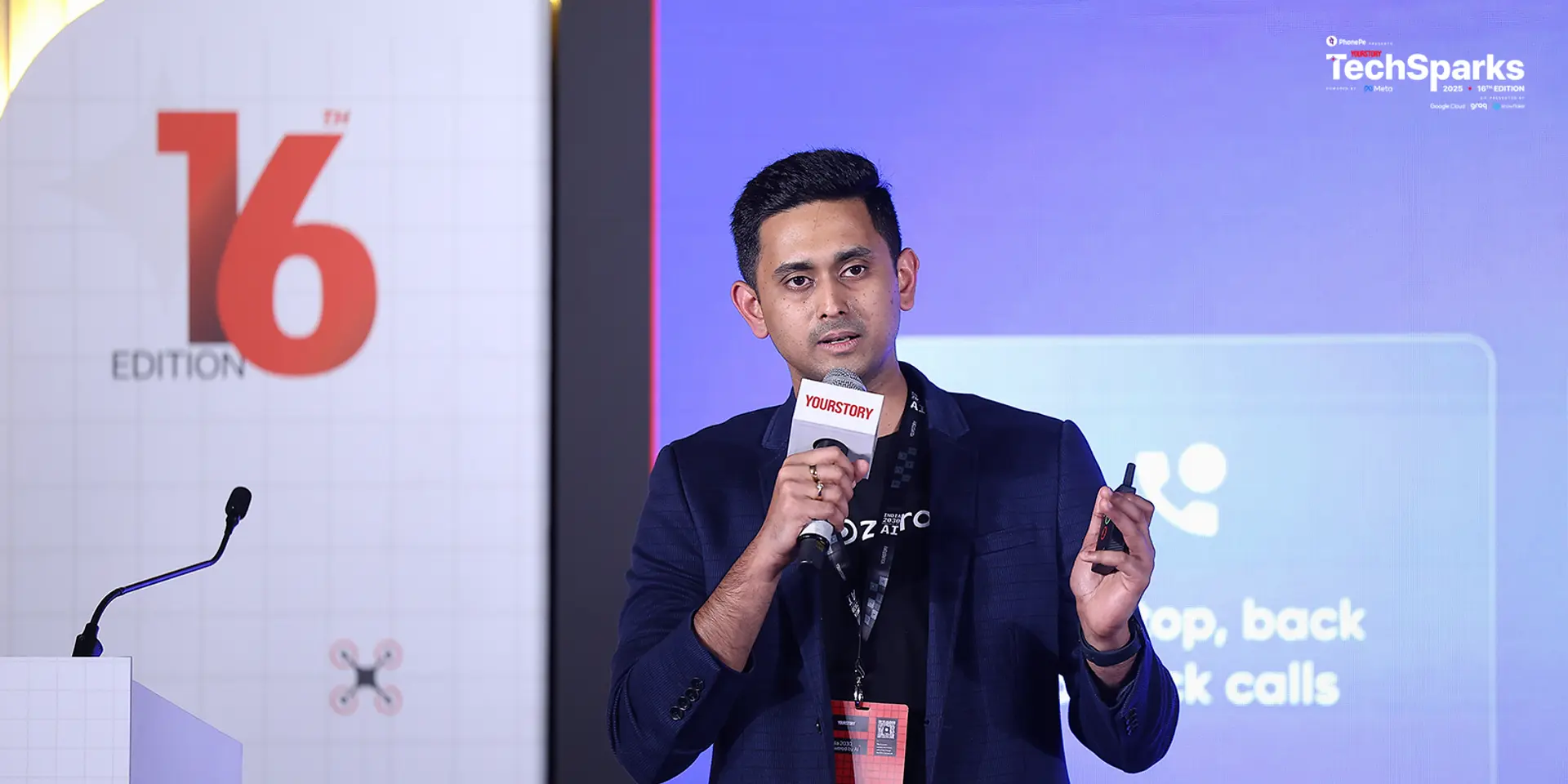
With the rise of AI, which detects borrower sentiment and tailors communication, a one-size-fits-all is quickly growing obsolete. At TechSparks 2025, Ananth Shroff, Founder & CEO, DPDzero, an AI debt collections platform, shared his journey and how DPDzero is embedding empathy as a strategy in a keynote address titled ‘Confrontation to compassion: Embedding empathy into debt collection with AI’.
The tipping point: How DPDzero began
Shroff began by sharing a personal story, one that sparked the idea behind DPDzero. In 2019, Shroff, a credit card holder for 4-5 years, traveled outside India and became unreachable on his regular number. Missing his credit card bill payments, the bank assumed he was absconding. After three days of calls, they contacted his family and warned legal action if he didn't pay. Once contacted by the family, he immediately made the payment.
This incident severed his trust and relationship with the bank. He closed his salary account, shifted deposits and cancelled his credit card. “How can they treat me like this when I paid on time every month? I missed one payment, and this was the situation,” he asked. It was this situation that led Shroff to ponder deeply on the collections industry and its treatment of borrowers.
Understanding the underbelly of collections
Post-COVID, Shroff contacted several lenders, shared his experience, and discussed the collections industry. On a friend's advice, he visited a south Bangalore collection agency for ground research, where he found a noisy room of agents shouting abusively at customers. Agents viewed customers as criminals and relied solely on abuse and threats to extract payments. “Throughout my life, I've been solving for customer experiences, and in this industry, the word experience didn’t even exist,” he shared. Shroff checked more agencies, but found the same: agents using Excel sheets to threaten customers into repaying where customers are reduced to a mere DPD number.
He deepened his research by interviewing agents offline. One described “training” as: threaten the customer, call parents, family members or contacts if unresponsive, then invoke the law. “I think that's when it became clear to us that this industry is broken, because there are no playbooks that were created, not in history and not today," said Shroff.
Balancing empathy and efficiency with AI
While debt collection remains an antagonistic process, the medium of contact has changed to smartphones. Shroff recognised that this was an opportunity and a cause to be addressed. “The current system cannot scale. The credit penetration rate in India is about 9% today, but it could rise to 30% tomorrow, meaning three times more borrowers will face a similar treatment. Someone has to change this landscape,” he said.
DPDzero set out to solve this problem by building India’s first AI + human collections stack - a system that enables agents to create respectful interactions with borrowers. The Collection agents get a comprehensive borrower profile: demographics including name, age, amount due, past relationships with banks, repayment history and every piece of data necessary to treat the borrower as a human.
DPDzero’s AI stack also empowers agents with access to all the communication channels available to reach the borrower, suggesting the right method and time to connect with them. Additionally, the AI digital agents are available to assist the human agent. These digital agents can engage with borrowers across all channels, understand their intent, negotiate, and capture their propensity to pay. “If the conversation pivots it can seamlessly move across different channels. It could be from voice to WhatsApp, from WhatsApp to SMS, from SMS to emails. But the context of the borrower is always carried over so it doesn’t need to be repeated but is present for every interaction with the borrower,” said Shroff.
He added, “Each borrower is unique both in terms of why they miss an EMI and why they borrowed in the first place. Therefore, it is crucial for lenders and collection agencies to understand the borrower's context and act likewise. And this is where DPDzero brings high intelligence and high context with an AI-first and empathy-led approach.”
When the live conversation happens between the agent and the borrower, an AI copilot provides real-time sentiment analysis, detecting emotions like anger, confusion or stress. It also shares real-time prompts about the most suitable tone to use and the best negotiation tactics for individual situations. This guidance allows for a more ethical, respectful and positive experience. DPDzero equips collection agents with intelligent tools and insights, enabling better outcomes for lenders and borrowers.
Powering these interactions are continuously learning models - each and every interaction is fed back into the system, allowing for the refinement of future suggestions and responses, empowering agents to get smarter over time. This vision for the future of collections is already being realised at DPDzero, marking a shift in how ethical and intelligent collections can be done.
