



Mentorship, Not Money, Will Build India’s Next Startup Leaders: Dr Jitendra Singh
Speaking at IISF, Dr Jitendra Singh urged young entrepreneurs to focus on clarity, aptitude, and early guidance, as Government efforts shift from policy intent to market-ready innovation.

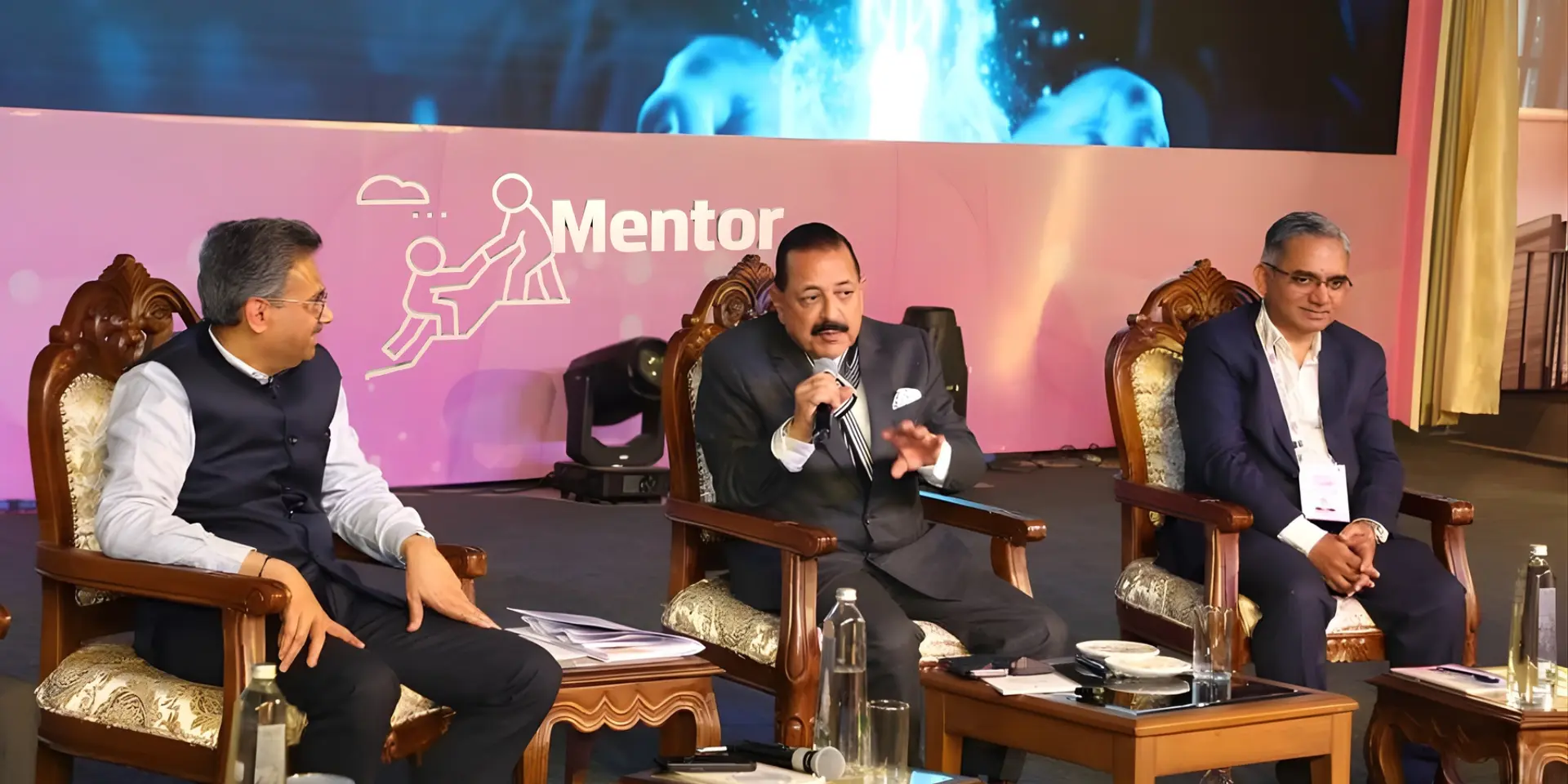

Union Minister of State (Independent Charge) for Science and Technology, Dr Jitendra Singh, said that mentorship, early handholding, and a culture of risk-taking will be as critical as funding in shaping India’s next generation of startups. He was speaking at the India International Science Festival (IISF) during a panel discussion on “Startup Journeys.”
Shift from Policy Intent to Supportive Ecosystems
Highlighting the role of startups as a key driver of India’s future growth, Dr Singh said the government is moving beyond policy intent to create structured ecosystems that connect ideas to markets. He noted that over the past decade, access to science education and entrepreneurship opportunities had become more “democratised,” enabling talent from smaller towns and modest backgrounds to pursue innovation-led careers.
According to him, sustained interventions by science and technology ministries have led to the creation of platforms such as BIRAC, national missions, and sector-specific programmes that integrate funding, industry partnerships, and mentorship. These mechanisms, he said, are enabling early-stage founders to navigate technical, financial and regulatory challenges.
Embracing Risk and Failure in Innovation
Dr Singh emphasised that innovation is inherently risky and that India must learn to accept failure as part of the entrepreneurial journey. Without this mindset, he cautioned, Indian startups will struggle to scale globally. He said early mentoring plays an essential role in helping young innovators sharpen their ideas, identify strengths, and avoid common pitfalls associated with entrepreneurship.
Responding to questions from school and college students, he said clarity of purpose and aptitude should precede the decision to start a venture. Government programmes aimed at nurturing student innovators, particularly girls, are being expanded to identify talent early and provide structured support.
Deregulation to Ease Entrepreneurial Burdens
Addressing regulatory concerns, Dr Singh said the government is steadily progressing towards deregulation, de-licensing and decriminalisation, with the aim of enabling startups to focus on innovation rather than compliance. While accountability remains important, he said policy changes are intended to reduce friction and accelerate growth.
The panel also featured founders and administrators who presented case studies involving technology-led solutions in sectors such as biotechnology and healthcare, especially those benefiting underserved communities. Dr Singh said these examples reflect India’s transition from a technology importer to a creator of original solutions across diverse sectors.
Building Curiosity and Early Exposure to Science
Dr Singh reiterated that forums like IISF play an important role in bringing together policymakers, scientists, entrepreneurs, and students to exchange ideas and build networks. As India looks towards long-term innovation goals leading up to 2047, he said nurturing curiosity among children and encouraging them to ask questions is as critical as building infrastructure or providing funding.