



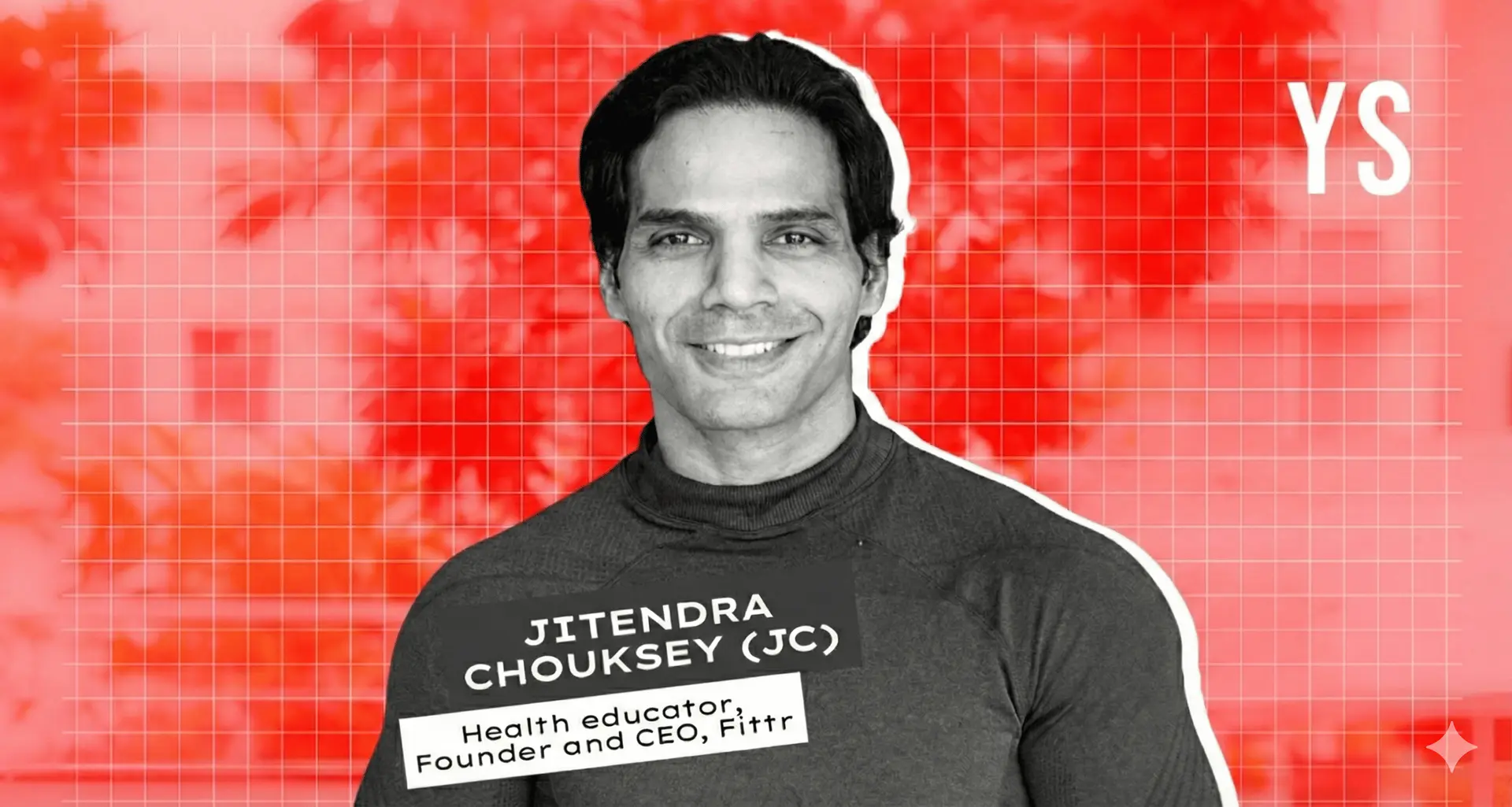
GLP-1 weight-loss drugs are a disaster waiting to unfold: Fittr CEO Jitendra Chouksey
India may be embracing GLP-1 weight-loss drugs, but healthtech startup Fittr is standing against the trend. With the launch of Fittr Labs, the company is betting on diagnostics, lifestyle intervention, and outcome-based care over quick-fix medication.


GLP-1 weight-loss drugs like Ozempic and Wegovy have gained immense popularity in recent times, fuelling a boom in clinics, telehealth startups, and even hospitals offering programmes for instant weight loss.
Diagnostic chains are launching weight-loss therapy divisions, hospitals are advertising specific GLP-1 programmes, and influencers are glamourising injectable treatments.
Jitendra Chouksey, CEO of Pune-based healthtech startup Fittr, is cautioning against this craze, calling it a “disaster waiting to unfold.”
GLP-1 (Glucagon-Like Peptide-1) is a class of drugs used to treat Type 2 diabetes by lowering blood sugar, which boosts insulin, slows digestion, and reduces appetite, leading to weight loss. It mimics the natural gut hormone, promoting satiety and a feeling of fullness.
At a time when global pharmaceutical giants are racing to expand manufacturing of the drug and Indian consumers are embracing it in metros and small towns alike, Fittr—an online platform which offers personalised fitness and nutrition plans from internationally certified coaches—is pushing a contrarian thesis: India doesn’t need more medication, it needs more movement.
The healthtech startup is “staying out” of this quick-fix trend, says Chouksey. Not because it cannot capitalise on it, but because it refuses to do so, he adds. “These drugs are dangerous, and the marketing hype is blurring ethical lines… Platforms are literally selling these drugs on sale. It’s irresponsible.”
Chouksey says India’s growing obsession with shortcut solutions is masking a deeper health crisis. Non-communicable diseases (NCD) already account for 63% of all deaths, and the country’s NCD burden is projected to hit $81.5 billion by 2030, a recent study by Tony Blair Institute for Climate studies showed.
However, the good news is lifestyle-linked conditions such as diabetes, hypertension, and cardiovascular disease, are largely reversible through structured movement, nutrition, and sleep, emphasises Chouksey.
And that is why Fittr is doubling down on its preventive care offering.
This month, the company launched Fittr Labs, a diagnostics-led chain that integrates advanced diagnostics, AI coaching, and wearables, including its fast-growing HART Ring, which tracks sleep, heart rate and other bodily functions. Under the model, doctors are paid upfront and given incentives only when a patient’s biomarkers improve.
The first centre of Fittr Labs has come up in Pune. In the coming months, more centres will be launched in Delhi, Bengaluru, Hyderabad and Chennai.
“These clinics will combine diagnostics, doctor consultations, nutrition coaching, and wearable tracking. It’s end-to-end,” says Chouksey in an interview with YourStory.
Edited excerpts from the interview…
YourStory (YS): You’ve been quite vocal about GLP-1 drugs. What worries you the most about these drugs?
Jitendra Chouksey (JC): I’ve been critical of these drugs, and I will continue to be. I’m against any sort of chronic medication. We’re repeating history, the same excitement existed during the opioid crisis. We have decades of longitudinal studies showing lifestyle beats metformin, SGLT2 inhibitors. These drugs are dangerous, and the marketing hype is blurring ethical lines.
YS: But the WHO has approved them. Doesn’t that address safety concerns?
JC: People say ‘WHO approved it’ but they ignore the message that comes with it: you must exercise, you must fix your lifestyle. Professionals prescribing these drugs rarely talk about lifestyle or nutrition—they simply say the drug is safe and people take it.
We train thousands of people. We know firsthand what they’re facing: arthritis, bladder issues, kidney problems, dryness, “Ozempic face,” “Ozempic feet.” Nobody wants to talk about it.
YS: How big is the dropout problem in India?
JC: The real-world dropout rate for GLP-1 drugs is 88%. Most people quit within two years. And when they quit, the side effects get worse. We’re looking at a disaster waiting to unfold.
YS: You even filed a complaint with the regulator. What happened to that?
JC: CDSO (Central Drugs Standard Control Organisation) hasn’t called back. Every time we ask, we’re told they’re working on it. The High Court gave three months; we’re in month six. Meanwhile, Australian regulators flagged suicidal tendencies and deaths. Where is our warning? Platforms here are literally selling these drugs on sale. It’s irresponsible.
YS: Given the demand, why not offer structured GLP-1 programmes through Fittr Labs?
JC: We made a conscious choice ten years ago not to build a supplements business. We’re taking the same stance today. Whether we stay in the business or go out of business, we’re not going to take risks with people. Our job is to reduce dependency on chronic medication, not add more of it.
YS: What pushed Fittr into Healthcare 3.0, a data-driven, personalised, and patient-centric model leveraging digital tools ?
JC: For years, people came to us with lifestyle conditions, diabetes, hypertension, and obesity. As they lost weight, many of those issues resolved. But doctors often drew a line and said, ‘This is our job. You can’t advise them.’ There was gatekeeping. Medicine and lifestyle weren’t working together. We realised we needed an ecosystem where doctors understand lifestyle intervention and community medicine.
YS: What makes your model different from traditional labs?
JC: We’ve banned referrals and commissions. Doctors don’t earn by prescribing more tests. They’re paid upfront and incentivised only when biomarkers improve. It’s outcome-based care, what healthcare should have been from day one.
YS: What services will Fittr Labs offer?
JC: Advanced diagnostics: DEXA scans, VO2 max, ECG, ultrasounds, spirometry, everything needed to evaluate metabolic and cardiovascular risk. These clinics will combine diagnostics, doctor consultations, nutrition coaching, and wearable tracking. It’s end-to-end.
YS: For whom is this meant?
JC: People who’ve been on chronic medication for 10–20 years without improvement. Not just older adults, young people are now rapidly affected by non-communicable diseases. We want to intervene early and gradually get them off medication.
YS: You’ve said India’s healthcare system is “rotting from the inside.” What do you mean by this?
JC: Incentives are wrong. Doctors operate in silos, labs operate in silos, and patients are left to figure things out. The system doesn’t fix problems, it manages them for life. There’s a shortage of doctors, maybe 1 per 6,000–7,000 people. Nobody has time for behavioural intervention. It needs a complete overhaul.
YS: How do you scale something this operationally heavy?
JC: We’re bringing in scientists and healthcare specialists in molecular biology, genomics, New product development, even experts from the Human Genome Project. We’re opening in five metros. This is a risk worth taking because the country needs it.
YS: What role will wearables play in this model?
JC: The HART Ring is seeing 300% year-on-year growth. It’s at Rs 18 crore ARR already. Wearables give us real-time behavioural and biomarker data. That’s essential for preventive care.
Edited by Swetha Kannan