



India is shaping global tech trends, not following them: Dr Jitendra Singh at IISF
With nearly 400 space start-ups, growing deep-tech talent, and new public governance models being replicated globally, India is entering a decisive phase of innovation-led economic growth. Dr Jitendra Singh urged youth to take risks and build sustainable enterprises.

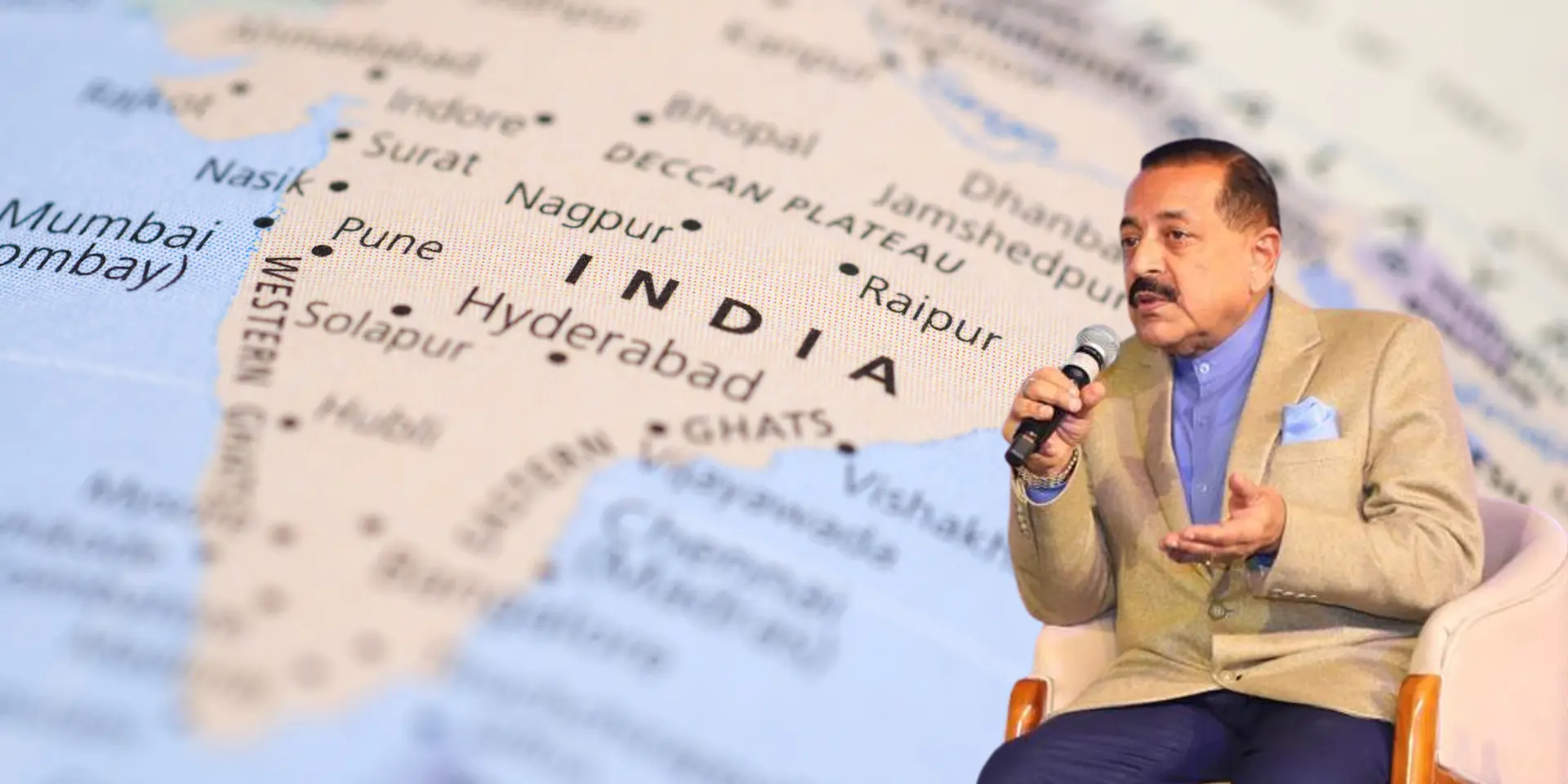

India has transitioned from a traditional economy to an innovation-driven powerhouse and is now shaping global technology trends instead of merely following them, Union Minister of State (Independent Charge) for Science and Technology Dr Jitendra Singh said at the India International Science Festival (IISF) underway in Panchkula.
Speaking during a Fireside Chat at the four-day festival, Dr Singh said that the last decade has fundamentally transformed India’s scientific temperament, policy landscape, and governance approach. “India’s economic growth is clearly powered by science, technology, research and innovation,” he said, adding that international audiences increasingly view India as a creator of new models in governance, public service delivery, and technology-led development.
Deep-tech, space and nuclear sectors take centre stage
A significant highlight of his address was the announcement of a new national R&D fund aimed at catalysing high-risk, high-impact innovation. The fund will support sectors traditionally out of reach for private enterprise including space and nuclear energy by providing long-duration, low-interest financial support to help companies scale.
Describing it as a “catalytic push,” Dr Singh said the initiative would enable India’s industry to develop long-term innovation capabilities and strengthen the nation’s deep-tech ecosystem.
He traced India’s dramatic shift in the space sector from limited access to launch facilities to a flourishing ecosystem of nearly 400 space start-ups now recognised globally. This transformation, he noted, has gone beyond rocket launches to applying space technologies in agriculture, healthcare, disaster management and access to drinking water.
A similar change, he said, is underway in nuclear science, where innovations are visible in cancer care services, water purification systems, and other citizen-centric applications, demonstrating how strategic technologies are improving everyday life.
Changing global perception and democratisation of opportunity
On India’s rising global stature, Dr Singh said that young Indians today enjoy far greater credibility abroad than previous generations. Delegations from several countries now visit India to learn from its grievance redressal systems, senior-citizen digital services, and public delivery platforms an indicator of the country’s emergence as a creator of best practices.
He attributed India’s renewed confidence to a cultural shift in governance emphasising accountability, responsiveness and inclusive delivery. Schemes like Pradhan Mantri Awas Yojana and Ujjwala Yojana, he said, have rebuilt trust between the state and citizens by ensuring benefits reach without discrimination.
Digital access and connectivity, he added, have enabled youth from small towns and rural districts to compete on equal footing with urban counterparts. The changing profile of UPSC toppers from regions such as Poonch to districts in the Punjab-Haryana belt illustrates a surge of aspiration from “Bharat,” which he described as one of India’s most powerful assets.
Innovation must translate to sustainable enterprise
Dr Singh said that India’s innovation journey should be measured not just in ideas but in sustainability and market viability. Innovation, he noted, must deliver dignity, financial security and social equality.
He highlighted the rise of profitable agri-start-ups including lavender-based businesses founded by former corporate professionals as examples of meaningful and economically successful innovation emerging from non-metro India.
India aims for lunar milestone and AI-driven transformation
Looking ahead, the Minister predicted that India would continue to surprise the world in space science, including the possibility of an Indian setting foot on the Moon within the next 15 to 20 years. Artificial intelligence, he said, would rapidly reshape everyday life if deployed responsibly.
His message to young innovators was clear: take risks, build industry partnerships, and leverage the government’s growing support and infrastructure for innovation.
Addressing participants at IISF, Dr Singh said forums such as these fuel curiosity, reinforce confidence and showcase India’s readiness to lead global scientific networks. He concluded that India today stands in one of its strongest positions in recent history, with the coming decade belonging to those who combine imagination with national purpose.