



Instant-fashion startup KNOT secures $5M fresh capital for city expansion
The round also saw repeat participation from early backers Kae Capital and Boundless Ventures, both doubling down as KNOT accelerates expansion beyond Mumbai.

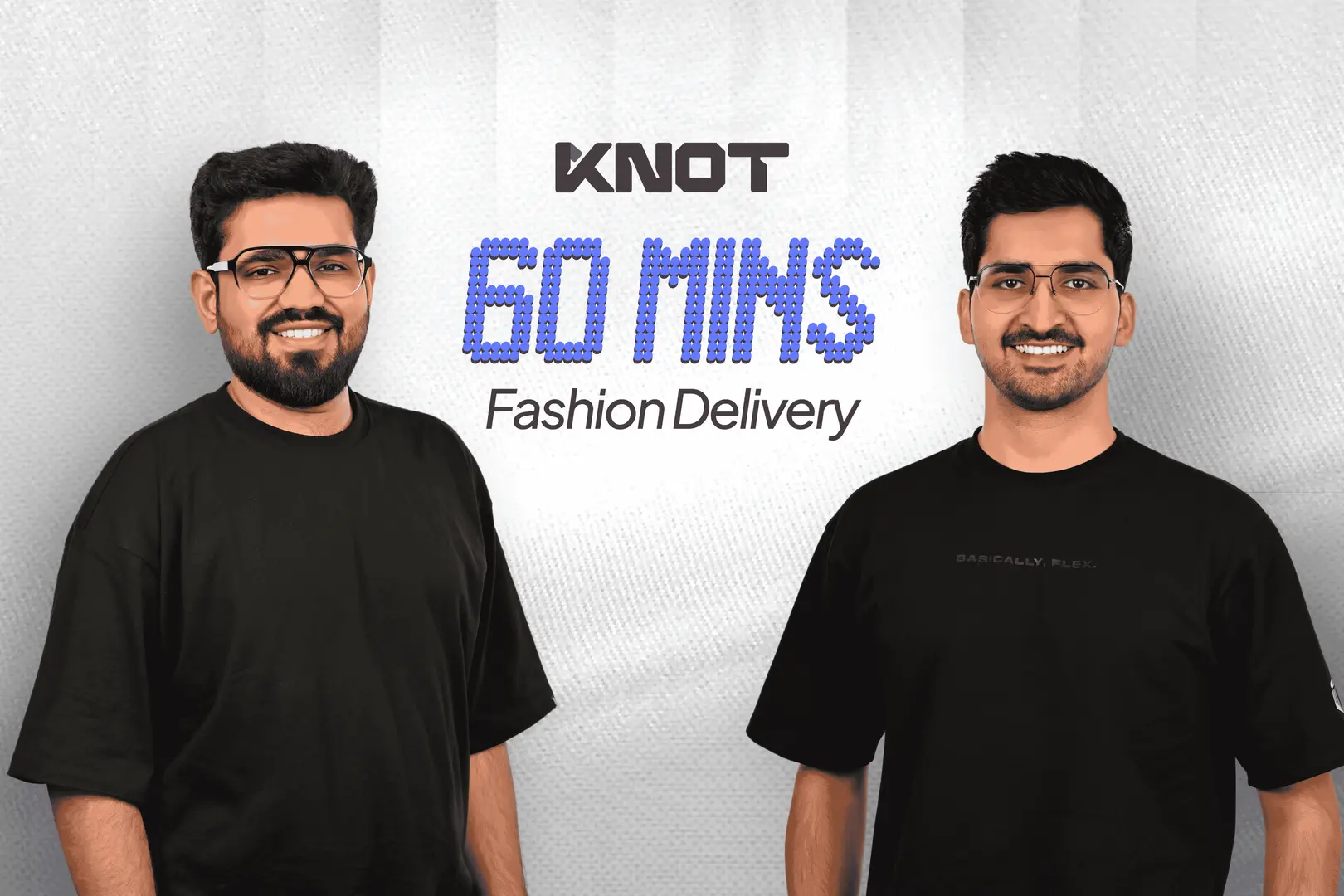

KNOT, a Mumbai-based fashion startup, on Wednesday said it raised $5 million in a funding round led by consumer-focused investor 12 Flags. The investment comes three months after KNOT's previous round, signalling strong investor appetite for a niche but fast-growing category: ultra-fast fashion delivery.
The round also saw repeat participation from early backers Kae Capital and Boundless Ventures, both doubling down as the company accelerates expansion beyond Mumbai.
Founded in 2025 by IIT Bombay graduates Archit Nanda and Rachit Bansal, KNOT is an instant-fashion engine for Gen Z and millennials, a generation accustomed to mood-based shopping and creator-led trends. The platform promises delivery within 60 minutes, virtual try-ons, and a “Try ‘n Buy” doorstep trial model that blends online convenience with offline familiarity.
“For us, the real opportunity lies at the intersection of culture and commerce,” said Founder and CEO Archit Nanda. “Fashion is no longer about catalogue browsing; it’s shaped by creators, micro-trends, and a desire for immediacy. This round gives us fuel to scale that experience across more cities.”
Investors said the company is tapping into a structural shift in consumer expectations when traditional online fashion platforms still operate on multi-day delivery windows. It targets young shoppers seeking speed, personalisation, and low-friction buying experiences, and who increasingly expect on-demand commerce to extend beyond essentials.
“The speed of cultural change is outpacing the speed of retail,” said Rakesh Kapoor, Founder of 12 Flags, and former Global CEO of Reckitt Benckiser. “Young shoppers want style that matches the moment. KNOT is building for millions of such daily occasions.”
The company said its order volumes have tripled in the past three months, reaching more than 350 orders a day. It will use the fresh capital to deepen its micro-warehousing footprint, improve routing and last-mile logistics, and onboard more premium brands. It is already integrating labels, including Jack & Jones, Vero Moda, Van Heusen, Louis Philippe, and Allen Solly.
Boundless Ventures, another returning investor, said the bet is less about rapid delivery and more about infrastructure. “KNOT is rebuilding the operating layer for how the next generation discovers, tries, and buys,” said Founder Natasha Malpani. She pointed to the startup’s work in fit intelligence and AI-powered discovery as differentiators in a crowded online fashion market.
KNOT’s push comes when the Indian ecommerce sector is splintering into faster, more specialised verticals, from 10-minute groceries to rapid electronics and now fashion. Yet unlike grocery delivery, where replenishment is frequent, fashion’s demand cycles are more erratic and trend-driven, creating operational challenges around fulfilment and inventory.
KNOT aims to expand beyond Mumbai in the coming months as it builds what it calls the “operating system of instant fashion.”
A handful of startups have begun raising capital to build a 60-minute fashion-delivery category in India, a niche that sits at the intersection of quick commerce and fast fashion. Bengaluru-based Slikk—one of the earliest entrants—raised about $10 million from Nexus Venture Partners to scale its hyperlocal dark store network and serve time-sensitive fashion needs.
New Delhi–based ZILO followed with a $4.5 million seed round, pitching itself as a “fashion in an hour” platform aimed squarely at Gen-Z shoppers. Fast-growing D2C brand NEWME also entered the race with its 60-minute delivery service, NEWME Zip, backed by its recent $20 million funding round (2024).
While NEWME isn’t a pure-play rapid-fashion startup, its expansion into dark stores signals how larger D2C labels are testing rapid fulfilment to boost conversion and loyalty.
The funding momentum reflects a broader shift in India’s retail landscape: young shoppers increasingly expect instant availability, curated assortments, and low-friction returns. But building this model at scale is operationally complex, as fashion involves more SKUs, higher return rates, and the need for fit certainty, which is why only a small number of funded startups are currently pursuing the 60-minute promise.
Edited by Suman Singh