




Bayer
View Brand PublisherThe women of Naidupeta: How a farmer collective is redefining rural entrepreneurship in Andhra Pradesh
They once worked unseen in the fields, now they lead one of Andhra Pradesh’s fastest-growing farm collectives. Supported by Bayer CropScience Limited and SFAC, the Naidupeta BRDS FPO is redefining rural leadership.

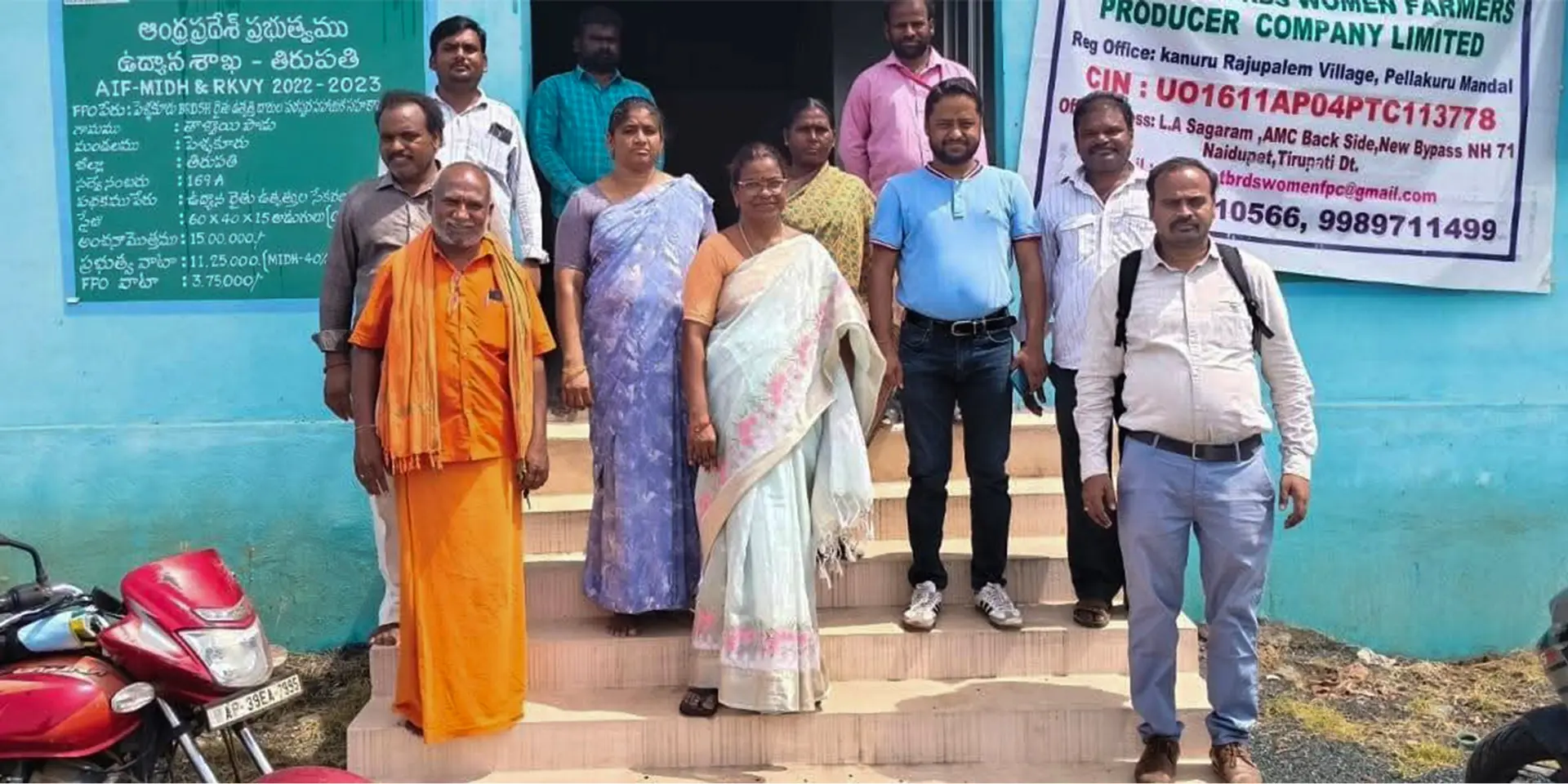

For years, women in Naidupeta, Andhra Pradesh, worked the fields without recognition or decision-making power. That changed when they came together to form their own Farmer Producer Organisation (FPO), and began running it like a business.
Today, the Naidupeta BRDS Women Farmers Producer Company Ltd. is one of the fastest-growing women-led collectives in the region. What began as a small group pooling resources and experience has grown into a 750-member enterprise with a turnover of ₹60 lakh. The organisation is supported by Bayer CropScience Limited, in collaboration with the Small Farmers’ Agribusiness Consortium (SFAC) under the Ministry of Agriculture, as part of a broader effort to help women farmers strengthen their value chains and become self-sustaining.
From dependence to decision-making
Most of these women had spent years supporting their husbands in farming without ever having control over the income. The FPO gave them a platform to build financial independence and make decisions about their work.
“Before, I always depended on others,” shared Shailaja, one of the directors. “After joining the FPO, I realised I could earn on my own, represent myself, and support my children’s education. I’ve also started helping other women around me to do the same.”
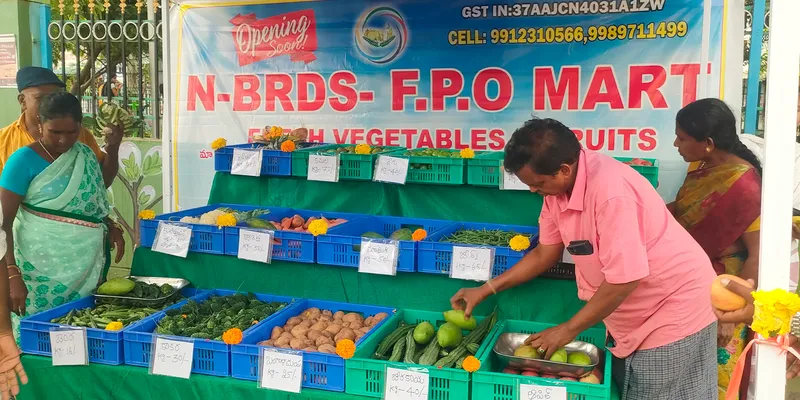
Today, the collective cultivates 12 crops including tomatoes, green chillies, gourds, and leafy vegetables, and has expanded its operations to retail stalls in nearby towns, allowing women to sell directly to consumers and secure fairer prices.
Training that unlocked confidence
The Naidupeta FPO is among 371 Farmer Producer Organisations formed and supported under the SFAC–Bayer collaboration, a public-private partnership (PPP) to strengthen farmer collectives across 20 states. Beyond this initiative, Bayer’s wider engagement with FPOs spans the entire country, supporting thousands of groups in building end-to-end value chains, market linkages, and business capabilities that allow farmer groups to operate as viable enterprises.
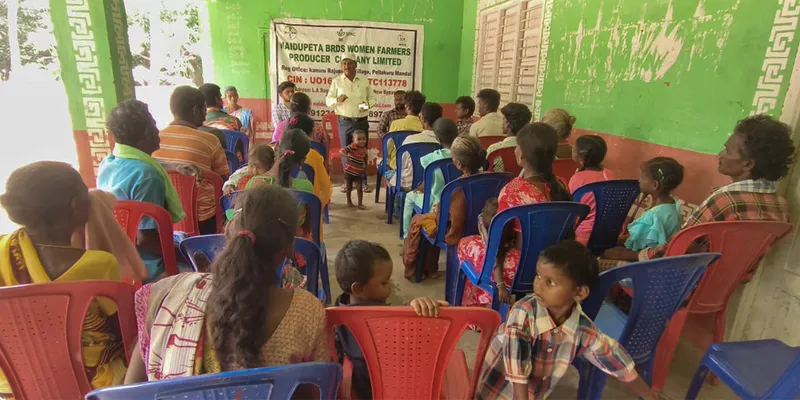
As part of this programme, the Naidupeta women received structured training in financial management, record-keeping, governance, and business operations. With Bayer’s technical guidance, the FPO secured crucial certifications including GST registration and seed, crop protection and crop nutrition licenses, enabling them to begin input trading and diversify revenue.
Financial grants facilitated through SFAC, combined with Bayer’s handholding support, strengthened the FPO’s early working capital and infrastructure, helping the women transition from farm workers to entrepreneurs running a formal collective.
Support that started with trust
The Naidupeta FPO took shape after mobilisation efforts under the SFAC–Bayer partnership identified potential women leaders in the village. Outreach teams spent time with the community to explain how an FPO could help women farmers gain independence, access markets, and make collective decisions.
“The team met us and explained how an FPO could help women farmers become independent,” Shailaja recalled. “We discussed it with our families, and they supported us. We saw success stories from other states and realised we could also build something like that here.”
That support created space for change. “Earlier, we just helped in the fields. Now our families see us as businesswomen,” said Bhuvaneshwari, another director. “We’ve created jobs for others, from women who work in sorting and grading to those managing our stalls.”
A platform for exposure and learning
The collective has showcased its produce at agriculture exhibitions and trade fairs in Tirupati, Pondicherry, and Vijayawada, opening new market opportunities and building confidence.
During these exhibitions, several FPOs have recorded sales of Rs 2-5 lakh. For the Naidupeta women, the exposure mattered even more than the earnings.
“We used to be shy to speak in public,” said Bhuvaneshwari. “Now, we attend exhibitions, meet buyers, and talk about our products with confidence.”
These platforms also enabled the women to list their products on digital marketplaces like ONDC, expanding their reach beyond their district.
Creating livelihoods beyond farming
Alongside vegetable cultivation, the FPO has diversified into household product manufacturing, including soaps, detergents, and phenyls – all produced by women from the community and sold locally. This diversification creates income opportunities for women who may not be directly involved in farming.
The FPO also plans to open a Common Service Centre (CSC), which will offer digital and financial services and create additional employment within the village.
Bayer’s approach to collectivisation emphasises not just income generation but the confidence it brings to women. And when women lead, the impact extends far beyond the fields — strengthening families, communities, and the next generation.
Part of a growing national network
The Naidupeta FPO is part of a much larger national effort. Across India, the FPO network built under the SFAC-Bayer collaboration brings together over 68,000 shareholder farmers. A significant portion of these groups have women in leadership roles, managing everything from input supply to output aggregation.
The broader programme focuses on helping FPOs become profitable and self-sustaining before scaling further, building strong local models that other communities can learn from.
A new identity for women in agriculture
For the women of Naidupeta, the FPO has become a source of identity as much as income.
“We feel proud when people from nearby villages come to learn from us,” said Bhuvaneswari. “We know our work has value now.”
SFAC has transformed collectivisation efforts in Indian agriculture into a dynamic model of entrepreneurship and an important driver of women’s empowerment in agriculture. Corporates like Bayer are vital to growing this ecosystem and advancing the vision of collectivization forward.
With continued mentorship and market access, the Naidupeta FPO is preparing to expand its direct-to-consumer model and strengthen value chains for perishable crops.
The Naidupeta FPO may be one story among hundreds, but it reflects something much larger: what becomes possible when women stop waiting for change and start leading it.