



Nexus Power: Reinventing Battery Tech with Bio-Organic, Lithium-Free Innovation
Nexus Power is building biodegradable batteries from crop waste to power EVs, reduce pollution, and replace lithium-based cells.

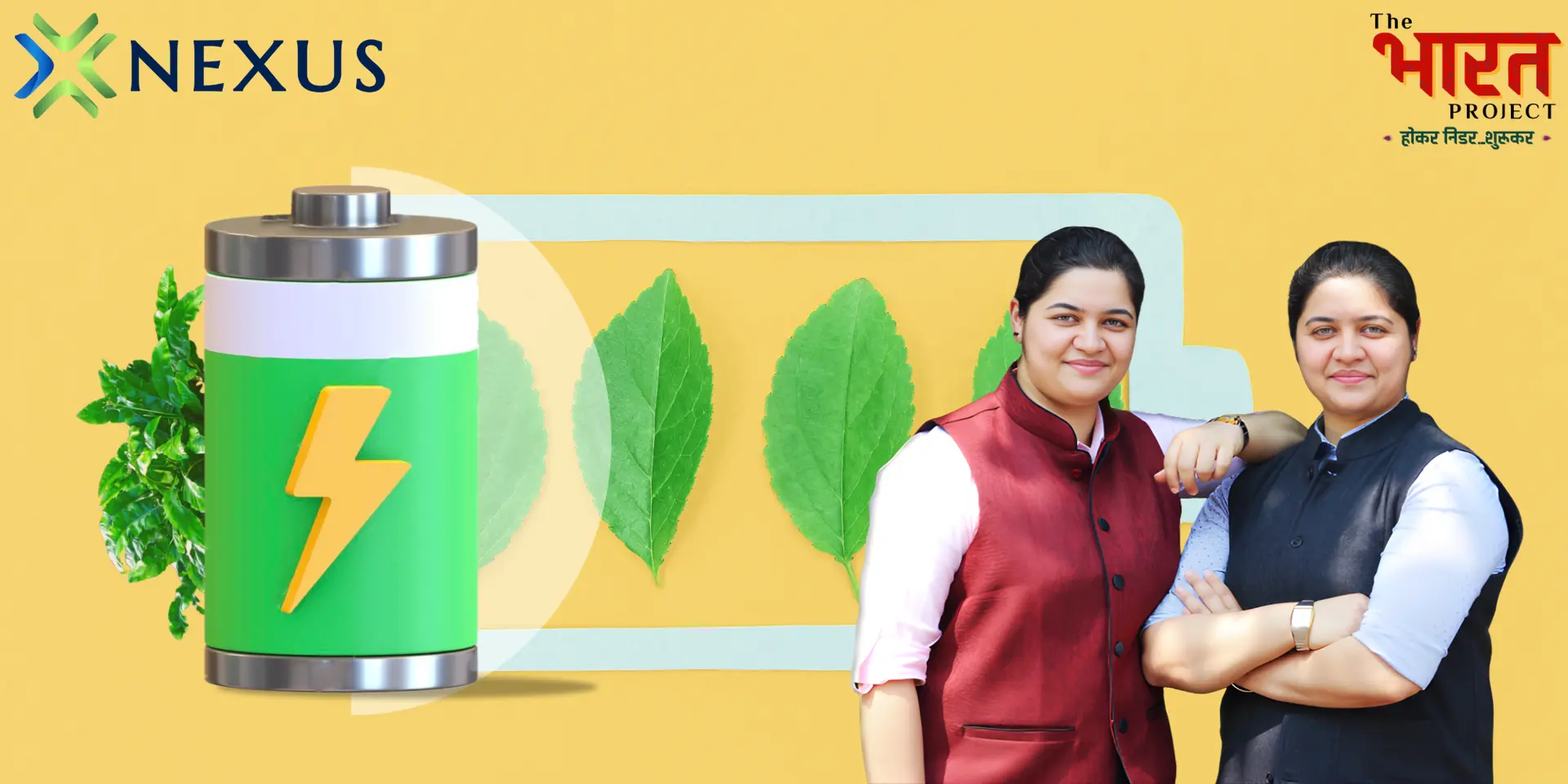

What if the future of electric vehicles didn’t rely on lithium, but on farm waste?
In a world shifting rapidly to electric mobility, one Indian startup is tackling a core issue sustainable, safe, and scalable energy storage. Based in Bhubaneswar, Nexus Power is replacing lithium with agricultural residue to develop rechargeable, biodegradable batteries.
These batteries are not just eco-friendly but also cost-effective and efficient. Founded in 2020 by twin sisters Nishita and Nikita Baliarsingh, Nexus is challenging the norms of the global battery industry, starting from India.
A clean energy vision born on a terrace
The idea behind Nexus Power came during a college night conversation. Both sisters were drawn to entrepreneurship from a young age. Their parents were business owners, and they grew up understanding both the highs and lows of running a company.
Nishita studied battery thermal management and hybrid vehicle design at IIT Kharagpur and IIM Bangalore. Nikita trained in nanomaterials for energy storage at IIT Roorkee and innovation strategy at IIM Bangalore. While studying, they began building the proof of concept for what would become a lithium-free, crop waste-based battery.
Fresh out of college, they were determined to take on the lithium-dominated market with a more sustainable and accessible solution.
Turning crop waste into power
Nexus uses a proprietary extraction and filtration process to convert unburnt crop residue into nano crystal-based battery cells. These are then used to make battery packs for EVs, energy storage systems, drones, and electronics.
The batteries charge faster, offer higher energy density, and cost 30 to 40% less than lithium-ion options. They are fully biodegradable, leaving no toxic residue at the end of their life cycle. All this makes them a viable and cleaner substitute for today’s mainstream battery solutions.
Building a mission-driven team
The team at Nexus includes 25 professionals with expertise in materials science, engineering, and business strategy. Nishita leads the company’s vision and operations as CEO. Nikita heads innovation and product development.
Hiring at Nexus focuses on more than skill. The team looks for passion, alignment with the mission, and strong teamwork. Each person contributes across functions, creating a collaborative and agile environment.
Their early challenges, like hiring during the pandemic, taught them valuable lessons. As the founders note, managing people is as critical as building products.
Institutional support and recognition
Nexus has been backed by key national incubators, including KIIT-TBI, BITS PIEDS, and IIM Udaipur. These organisations provided funding, mentorship, lab access, and industry connections.
The startup has been recognised widely, with features in Forbes 30 Under 30, India EV Awards, and TEDx, and support from the Department of Biotechnology and Startup India, among others.
Key achievements so far include:
- 30,000+ charge-discharge cycles completed
- 12 battery prototypes built and tested
- 50+ patents and IP applications filed
- 1,200 battery cells tested, yielding 7,920 kWh
- Over 2% of India’s carbon emissions offset between 2020 and 2024
Target market and scalability
Nexus Power targets EV manufacturers, energy storage developers, and electronics and drone makers. India’s battery market is set to double from $7.2 billion in 2024 to $14.9 billion by 2033. Globally, the battery market is projected to grow to $680 billion by 2034.
Nexus is pre-revenue and plans to commercialise by 2026. Its batteries are priced 30 to 40% below lithium-based alternatives, with no compromise on performance. The model is scalable due to its use of abundant crop waste and minimal retooling needs at the manufacturing end.
Overcoming barriers with focused execution
Bringing a new battery chemistry to market has hurdles. Regulatory approvals like BIS, AIS, and IEC take time. Scaling up pilot manufacturing and validating performance in real-world use are top priorities. Hardware development requires patience and consistency. As Nishita shares, one of the most important lessons has been emotional balance.
Whether a day is good or bad, the founder must stay steady. Teams look to their leaders for calm and confidence. Just as critical is staying organised. “Be meticulous with your paperwork from day one,” she says. It helps during funding, growth, and due diligence.
Measurable social and environmental impact
Nexus has already upcycled 35 tonnes of crop waste, engaged over 300 farmers, and generated Rs 4.5 lakh in direct rural income. By 2028, they aim to scale production to 2,80,000 kWh, create 170 jobs, and prevent thousands of tonnes of crop burning and CO₂ emissions.
Plans to scale and expand
By 2026, Nexus plans to launch its first battery packs for two- and three-wheeler EVs and BESS systems. Following that, the company will expand to batteries for four-wheelers, commercial vehicles, drones, and consumer electronics.
They also plan to produce ethanol as a co-product during battery manufacturing. This ethanol will be used in the oil, pharma, and alcohol industries, supporting circular economy goals.