



Maharajganj Youth Builds a Sustainable Nursery Business from Family Land in Nichlaul
A young founder from Bedwali Gram Sabha outlines how his small nursery raises fruit and forest saplings for farmers and local institutions

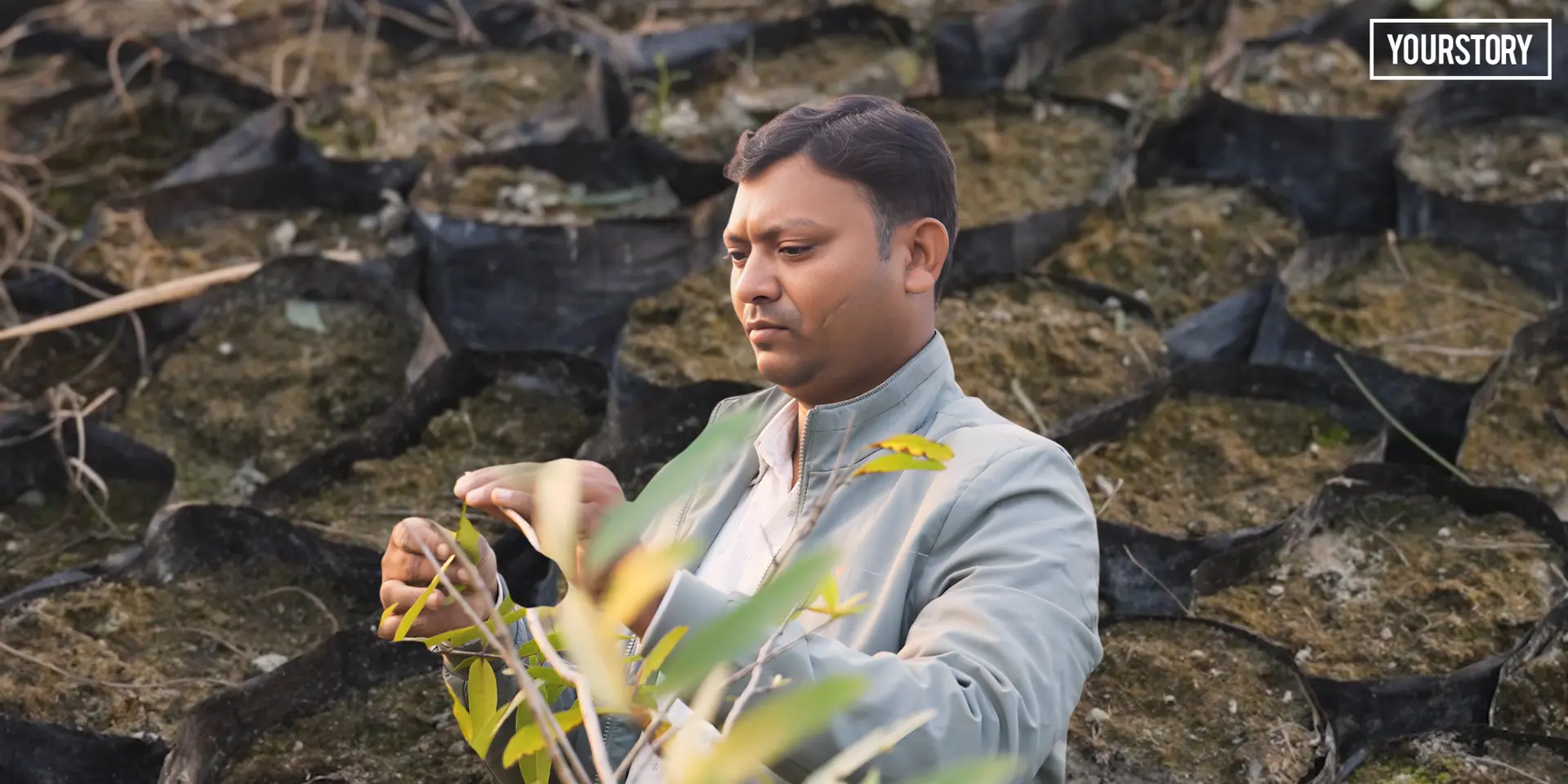

In Bedwali Gram Sabha near the town of Nichlaul (Maharajganj, Uttar Pradesh), a young nursery founder is turning a simple village plot into a steady pipeline of saplings for farmers and local institutions.
Sonu, who introduces himself plainly as a nursery worker and entrepreneur, says his team grows plants from seed to sale, supplying hardy saplings that can anchor orchards, kitchen gardens and roadside plantations.
The enterprise aims to balance livelihood with environmental responsibility, a priority that Sonu describes as making the area green and clean while creating work for youth.
Building a nursery as a business
According to Sonu, the nursery began as a hands-on effort on family land, using basic tools, seed trays and polybags. Over time, the unit took a more organised shape, supported by awareness of state-backed entrepreneurship initiatives such as the Chief Minister’s Yuva Udyami Vikas Abhiyan (CM YUVA), which is designed to encourage young people to start micro and small enterprises at the village level.
Today it functions as a small but organised unit that prepares plant material, raises it through early growth stages and dispatches it once the roots are strong enough to survive transplantation.
The founder says the operation draws buyers from nearby markets and from farmers looking to diversify into fruit trees. He positions the work as both a business and a community service that improves local green cover.
How did the nursery idea take root
Sonu recalls that the idea gathered momentum over roughly four years. He and his colleagues sourced seed from shops and seed markets, prepared nursery beds, and kept refining processes. Once the seedlings were established, they shifted them into polybags, nurtured them until they were robust, then offered them to customers.
The approach, he explains, keeps the pipeline moving from sowing to hardening to sale. He adds that orders typically come from individual farmers as well as institutions that require batches for plantation drives and agroforestry plots.
What grows in the nursery
The catalogue spans fruit and forest species. On the fruit side, Sonu lists guava, amla and mango. Among forest and avenue trees, the nursery raises cadamba, commonly known as kadam, and other hardy saplings suited to local conditions.
Grafting is a routine practice for mango and certain other fruit trees, which, as he notes, helps combine desired traits and shorten the time to bearing.
The team pays attention to potting mix, watering schedules and shade management so that plants leave the nursery resilient and ready for field conditions.
From sapling to sale
Once plants reach the target size and root strength, the nursery supplies them to farmers, traders and, at times, to organisations planning community plantations.
Transactions are straightforward, according to Sonu, with buyers selecting varieties and quantities based on seasonal needs. The sales cycle often aligns with monsoon and post-monsoon windows when transplant survival improves, and when smallholders look to expand orchards or replace losses.
Why the environment is central
Sonu repeatedly frames the nursery as a youth-led response to environmental concerns. The stated aim is to improve the local environment, keep neighbourhoods green and clean, and contribute to community well-being.
The work also creates a modest income stream, which the founder argues makes ecological action more sustainable for young people.
In his telling, every batch that leaves the nursery is both a unit of livelihood and a unit of green cover, a practical model of climate-conscious enterprise rooted in a village context.
What is CM YUVA Scheme?
Under the leadership of Hon’ble Chief Minister of Uttar Pradesh, Yogi Adityanath Ji, the state government aims to transform youth from job seekers into job creators.
To achieve this vision, the Directorate of Industries and Enterprise Promotion, under the Department of Micro, Small & Medium Enterprises and Export Promotion, is implementing the ‘Mukhyamantri Yuva Udyami Vikas Abhiyan’ (CM YUVA) Yojana.
Under this scheme, young entrepreneurs are provided with up to Rs 5 lakh in 100% interest-free and collateral-free loans to start their industrial or service-based ventures. In addition, beneficiaries also receive a 10% margin money subsidy on the project cost.
CM YUVA is not just a financial assistance scheme; it also provides mentorship, guidance, market access, and essential resources to help youth become self-reliant entrepreneurs and generate employment opportunities for others.
Click here to know more about the CM YUVA Scheme.