


1575367080560.png?format=auto&w=1920&q=75)
Flipkart
View Brand PublisherCredit is now a primary growth lever: Flipkart Wholesale on the future of B2B commerce
India’s kirana supply chain is undergoing a structural shift as digital B2B platforms reshape how retailers buy inventory. Dinkar Ayilavarapu, Vice President and Head of Flipkart Wholesale explains why credit, localization, and wider assortment are becoming the new growth levers.

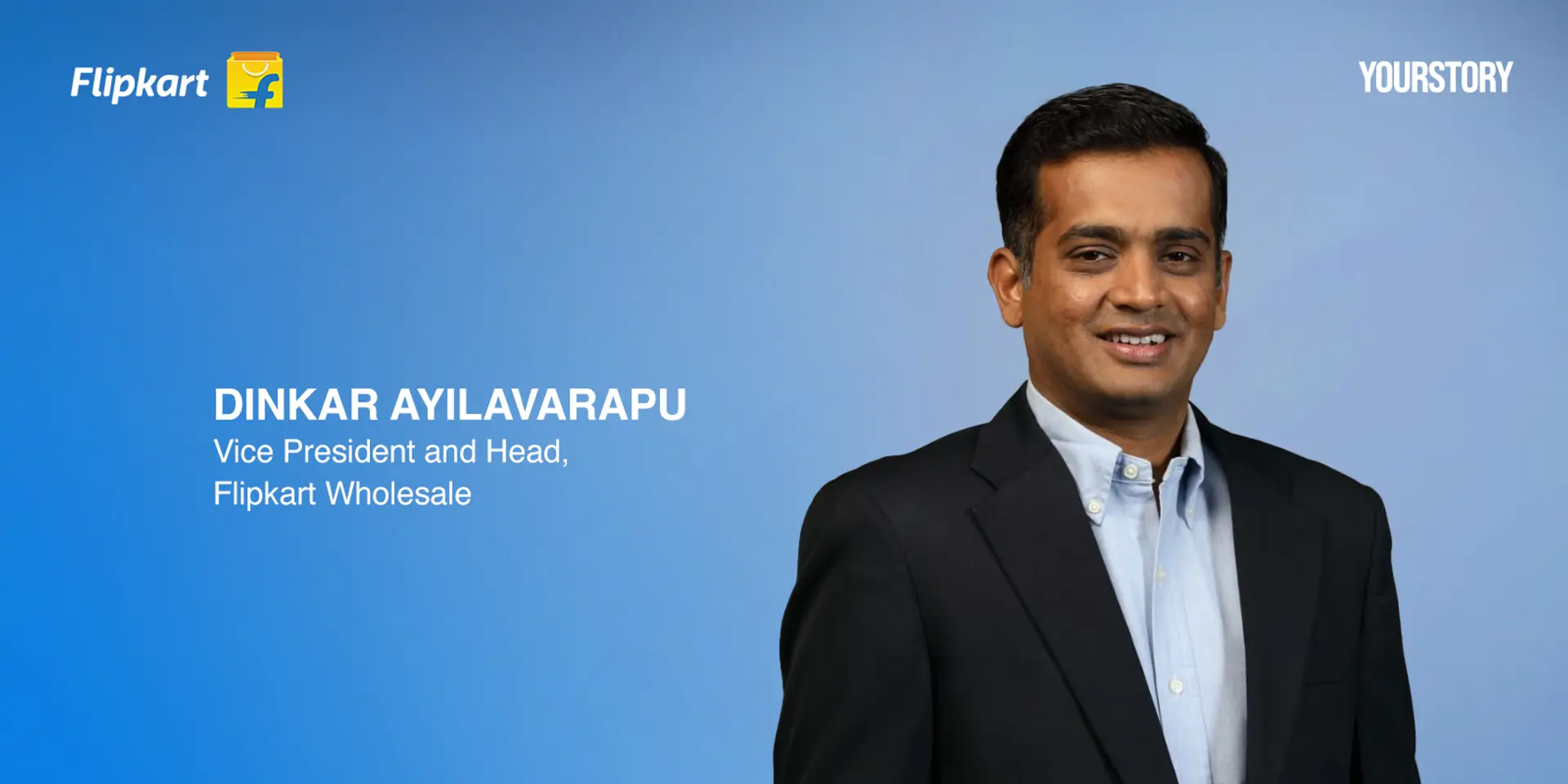

For most of its existence, the kirana store has sourced inventory the same way — through a local distributor, a mandi, or a trusted wholesaler down the road. The system worked well enough, even if it was opaque, fragmented, and heavily dependent on personal relationships. Digital B2B commerce has spent the last several years offering an alternative, and that alternative has now begun to look less like a challenger and more like the default.
Recent years have seen consolidation among mid-scale players, credit deepening from a fringe feature into a primary driver of kirana buying behaviour, and a gradual but clear shift in what kiranas actually want from a wholesale platform, not just availability of top SKUs, but full-range assortment across categories. Recent GST reforms added fuel, delivering volume growth that has carried into the new year. Traditional distributors, meanwhile, have found themselves increasingly squeezed on both assortment and pricing.
Dinkar Ayilavarapu, Vice President and Head of Flipkart Wholesale has been watching these shifts play out up close. We spoke with him about what the sector got right, where the pressure points remain, and what kiranas, platforms, and distributors should expect in the months ahead.
Edited excerpts:
The past year has been described as one of consolidation for B2B ecommerce. From where you sit at Flipkart Wholesale, what actually moved the needle?
Year-end reviews of B2B commerce tend to gravitate toward scale. But the more telling shifts were behavioral in terms of how kiranas bought, how distributors coped with structural pressures, and how digital wholesalers recalibrated their operating models. Three themes defined the period: the move toward localized supply chains, credit becoming a serious growth lever, and kiranas graduating from availability-driven buying to range-driven buying. These aren’t isolated trends. They reinforce each other, and they now form the baseline going forward.
Let’s start with localization. Why did supply chain geography suddenly matter so much more?
The economics are quite straightforward. Unlike consumer ecommerce where long-haul movement is routine, B2B relies on short hops and a close link between supply nodes and neighbourhood kiranas. Every scaled player moved in this direction because the logic is simple - the longer the product travels, the higher the logistics cost. In a highly price-sensitive kirana universe, adding cost isn’t prudent or viable. What’s interesting is that even as B2C ecommerce pivoted hard on speed of delivery, nothing discernible happened on that front in B2B. Faster delivery will be a key need going forward, but it requires the entire working capital cycle to adjust first. That recalibration is starting to play out now.
Credit has been a talking point in B2B commerce for years. What changed recently?
It moved from being a support feature to a primary lever. Most organised players widened access to credit and introduced stricter risk filters alongside. The broader base of eligible retailers, combined with higher adoption of closed-loop credit, created steady throughput particularly for staples and processed foods. In some ecosystems, every retailer is now whitelisted — credit shaped repeat purchases, ticket sizes, and category expansion throughout. This depth will only increase going forward. When credit is table stakes rather than a differentiator, the competition shifts to how intelligently you deploy it.
Kiranas are now moving toward 'range-driven buying'. That's a significant behavioral change – what's driving it?
A kirana can find its fastest-moving SKUs through several channels. What pushed them toward digital wholesale platforms was the long tail — small pack sizes, region-specific variants, niche staples. The platforms that could offer full assortment across personal care, home care, processed foods, and core FMCG were the ones that won disproportionate share. This changed how discovery journeys were designed too. Kiranas increasingly started treating digital wholesale apps as category managers, not just order-capture tools. Traditional distributors are structurally disadvantaged here. A distributor tied to a single principal has many other advantages, but they cannot match a digital wholesaler’s assortment. With multiple market sources for top items, pricing pressure also increased. Loss of exclusivity on key SKUs and an inability to widen range made it harder for them to retain kiranas accustomed to one-stop procurement.
Is the GST tailwind you anticipated actually materializing?
The data is quite clear. October and November 2025 delivered year-on-year volume jumps even for mature players, and that momentum is likely to continue in the first half of 2026. The GST reforms visibly lifted consumption, particularly in processed foods and home care – two of the strongest performing categories. So yes, the tailwind is real.
What about categories that struggled? Staples had a difficult year.
Staples, particularly pulses, went through a genuine down cycle over the past 12 months — driven by commodity price pressures and erratic supply dynamics. But we’re now expecting a correction. Pulses should start seeing revenue growth, and that’s true of several other categories in the staples basket. It won’t be explosive, but it should be a steadier, more predictable climb. Grocery overall remains the anchor for digital B2B commerce — it’s the engine that sets the rhythm of platform activity. Its high repeat cycles also make it the natural test bed for new levers like loyalty.
Loyalty mechanics in B2B; that sounds counterintuitive. Kiranas are rational buyers, aren't they?
They are rational, but that's exactly why loyalty works differently in B2B. A kirana buying for resale, not personal use, can scale purchases many times over if they see even a small gain in value. That dramatically raises the return on loyalty-led incentives compared to consumer programmes. Loyalty has traditionally been a consumer internet construct. B2B platforms are discovering it can be just as effective, possibly more so, when you design it around the economics of a resale business rather than personal gratification.
AI is moving from proof-of-concept to operational use. Where specifically has it landed?
Two areas where it moved fastest: fraud detection and pricing. On fraud, large-scale data ingestion into models allowed to detect patterns that manual review simply can't catch at volume. On pricing, there has been a shift from manual judgement calls to automated signals aggregated from field force inputs, customer app behaviour, store performance, and competitor data sets. The next phase is going to focus on inventory ordering, replenishment automation, and transport fraud checks. With thousands of daily transactions across mixed channels, automated workflows are rapidly becoming central to how B2B commerce actually runs, not aspirationally, but operationally.
Personalization in B2B sounds like a harder problem than in consumer — kiranas serve very diverse shopper profiles.
Much harder, yes. A kirana aggregates a wide variety of consumer types, which makes their own persona feel idiosyncratic at times. But early results from personalized assortments on B2B apps are promising. The logic combines a retailer's past purchase history, the buying patterns of nearby kiranas, and the fastest-moving SKUs in that geography. It gives retailers a view of peer trends alongside regional velocity. For omnichannel players, digital signals are already beginning to inform store-level personalization.
Finally, omnichannel keeps coming up as the winning model. Is online-only genuinely struggling?
The evidence is fairly consistent. Kiranas that buy across both store and app channels buy more frequently and more widely. A physical store is the fastest way to trigger range expansion — there’s something about walking through an assortment that drives discovery in a way that an app screen still doesn’t replicate fully. Online is the most convenient channel for low-friction top-ups. A blend of both creates stronger habits and higher lifetime value. Online-only models struggle to replicate the depth of a store basket. Store-only models can’t offer the ease of frequent restocking. The most efficient kiranas use both channels deliberately. That’s the pattern we expect to accelerate sharply from here.
B2B mobile apps must balance brand-led discovery with SKU-led discovery, since kiranas often think in terms of brand collections while categories like utensils are entirely SKU-based. Most apps lean on brand-first layouts with deal-centric framing borrowed from the consumer internet. Finding the right balance will be a priority this year.
Additionally, the push to become the lowest cost operator will intensify. Facility costs, picking and packing, and logistics form the bulk of the cost structure. Some fleets have begun using electric vehicles to keep cost per kilometre low while meeting sustainability expectations. B2B commerce has entered 2026 with steady demand, better price conditions in staples, stronger credit penetration, and greater acceptance of omnichannel buying. The year is set to build on the late momentum of 2025, with the sector moving closer to stable, predictable, and range-heavy kirana buying at scale.