


In Farrukhabad district, a small printing unit finds its footing in local markets
A newly launched manufacturing unit in Farrukhabad district is supplying printed carry bags to garment, footwear and agri shops, gradually building a steady local customer base.

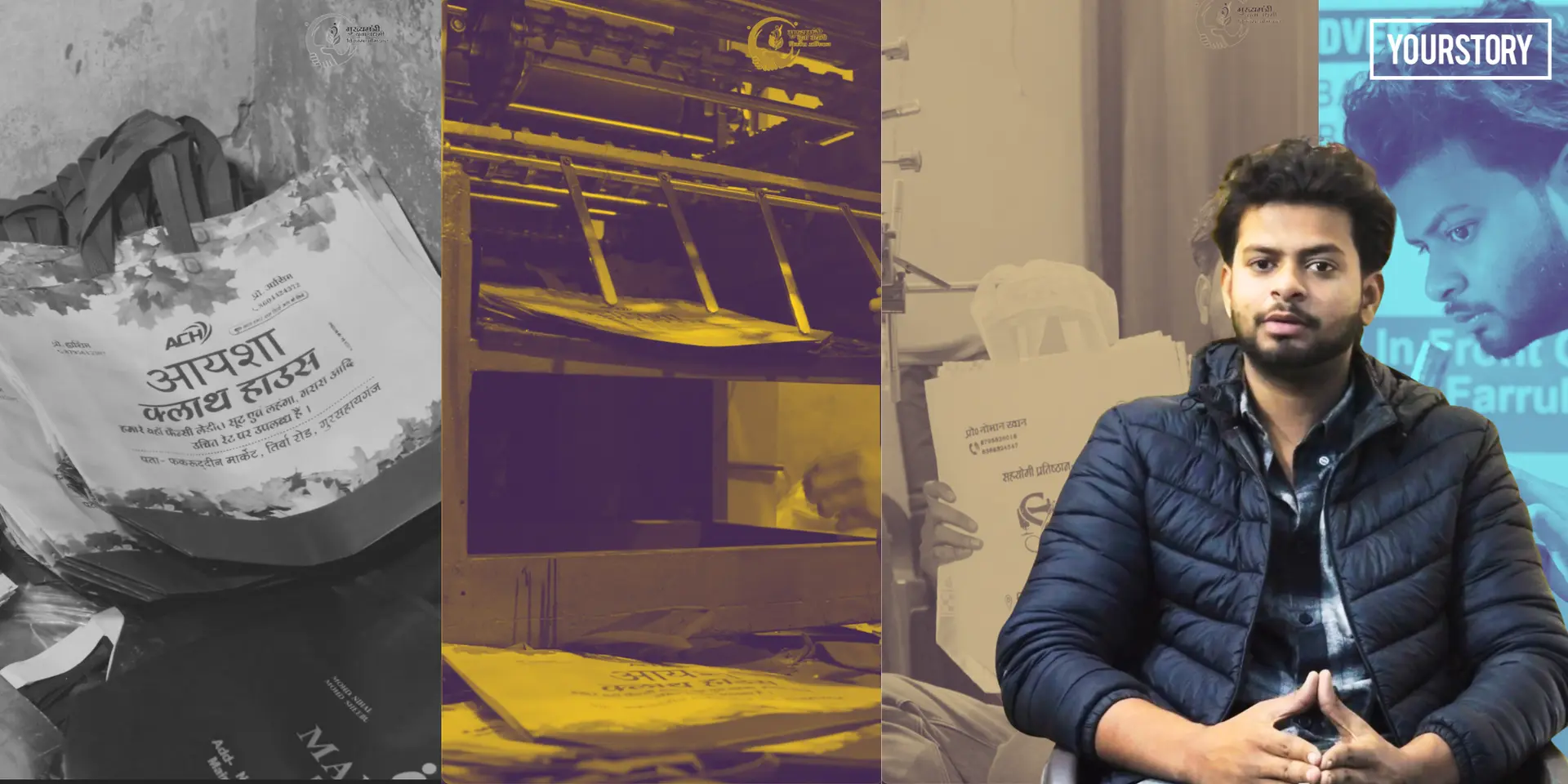

In a small locality of Farrukhabad district, Bashar Sheikh’s modest manufacturing unit is supplying printed carry bags to shops across nearby markets. The unit produces non-woven, BOPP and paper bags, mainly used by garment stores, footwear shops and agricultural retailers for packaging.
Most of the demand comes from clothing shops that require customised bags with simple branding and colour preferences.
Launched 3-4 months ago, this is Sheikh’s first independent business venture, and he entered it without prior experience of running a manufacturing operation.
In the initial weeks, the work was limited and uneven, as he learned to manage machines, suppliers and customer expectations at the same time. As orders became regular, the pace stabilised, and the operation gradually found its rhythm.
Learning to run a manufacturing setup
The production process begins with basic non-woven fabric rolls, usually white in colour. Based on a customer’s requirement, the design is finalised, and printing plates are prepared, which are sourced from Kanpur.
Once the plates arrive, they are fitted into an automatic printing machine operated by a trained operator. Customers can choose between single-colour or double-colour printing depending on how simple or eye-catching they want the bags to be. Orders are supplied in bulk quantities and delivered directly to shops.
Sheikh says the early phase involved frequent errors and adjustments, which are common when a business is new. Over time, he learned how to price orders, manage raw materials, and schedule production more efficiently.
At present, his products reach 100-150 shops spread across the Farrukhabad district and a neighbouring district, with repeat orders indicating steady acceptance in the market.
Support that made the setup possible
To arrange the machinery and raw material required for the unit, Sheikh applied under the Mukhyamantri Yuva Udyami Vikas Abhiyan (CM YUVA) Yojana after learning about it several months earlier. The financial support helped him purchase the machine directly from the supplier and arrange working capital for ink, fabric and other tools.
He also attended a short training programme in Farrukhabad, which gave him basic clarity on operations and compliance.
He describes the early phase as demanding but manageable, especially because there was no immediate pressure to repay instalments.
“The biggest relief was getting time to set the business properly before repayments started,” he says. That window allowed him to focus on stabilising production and building a customer base rather than rushing decisions.
From uncertainty to routine stability
Since the unit became operational, Sheikh’s daily routine has shifted from uncertainty to a more predictable work cycle. Regular interaction with shop owners, suppliers and operators has expanded his understanding of local markets and demand patterns.
While the setup is still small, it has brought consistency to his work and income, something he did not have earlier.
Looking back, the challenges of starting without experience remain fresh, but so does the sense of having built something step by step.
The business has not transformed his life overnight, yet it has moved him from hesitation to stability, anchored in a skill he continues to refine with each passing order.
What is CM YUVA Scheme?
Under the leadership of Hon’ble Chief Minister of Uttar Pradesh, Yogi Adityanath Ji, the state government aims to transform youth from job seekers into job creators.
To achieve this vision, the Directorate of Industries and Enterprise Promotion, under the Department of Micro, Small & Medium Enterprises and Export Promotion, is implementing the ‘Mukhyamantri Yuva Udyami Vikas Abhiyan’ (CM YUVA) Yojana.
Under this scheme, young entrepreneurs are provided with up to Rs 5 lakh in 100% interest-free and collateral-free loans to start their industrial or service-based ventures. In addition, beneficiaries also receive a 10% margin money subsidy on the project cost.
CM YUVA is not just a financial assistance scheme; it also provides mentorship, guidance, market access, and essential resources to help youth become self-reliant entrepreneurs and generate employment opportunities for others.
Click here to know more about the CM YUVA Scheme.