


A Gonda workshop’s journey from manual repairs to digital diagnostics
A Gonda-based mechanic reflects on nearly two decades of hands-on learning as vehicles shifted from mechanical systems to electronics-driven designs.

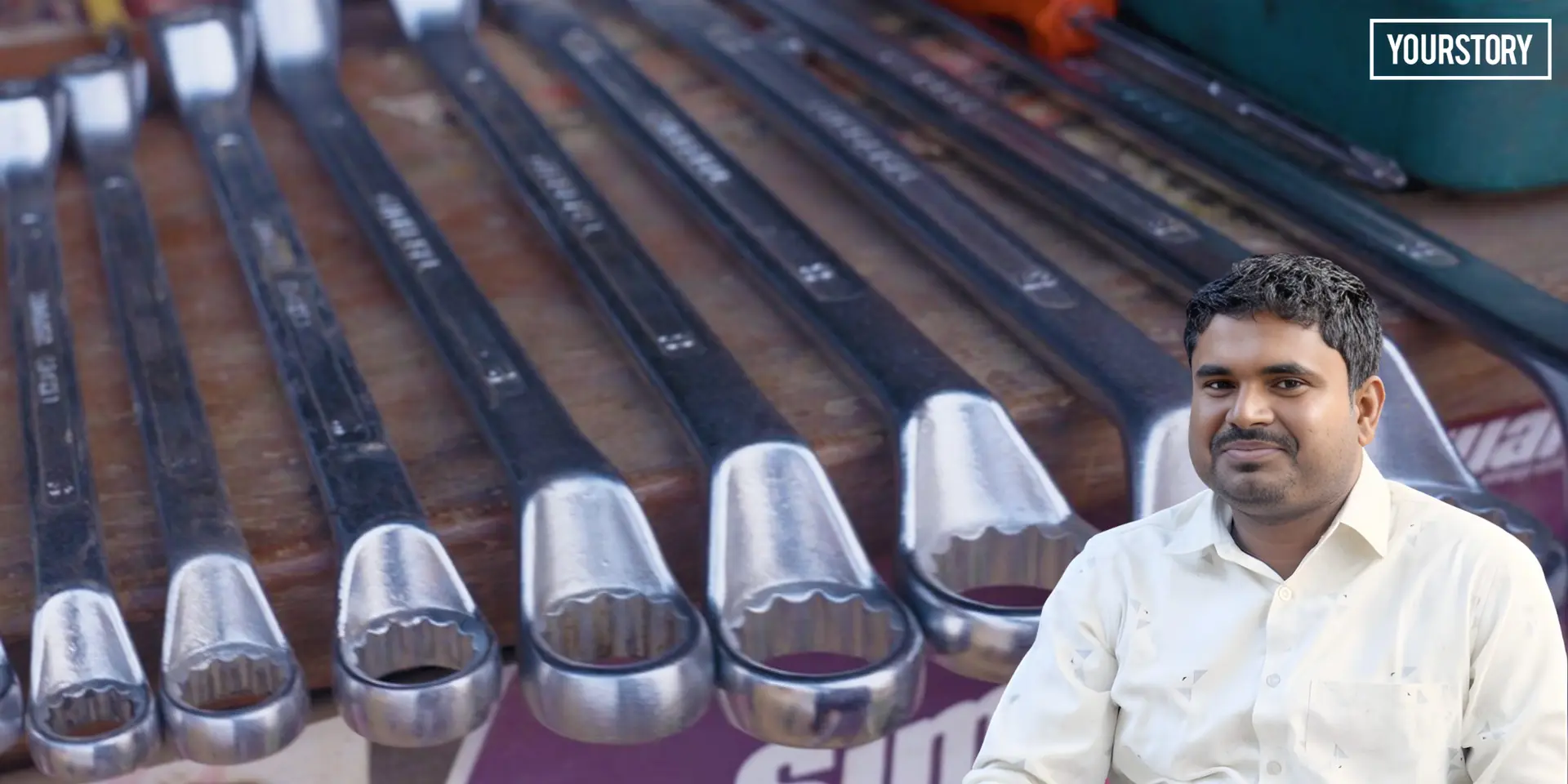

For nearly two decades, Iqbal Ahmed has been fixing vehicles in Dhanepur, Gonda district, learning his trade in the slow, practical way that small workshops often do. His point of view was shaped early by what he saw at home and by long days spent around tractors and ageing machines, where curiosity mattered more than formal plans.
Over time, that early exposure turned into steady involvement with the automobile repair line, even as vehicles themselves began to change.
Learning the trade
Ahmed’s workshop today handles electrical and mechanical faults across a wide range of vehicles. He focuses on diagnosing wiring issues, alternators, starters, batteries, sensors, and electronic faults that prevent vehicles from charging or starting.
As newer models entered the market, he began using laptop-based scanning tools to read error codes and identify problems that older methods could no longer catch.
The shift did not come overnight. He spent years observing how systems worked, testing parts, and understanding how electronics had begun to define modern vehicles. His formal education in electronics and physics helped him keep pace with these changes, especially as programming and sensor-based diagnostics became common across brands.
What remained constant was the routine of the garage, shared with his brother and a small team, where repairs continued alongside learning.
Adapting to new vehicles
As vehicles grew more complex, the limitations of traditional tools became clear. New emission standards and electronic controls demanded updated scanners, specialised equipment, and structured processes.
Ahmed began looking for ways to expand the workshop’s capacity without overextending it. Support came through the Mukhyamantri Yuva Udyami Vikas Abhiyan (CM YUVA) Yojana, which helped him access the right equipment and training needed to work on newer vehicle segments.
The assistance did not change the nature of the business, but it eased specific constraints. Updated diagnostic tools reduced trial-and-error, and short online training sessions introduced systematic approaches to fault identification, workflow management, and technical gaps. The focus remained on repair work, but with greater confidence in handling newer models that customers increasingly brought in.
Referring to that phase, he said, “Training showed us how to find problems faster and manage work better.” The support allowed the garage to respond to demand without altering its basic structure or scale.
Steady work, local trust
The garage continues to function as a local service point rather than a showcase operation. Customers arrive with everyday problems, from battery failures to electronic faults triggered by newer systems.
Ahmed and his team address these issues methodically, relying on experience built over years rather than promises of rapid expansion. He has also encouraged others in the area to consider CM Yuva Yojana support where appropriate, seeing it as a practical option rather than a guarantee.
Looking back, the path from early interest to present stability reflects continuity more than transformation. Skills accumulated gradually, tools improved when necessary, and the business adjusted to changing vehicles without losing its footing.
For Ahmed, the garage stands as proof that steady learning and local trust can sustain a small enterprise through technological shifts, without needing to become something it was never meant to be.
What is CM YUVA Scheme?
Under the leadership of Hon’ble Chief Minister of Uttar Pradesh, Yogi Adityanath Ji, the state government aims to transform youth from job seekers into job creators.
To achieve this vision, the Directorate of Industries and Enterprise Promotion, under the Department of Micro, Small & Medium Enterprises and Export Promotion, is implementing the ‘Mukhyamantri Yuva Udyami Vikas Abhiyan’ (CM YUVA) Yojana.
Under this scheme, young entrepreneurs are provided with up to Rs 5 lakh in 100% interest-free and collateral-free loans to start their industrial or service-based ventures. In addition, beneficiaries also receive a 10% margin money subsidy on the project cost.
CM YUVA is not just a financial assistance scheme; it also provides mentorship, guidance, market access, and essential resources to help youth become self-reliant entrepreneurs and generate employment opportunities for others.
Click here to know more about the CM YUVA Scheme.