



The man who funded eight schools at IITs taught me that time, not money, is the real donation
Rahul Mehta left India at 17 with dollars his parents scraped together by selling their gold. He built and sold four companies in America, then came back to change how India teaches biotechnology, AI and sustainability. A meeting at IIT Madras changed my understanding of what it means to give.

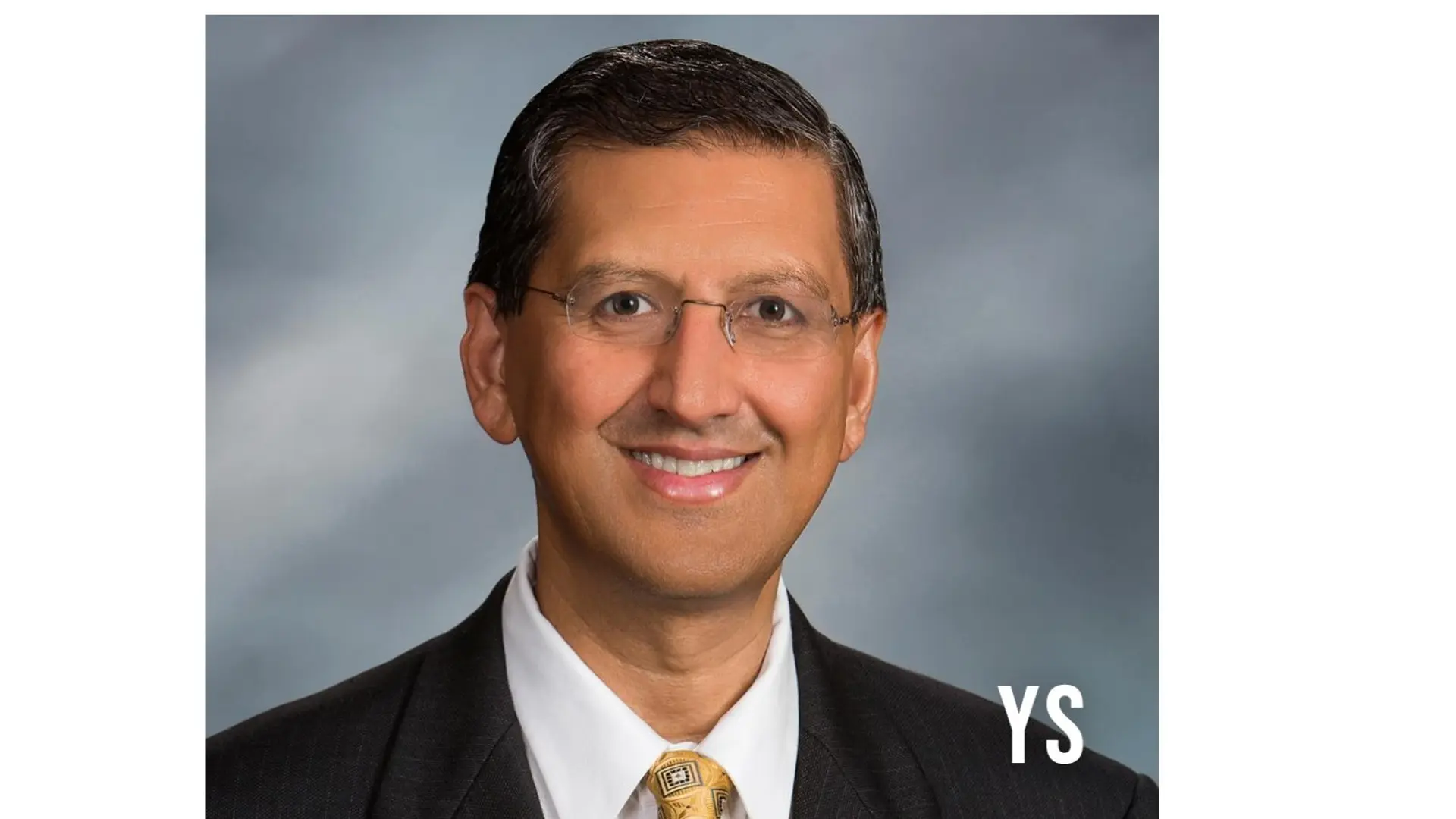

Rahul Mehta walked into the room at IIT Madras wearing a red hoodie and brown trousers, and the first thing he did was apologise for his attire. His luggage had not arrived with him due to some airline mishap, and he had come straight from the airport to the event he was organising on campus. He had slept four hours and looked like he could have used four more.
At a table nearby, two men were loudly discussing some business matter, oblivious to us, and Mehta glanced at them briefly before turning his attention back. There was an energy about him that did not match the casual clothes, a kind of restlessness that seemed incongruous for someone who had walked away from the money game nearly two decades ago.
He built four companies in America, sold them all to names like HP, Veritas and Brocade, never took a loan, never raised venture capital, and stopped in 2006 because he had reached what he calls his “enough number”. Since then, he has funded eight schools across six IITs in fields ranging from biotechnology to data science to sustainability. The Bhupat and Jyoti Mehta Family Foundation, named after his parents, has supported more than 100 nonprofits and created pathways for thousands of students who, perhaps, will never know his name but whose lives have been shaped by his conviction that intellectual capital is what makes nations prosperous.
I had expected to write a profile of a rich man doing good things with his money, but what I got instead was a lesson that will stay with me, one that reframed how I think about giving and what middle-class people like me can actually contribute to the world.
Mehta’s story begins in a lower middle-class home in Mumbai where his parents had no formal education and his father ran small textile operations that never generated free cash flow. When a 17-year-old Rahul told them he wanted to go to America for college, they did not say they could not afford it. They said: go figure it out.
“How many parents would send a 17-year-old to a foreign country?” Mehta asked me. “Even today, American parents wouldn't do that. But my father never said stop; he said go figure it out.”
Behind the scenes, his parents sold all the gold and silver they had accumulated over the years to pay for his first semester, though they did not tell him at the time. He found out later.
This was 1979, and the Indian government did not allow free transfer of rupees to dollars. Mehta went to USIS in Mumbai (then Bombay), read university catalogues, and figured out that if he enrolled in a programme not available in India, the RBI would release the foreign exchange.
So he chose polymer science instead of chemical engineering, got his visa, got his dollars, and landed in Houston with enough money for one semester and a little extra. He started working on campus immediately because his goal, from day one, was to reduce the burden on his parents. “There were days you didn’t have anything to eat all day,” he told me, “and all I did was buy a $2 frozen pizza, put it in the oven, and that’s all I could afford.”
He never worked full-time for anyone else. Straight out of school, he started his first company, building an interface between Oracle and SAS. Before he knew it, he had 80 employees, though he never borrowed a cent and his bank balance was zero because he paid his employees more than he paid himself. His father said he was stupid for having no backup, and he did not even buy a house, but he loved what he did and that was enough.
He sold his first company in 1996 and made more money than he ever thought he would see in his lifetime. He could have retired, but instead he started a second company to prove the first was not a fluke, sold it in 1998 for more than the first, started a third in 1999, and then a fourth which he sold to Brocade in 2006. Each one was bigger than the last, each one was bootstrapped, and each one proved something to himself that perhaps only he understood.
And then he stopped, not because he ran out of ideas, but because he had reached a conclusion that most wealthy people never reach: “At some point, you realise you aren’t going to spend it all,” he said. “What is the purpose of money? People say a good life, but how much do you want? Ultimately, money is not the answer; it’s your time. What you don’t have in life is time.” He had reached his enough number, and beyond that, he believed, it is all excess.
Time, Talent, and Treasure
This is where my interview took a turn I did not expect. I had assumed philanthropy was about money, about writing cheques, but Mehta told me to think about it differently: Time, Talent, and Treasure, in that order. Most people focus on treasure (money) and conclude they cannot do anything because they do not have money, but money is the last thing. The first question is whether you have time.
He puts in enormous amounts of time, and not the board meeting or video call variety, but the kind of time that involves getting on flights, showing up in person, sitting with students and faculty, and understanding what they need. The red hoodie and the missing luggage were not anomalies but symptoms of a man who prioritises being there over looking the part. “You cannot measure the profit,” he said. “You measure the satisfaction. It gives me meaning and purpose.”
There is a difference, Mehta explained, between charity and philanthropy. Charity is giving money away without worrying about strategic impact, like handing a thousand rupees to a temple or a beggar, and you feel good but you have not changed anything structurally. Philanthropy is when you make a strategic intervention that permanently improves society, and it requires thought, involvement, and follow-through. It requires time.
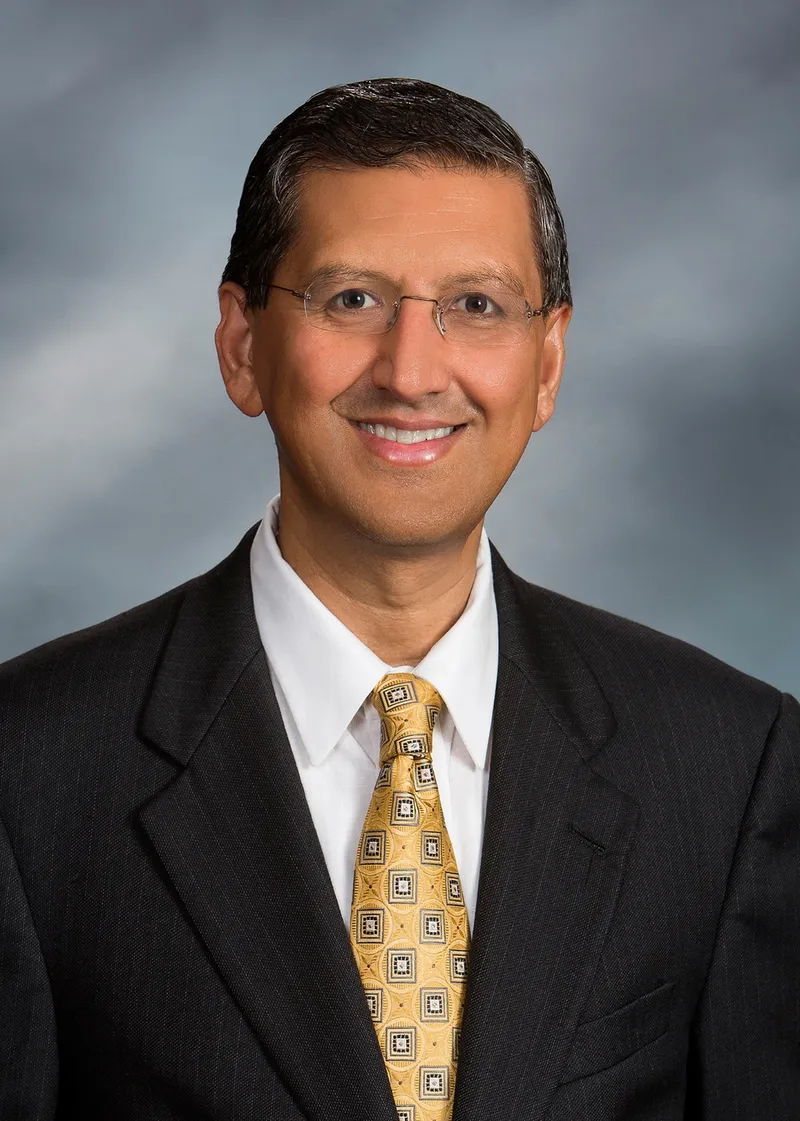
According to Rahul Mehta, philanthropy is about Time, Talent, and Treasure, in that order.
His first big project came almost by accident. Around 2005, while visiting the Aurobindo Ashram, he made a spontaneous stop at IIT Madras, and a conversation with the then director led to the creation of the Bhupat and Jyoti Mehta School of Biosciences and Bioengineering, the foundation's first major investment. It took 10 years to see results through hiring faculty, building infrastructure, and graduating students, but when those students told him the programme had changed their lives, he knew he was onto something. Change the student, change the family, and they will make a difference in the community.
Since then, the foundation has established schools in data science and AI at IIT Guwahati, IIT Roorkee and IIT Palakkad, and has created health sciences programmes at IIT Kanpur and IIT Guwahati. Most recently, it funded India’s first BTech programme in Sustainability at IIT Indore, a field Mehta had to convince IIT directors to take seriously.
In 2018, he hosted a meeting in Delhi pitching data science and AI schools, and no one was interested. Then ChatGPT happened and suddenly everyone saw the relevance. Mehta sees patterns before they become obvious because he studies what is happening in American academia and bets on what India will need a decade later.
His theory of change is simple: countries that invest in intellectual capital generate economic prosperity. India’s greatest asset is its undergraduate population, but it needs more graduates in STEM, in medicine, in journalism, and in humanities. If 30 to 40% of Indians have degrees, it will be a different country. The foundation’s target is to produce 12,000 graduates by 2031, and most of them will come from small towns Mehta has never heard of. Many will be the first in their families to go to college, and a job after graduation will change their lives and their families’ lives.
I asked him about India catching up with China, and he pushed back gently. He believes in what he calls the Gapminder philosophy, named after the foundation started by the Swedish statistician Hans Rosling, who spent his career showing that the world is getting better in ways we fail to notice. Rosling's central insight was that poverty is not a fixed state but a ladder, and that countries climb it in predictable ways.
A person earning one dollar a day goes barefoot. At $2 they buy sandals. At $4 they get a bicycle. At $8 they might get a motorbike. India, Mehta argued, has reached a certain rung on that ladder and will only climb higher. We do not need to compare ourselves to China because we are on our own trajectory.
“In 2000, a poor village family would marry a daughter at 16 with no education. Today, they want her educated. Earning power is increasing, and that progress is tremendous.,” he said.
I asked whether his father lived to see him succeed. Mehta's eyes softened. His father saw some of it, he said. After the first company was sold, Mehta took his family to Hawaii. Although he had sold his shares he hadn’t received the money yet. Then his broker called and said there was money in his account, and Mehta told his father. “I could see the relief in his face,” he said. "He felt, ‘Wow, now we made it in this country’.” He paid off all their loans taken for homes and cars, and every sibling was taken care of.
That must have been a high, I said. It was, he replied, but entrepreneurship was a high that depended on your measurement. Is your measurement money, or is it making a difference? He recommended a book called How Will You Measure Your Life? by Clayton Christensen, and the point he was making was clear: the question is not what you achieve, but what metric you use to define achievement.
I left IIT Madras that evening thinking about my own enough number and about what I could give even without a fortune. Mehta had reframed the question for me. It was not about how much money I had but about how much time I was willing to put in, and whether I was willing to think strategically about where that time could make a difference.