



Hard times make you stronger: The truth about growth
Comfort feels safe, but challenges shape competence. Discover why tough phases train your mindset and make you stronger for the long run.

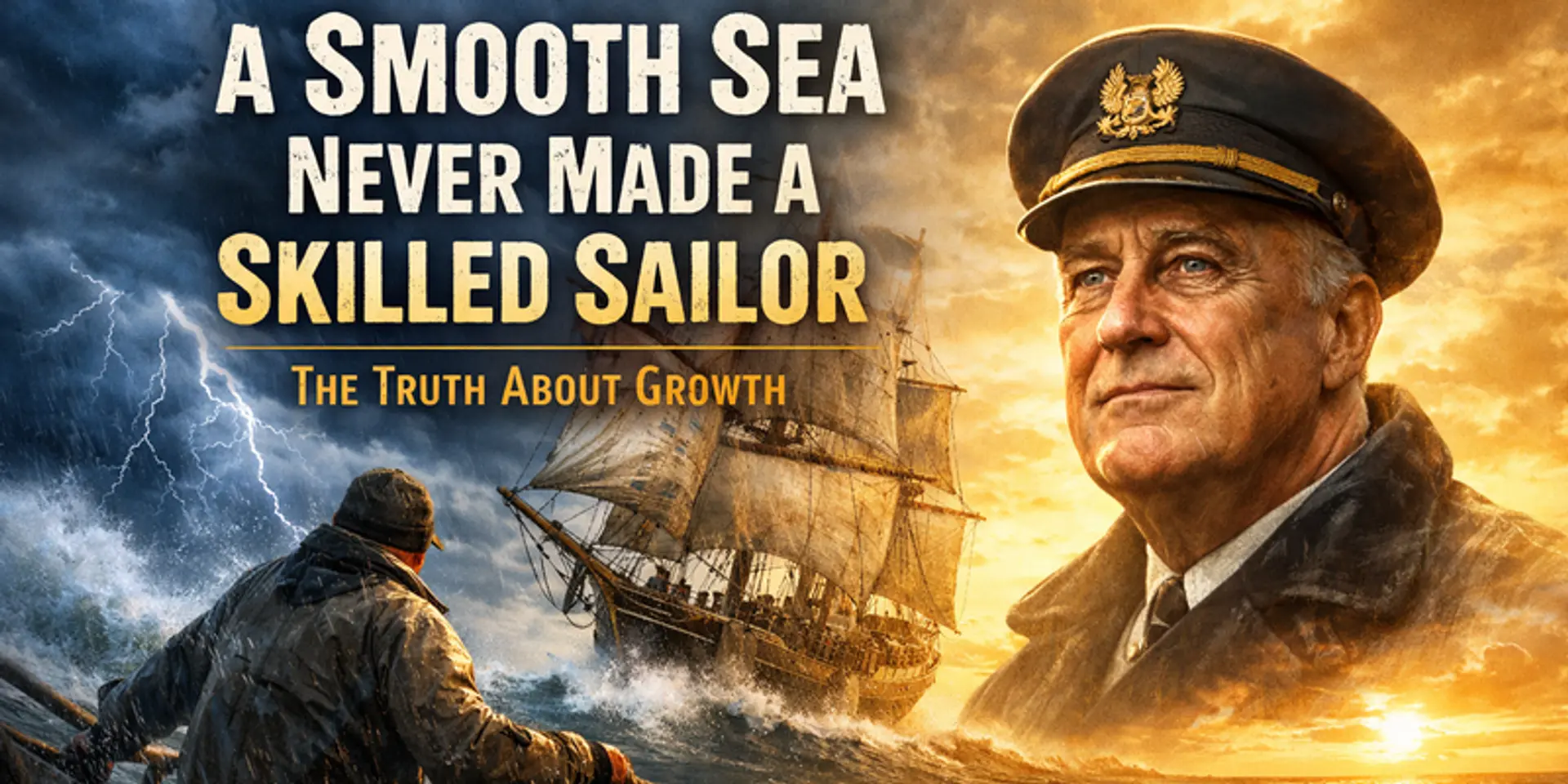

“A smooth sea never made a skilled sailor.” — Franklin Roosevelt
Some quotes feel like a gentle reminder. This one feels like a wake-up call.
Roosevelt’s line cuts through the modern obsession with comfort. It suggests something deeply practical: ability is not formed in ease. It is shaped in friction through moments that test judgment, patience, and grit. Just as a sailor becomes skilled by navigating rough waters, people become capable by meeting difficulty without collapsing into self-pity or avoidance.
This is not a celebration of suffering. It is a recognition that challenge is often the price of competence.
Comfort Teaches Little, Pressure Teaches Everything
In calm conditions, anyone can steer a boat. But calm conditions don’t demand decision-making under uncertainty. They don’t force you to adjust to shifting winds. They don’t punish arrogance or reward humility.
Life works the same way. When everything is going well, your habits aren’t truly tested. You may feel confident, but that confidence can be unproven. Pressure is the real examiner. It reveals whether you can stay clear-headed, learn fast, and act responsibly.
Hard phases—tight deadlines, financial stress, rejection, a public failure, a personal setback—don’t just hurt. They also teach. They expose blind spots. They build emotional endurance. They force you to develop skills you wouldn’t otherwise bother to master.
The Hidden Skills You Gain in Rough Waters
Difficult seasons don’t only create “stronger” people in a vague, motivational sense. They build specific capabilities:
- Resilience: the ability to recover without losing direction.
- Adaptability: the habit of changing strategy without abandoning the goal.
- Discipline: the skill of doing the work even when motivation disappears.
- Perspective: the understanding that today’s storm is not your whole life.
- Humility: the awareness that you can be wrong and must keep learning.
These traits aren’t born from comfort. They are earned through repetition: falling, adjusting, trying again.
Why Avoiding Struggle Can Make You Fragile
If your life has always been smooth, you might believe that peace equals preparedness. But smoothness can create a dangerous illusion: that you are ready for anything because you have never been pushed.
Fragility often looks like confidence until the first serious wave hits.
This is why small challenges matter. Taking on difficult work. Having hard conversations. Starting something you’re not fully ready for. These experiences build a kind of internal “sea training” that protects you later.
How to Use the Storm Instead of Being Used by It
When life gets rough, the goal isn’t to be heroic. It’s to be deliberate.
- Name what the storm is. Be specific: what exactly is going wrong?
- Control what you can. Focus on actions, not emotions you can’t command.
- Learn one lesson. Every setback has data—extract it.
- Keep moving. Progress in storms is rarely dramatic; it’s often quiet consistency.
A skilled sailor isn’t fearless. He’s trained. He respects the sea, reads it, and responds.
The Real Promise Behind the Quote
Roosevelt’s quote doesn’t say storms are good. It says storms are useful. They create competence, not because pain is noble, but because difficulty forces growth.
A smooth sea can feel like success. But a rough sea builds the person who can handle success when it finally arrives and survive it when it leaves.
And that is what skill really is: not a talent you’re born with, but a strength you’ve earned.