



In Moradabad, a yoga practitioner turns years of learning into a small studio
After nearly a decade of personal practice, Swati Verma turned yoga into a small business, creating Shivoham Yogshala as a calm space focused on breathing, balance, and mental ease in Moradabad district.

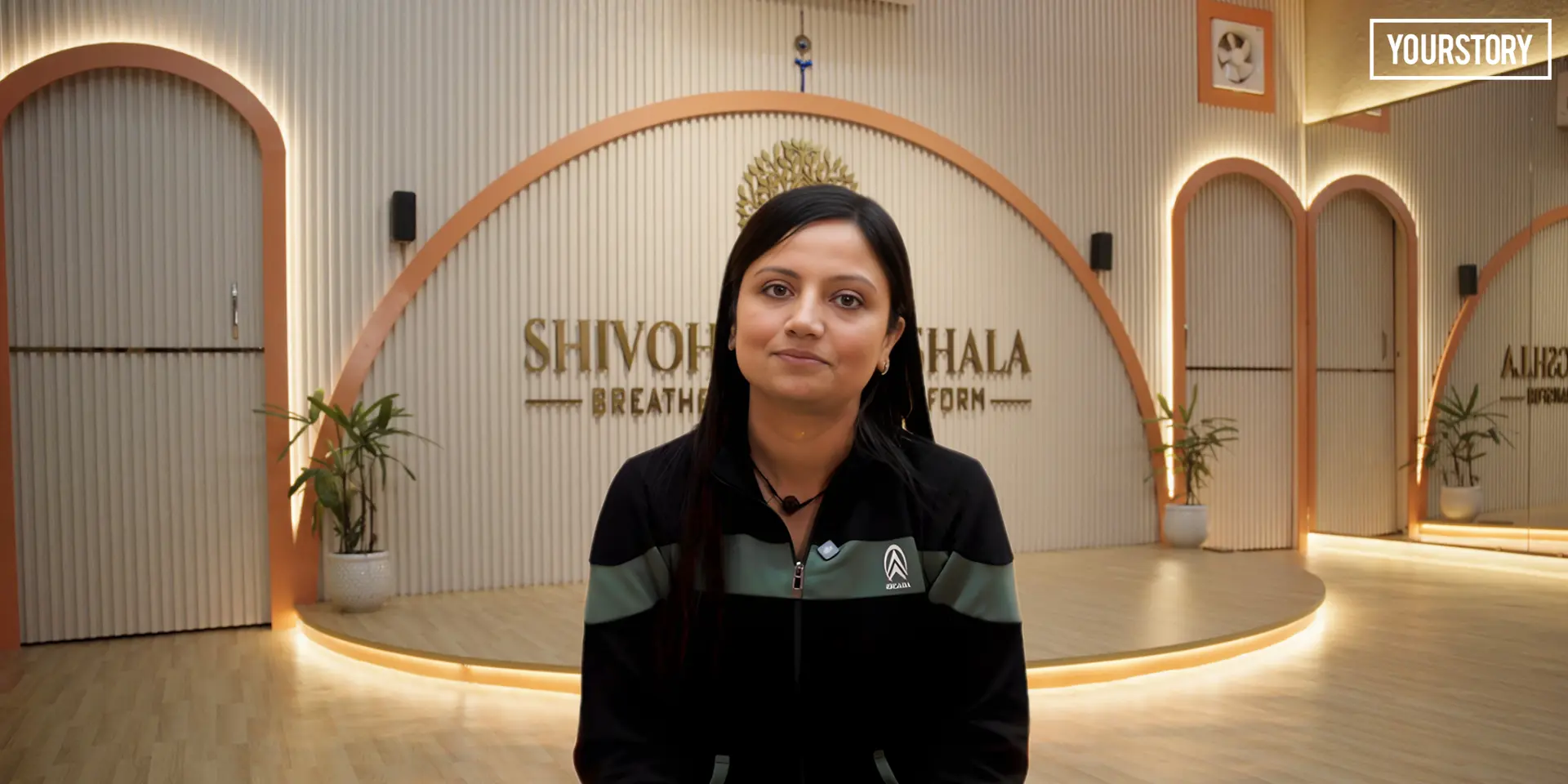

Swati Verma runs Shivoham Yogshala in Moradabad district, a small yoga studio she set up after nearly a decade of personal practice. Yoga, she says, was never just a fitness routine for her but a gradual shift in how she understood health, discipline, and daily life.
Before opening the studio, Verma had been practising yoga for around 10 years and had experienced significant personal changes through it, which eventually led her to consider turning that practice into a livelihood.
‘'Shivoham Yogshala’' offers guided yoga sessions focused on breathing, posture, and relaxation to help participants build physical stability, also addressing mental strain. Verma explains that the studio is meant to provide a quiet space away from the fast pace of the city, where people can spend time working on their bodies and attention without pressure or competition.
Training, hesitation, and the decision to start
Although Verma had been practising yoga for years, she felt that running a centre required deeper training and clarity.
She travelled to Rishikesh and explored multiple schools before completing formal training that helped her understand the foundational principles of yoga beyond routines and poses. That process, she says, gave her confidence in how to teach and structure sessions.
The idea of starting a studio in Moradabad did not come easily. Verma has an MBA and a postgraduate qualification and had earlier been inclined towards salaried work. Marriage and family responsibilities had pushed professional plans into the background for a period.
Starting a business felt risky, especially since she did not come from a business background on her maternal side. Over time, however, her sustained engagement with yoga changed how she approached uncertainty and decision-making.
Building a space and finding support
Finding the right location was one of the first practical challenges. Verma wanted a peaceful environment rather than a busy commercial street and eventually settled on a rented space in the Buddha Bazaar area.
The studio was constructed within about 40 days, a phase she recalls as intense but focused, with most of her attention on creating a functional and calm setting.
Funding proved to be another hurdle. Initial estimates and construction costs led to delays, and there was uncertainty about how much capital would be available.
Verma eventually received support through the Mukhyamantri Yuva Udyami Vikas Abhiyan (CM YUVA) Yojana, along with her own savings, which helped her complete the setup. The process involved multiple bank visits and periods of waiting, including receiving the funds shortly before the studio opened.
Within the first month of operations, Shivoham Yogshala enrolled around 40 participants. Many, Verma says, came with a general idea of yoga but gradually began to understand its emphasis on breathing, relaxation, and consistency.
Reflecting on her journey, she notes, “Yoga did not just change my weight, it changed my thinking and how I see life.”
Today, the studio represents a stable beginning rather than a finished goal. For Verma, the shift from personal practice to a small, steady business in Moradabad has been shaped by patience, learning, and measured risk, linking years of quiet preparation to a more grounded present.
What is CM YUVA Scheme?
Under the leadership of Hon’ble Chief Minister of Uttar Pradesh, Yogi Adityanath Ji, the state government aims to transform youth from job seekers into job creators.
To achieve this vision, the Directorate of Industries and Enterprise Promotion, under the Department of Micro, Small & Medium Enterprises and Export Promotion, is implementing the ‘Mukhyamantri Yuva Udyami Vikas Abhiyan’ (CM YUVA) Yojana.
Under this scheme, young entrepreneurs are provided with up to Rs 5 lakh in 100% interest-free and collateral-free loans to start their industrial or service-based ventures. In addition, beneficiaries also receive a 10% margin money subsidy on the project cost.
CM YUVA is not just a financial assistance scheme; it also provides mentorship, guidance, market access, and essential resources to help youth become self-reliant entrepreneurs and generate employment opportunities for others.
Click here to know more about the CM YUVA Scheme.