



9 Energy-Draining Habits That Secretly Exhaust You Every Day
From doomscrolling to multitasking, everyday patterns can quietly exhaust your mind and body. Here’s what drains your energy most and how to fix it fast.

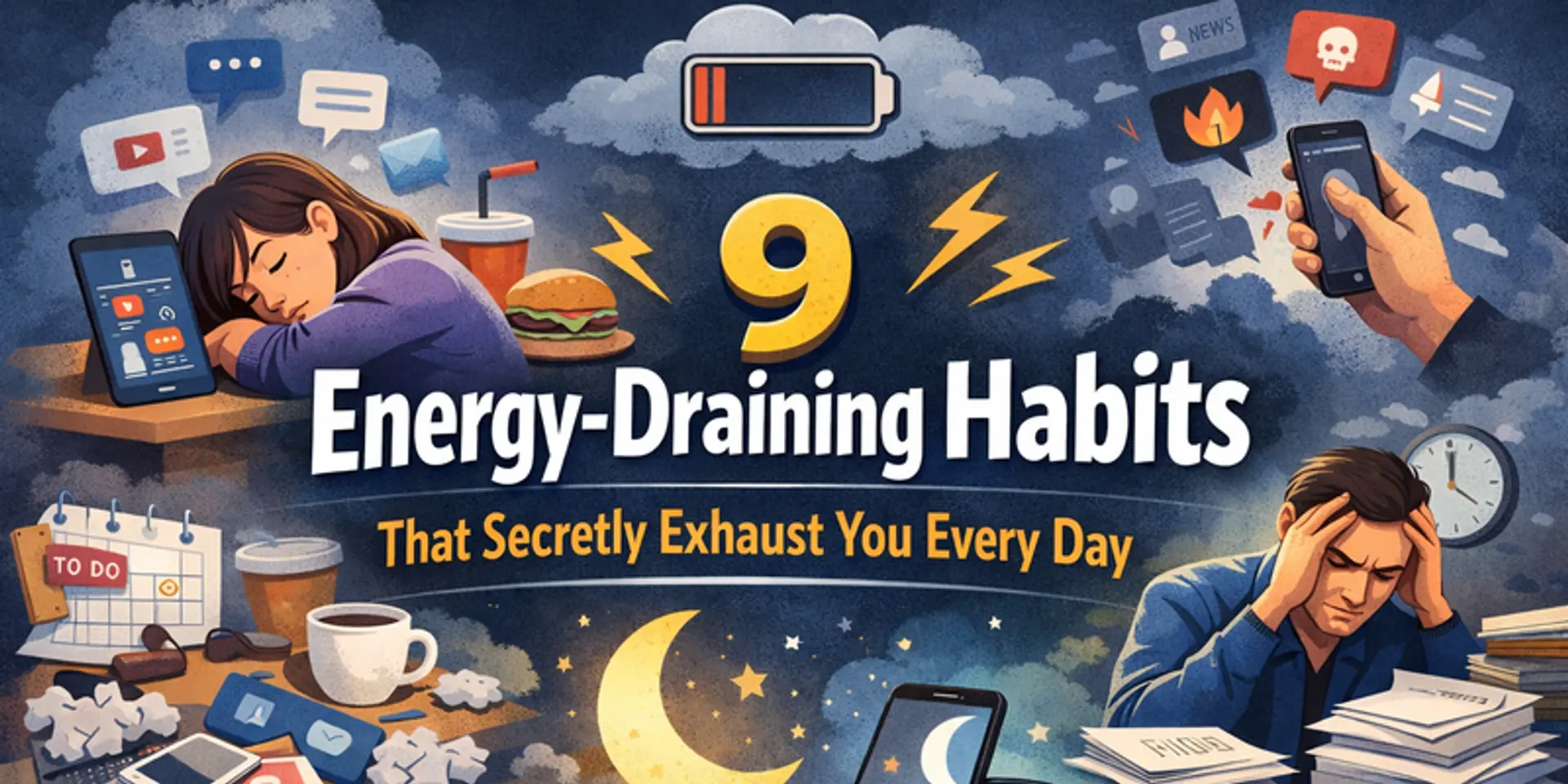

Some days you sleep enough, eat reasonably well, and still feel oddly depleted by afternoon. It’s tempting to blame workload, weather, or luck. But often, the biggest drain isn’t a single major problem. It’s a set of small, repeatable habits that quietly tax your brain, time, and emotions—until “tired” becomes the default setting.
Here are the most common energy-draining habits, why they work that way, and what to do instead.
1) Starting the day on your phone
Checking messages, news, or social media the moment you wake up pushes your mind into reaction mode. You begin the day responding to other people’s priorities, which increases mental noise and makes it harder to focus later.
Try this: Delay your phone by 20–30 minutes. Use that time for water, light movement, a quick plan for the day, or simply quiet.
2) Constant multitasking
Multitasking feels productive, but it often forces your brain to switch contexts repeatedly. That switching costs energy and creates a “busy but not finished” feeling. Over time, it reduces attention span and increases fatigue.
Try this: Work in single-task blocks. Even 25 minutes focused on one task, followed by a 5-minute break, can restore a sense of control.
3) Skipping meals or surviving on quick sugar
Long gaps between meals or heavy reliance on sugary snacks can spike energy temporarily and then crash it. That roller-coaster shows up as irritability, low motivation, and brain fog.
Try this: Anchor your day with protein and fibre. Keep simple options nearby—nuts, fruit, curd, boiled eggs, or sprouts.
4) Overcommitting and under-resting
Saying yes too often can look like ambition, but it’s also a quick route to exhaustion. When your calendar fills up, your brain gets no recovery time between demands.
Try this: Build “white space” into your day—small buffers between meetings or tasks. Protect at least one low-demand slot daily.
5) Living in unresolved clutter
Clutter isn’t just visual. It’s mental. Unfinished chores, messy spaces, and pending decisions create a constant background pressure that drains attention.
Try this: Do a 10-minute reset each evening—clear one surface, close one loop, prep one thing for tomorrow.
6) Doomscrolling and background negativity
A steady stream of alarming content keeps the nervous system on alert. Even if you feel “fine,” the body reads constant threat signals, which burns energy.
Try this: Set one fixed time window for news. Avoid it in the first hour after waking and the last hour before sleep.
7) People-pleasing and avoiding hard conversations
When you regularly suppress your needs to keep things smooth, the cost shows up later as fatigue, resentment, and anxiety. Avoidance may reduce discomfort now, but it increases emotional load over time.
Try this: Use simple boundaries: “I can’t do this today,” “I need time to think,” or “Let’s revisit tomorrow.”
8) Perfectionism and endless tweaking
Trying to make everything “just right” keeps you stuck in a loop of doubt and revision. Perfectionism doesn’t just waste time; it drains confidence.
Try this: Decide what “good enough” means before you start. Finish at that standard, then move on.
9) Late-night screens and irregular sleep timing
Even with enough hours, inconsistent sleep timing can leave you groggy. Late-night scrolling also delays sleep and reduces recovery quality.
Try this: Keep a consistent sleep-wake window most days. Replace last-screen scrolling with a wind-down cue—dim lights, light reading, or calm music.