


From Grass Fibre to Grassroots Livelihood: Amethi’s Moonj Craft
In Amethi, moonj craft continues as a home-based, women-led livelihood model where traditional weaving skills support household incomes under the One District One Product (ODOP) initiative.

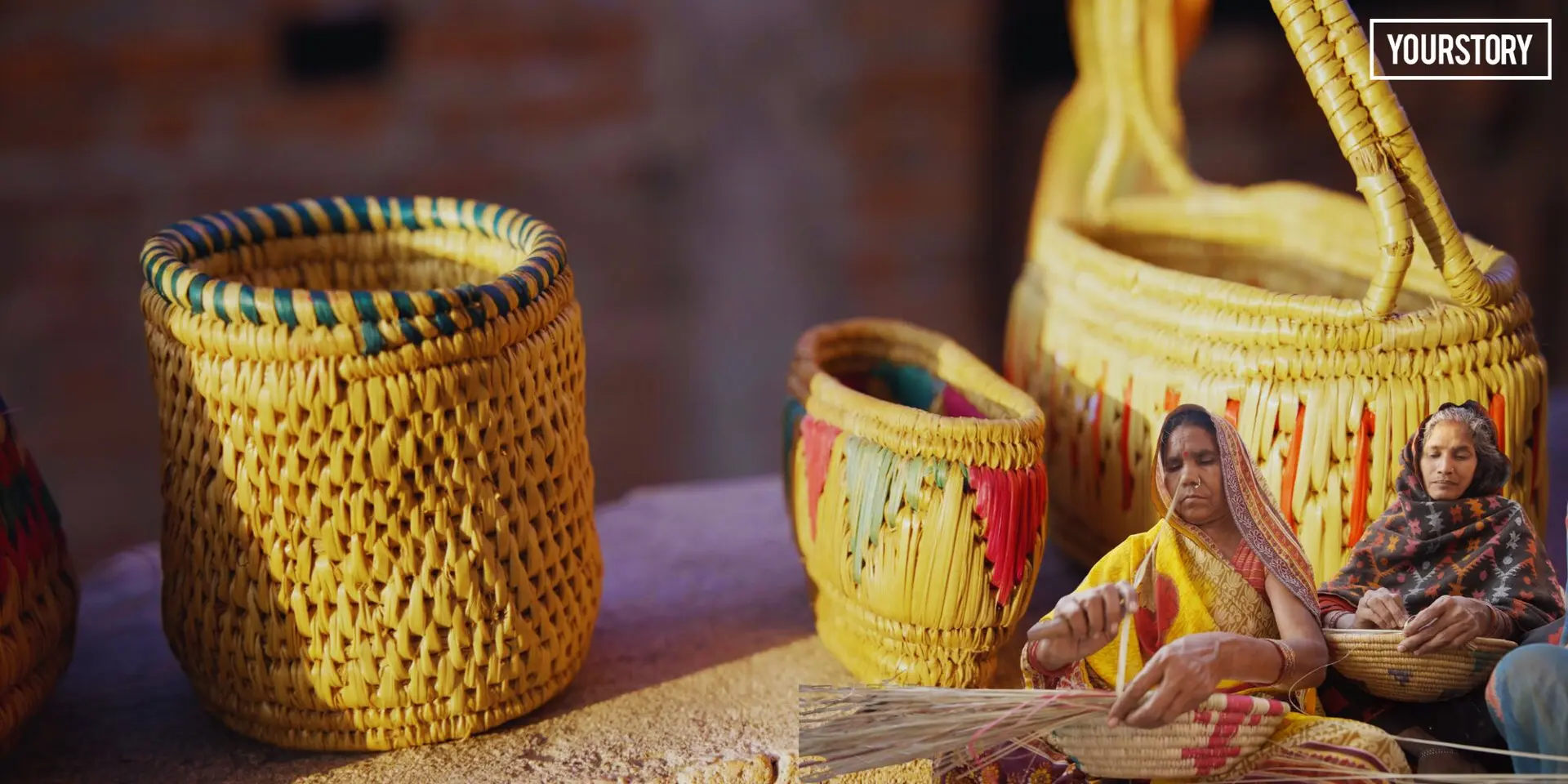

Across North Indian homes, handwoven baskets, storage boxes, and festival-use items continue to serve everyday needs — storing rotis, grains, snacks, and household goods. What appears simple on the surface is often the outcome of careful handwork done within small family networks.
In Amethi, Uttar Pradesh, moonj craft is a part of this quiet, home-based economy. Recognised under the One District One Product (ODOP) programme of Uttar Pradesh, Moonj Craft represents how traditional skills can translate into household income while remaining rooted in local life.
In the Chhota Goriyana/Chhota Buriyana locality near Jais, Munni Devi works from her home, shaping moonj fibre into functional household goods. Around her, several women in the neighbourhood are engaged in similar work. Some produce items for gifting at weddings, others weave baskets and containers for sale when cash flow is required. The work is not concentrated in a factory or unit — it is distributed across homes, forming a women-led neighbourhood production model.
Moonj products in Amethi are valued primarily for their utility. A commonly used item is a roti-storage container that helps keep food fresh during the summer months. There are storage baskets for grains, boxes for snacks, and larger traditional items such as “soop” and “dora,” which see seasonal demand around festivals like Chhath Puja.
Demand patterns follow use cases. Certain products — especially everyday storage containers — remain popular throughout the year. Others, particularly larger and sturdier pieces, are purchased seasonally. Within neighbourhood production groups, finishing plays a defining role. Well-finished pieces are sold quickly, while others may need to be retained longer or sold at different price points.
The process begins with sourcing. Moonj grass is either collected from forest areas or purchased from the mandi. Once brought home, it is cleaned and separated into workable strips.
Colouring follows. Water is heated, dyes are mixed, and the moonj fibre is dipped to ensure an even finish. After drying, the fibre is soaked periodically during weaving to maintain flexibility. The shaping and weaving are done entirely by hand within homes. Each finished product reflects the maker’s skill, especially in its final detailing.
Finished pieces are kept ready for local buyers, wedding gifting, or carried to larger markets and exhibitions when opportunities arise. Munni Devi recalls participating in exhibitions in Delhi, including visits to Pragati Maidan, as well as showcases in Noida and Lucknow. Such platforms connect neighbourhood artisans to buyers beyond their immediate locality.
Under the ODOP initiative, Munni Devi received training, toolkits, and financial assistance in 2024, along with opportunities to participate in exhibitions where certificates were awarded. These interventions strengthen production capacity at the household level and open access to wider markets.
While local demand remains modest due to the prevalence of plastic alternatives, moonj craft continues to find relevance where buyers value natural materials and handcrafted utility. For many households in Amethi, steadier demand from exhibitions and repeat orders provides predictability — allowing them to plan production cycles and maintain consistent finishing standards.
From grass fibre to finished household goods, Amethi’s moonj craft demonstrates how traditional skills can generate grassroots employment — sustaining women-led neighbourhood networks and preserving a district’s notified ODOP identity.