



Ashwini Vaishnaw Demands Fair Revenue Share for Content Creators
I&B Minister Ashwini Vaishnaw urges social media platforms to ensure fair revenue sharing with news publishers, creators, influencers and researchers while reinforcing accountability and online safety standards.

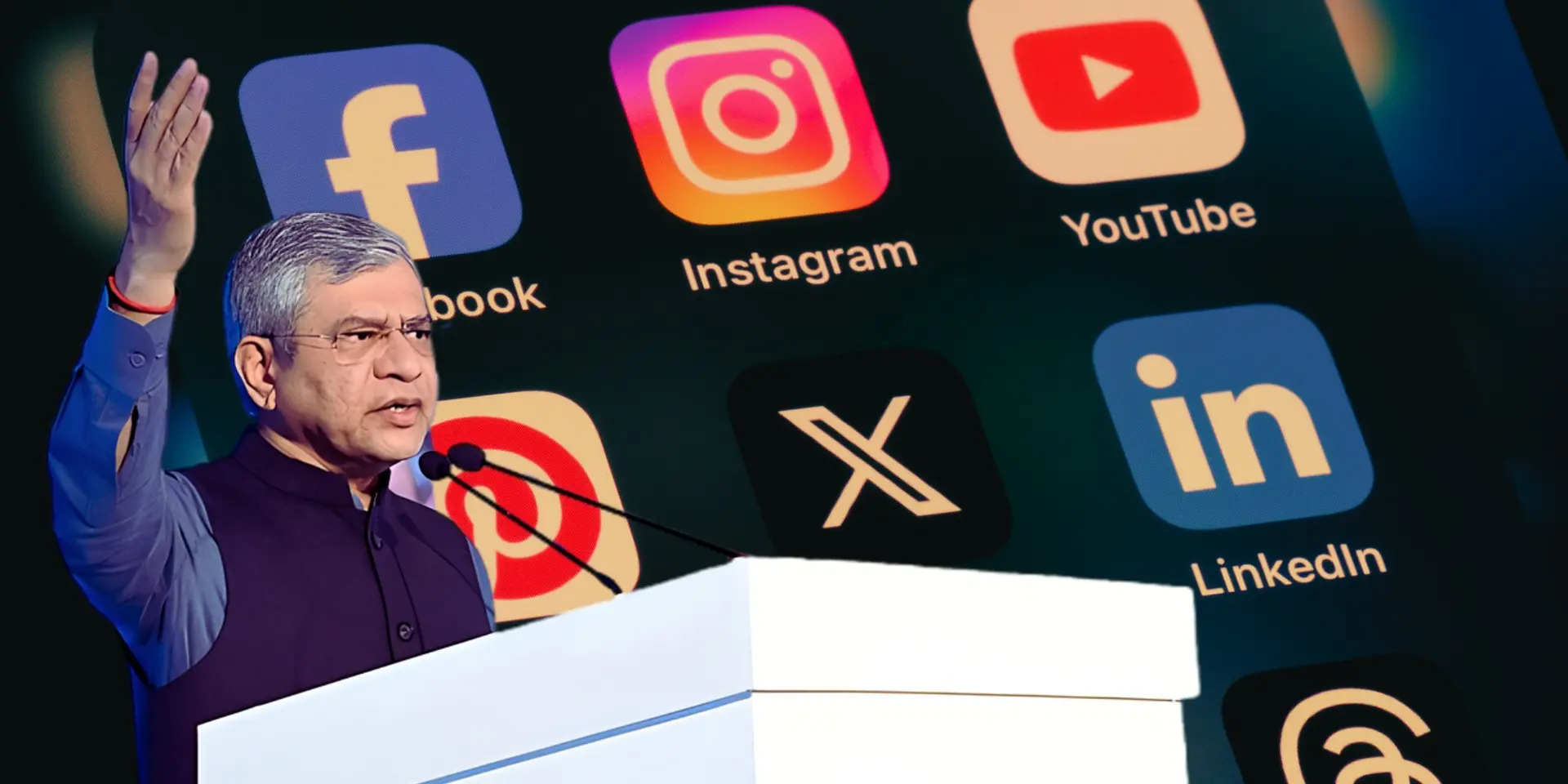

India’s Information and Broadcasting Minister Ashwini Vaishnaw has urged social media platforms to adopt a “fair share of revenue” model for the people and institutions that create the content powering their engagement and advertising businesses—ranging from journalists and legacy newsrooms to independent creators in remote areas, influencers, and academics who publish research online.
Speaking at the Digital News Publishers Association (DNPA) Conclave 2026 in New Delhi, the minister framed the issue as a correction that platforms must make as the internet shifts deeper into an era of synthetic media and high-velocity misinformation.
A push for creator compensation across the ecosystem
Vaishnaw’s remarks broaden the revenue-sharing debate beyond traditional publisher-platform dynamics. He argued that the “principle” of fair remuneration should apply to all categories of content creators whose work drives reach on platforms—news professionals, conventional media, far-flung independent creators, influencers, professors, and researchers.
The minister’s emphasis comes amid intensifying global scrutiny of how large platforms monetize content while creators—especially newsrooms—struggle with shrinking margins and fragmented advertising markets.
Platform accountability and online safety
Beyond monetisation, Vaishnaw placed responsibility for hosted content squarely on platforms, arguing that reinforcing trust in long-standing social institutions is now a core requirement for the digital public sphere. He linked this responsibility directly to citizen safety online, including child safety—stating that platforms must treat it as an obligation, not an optional compliance exercise.
The comments align with a wider policy direction that seeks clearer accountability from intermediaries as they increasingly function as distributors and amplifiers of information at scale.
“No synthetic content without consent”
A central part of Vaishnaw’s message focused on synthetic content—deepfakes and other AI-generated media calling for consent to be mandatory when a person’s face, voice, or personality is used to generate content. He argued that the internet’s “nature” has changed, and that the next inflection point must include stronger norms (and enforcement) around consent-driven creation.
At the conclave, he also warned that deepfakes and organised misinformation campaigns are straining the “core tenet” of trust an issue he suggested is becoming systemic rather than episodic.