



Inside Banda’s ready-made supply chain, from Ludhiana cloth to local markets
In Banda, a small ready-made garment unit stays active year-round by switching products with the season and tracking small demand shifts from markets across central India.

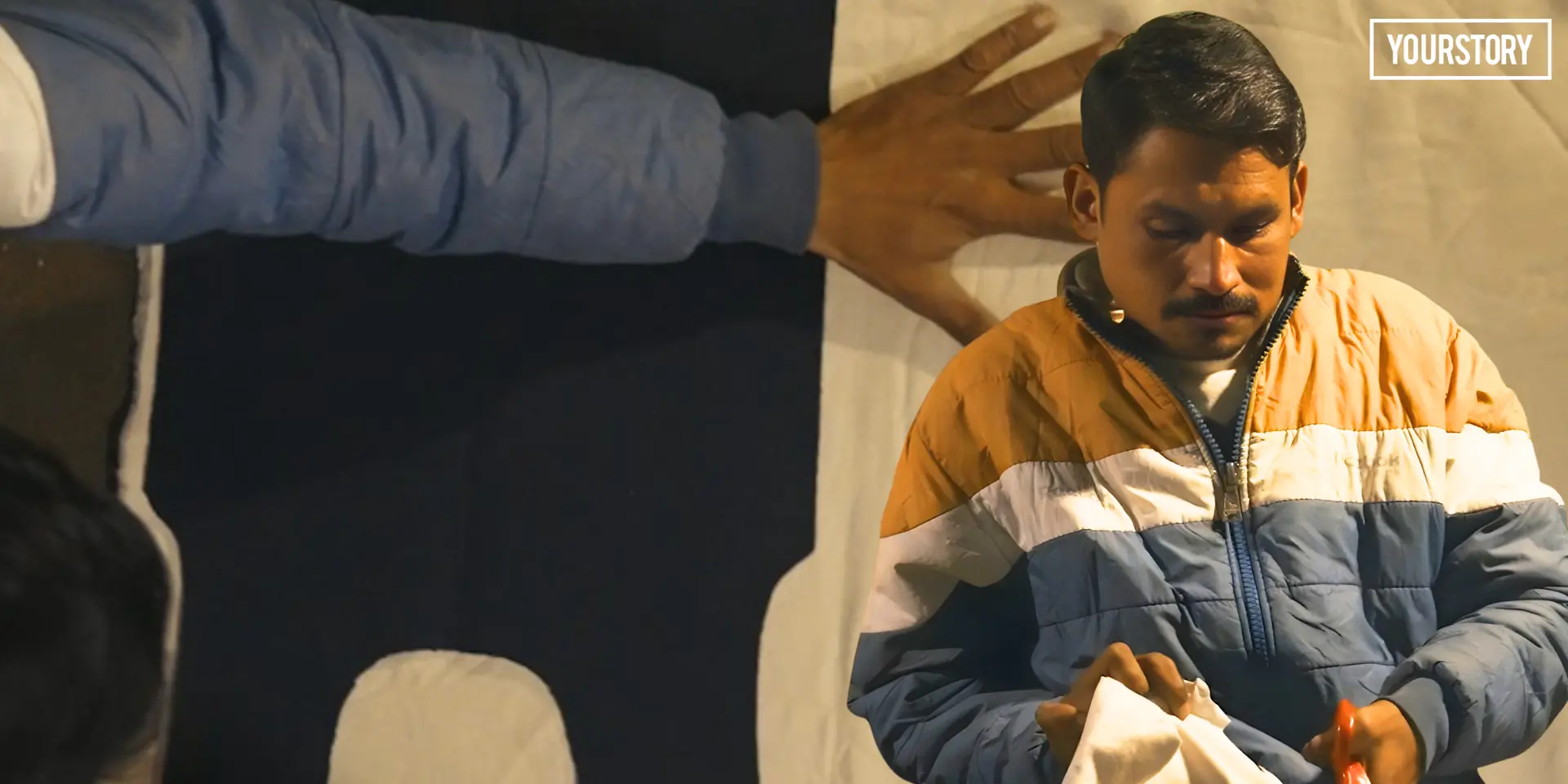

Ravi, from the Banda district, runs a small ready-made garment unit that remains busy across seasons, by switching what it makes, and by identifying small changes in demand that arrive from markets far beyond his town. His work is straightforward: he gets fabric, cuts it, stitches it through a set of local hands, and sells finished pieces to traders who then move the stock onward.
He describes the unit as an old, family-run business; one he learned by watching his father sew when he was young. Over the past eight to ten years, Ravi has taken it forward as his own operation, building a routine around the calendar of clothing that sells in different months. Winters bring hoodies, summers shift to lowers and T-shirts, and around July, he focuses on dress and uniform orders, so that the machines do not sit idle for long.
A workshop that never stops
The supply chain begins outside Uttar Pradesh. Fabric arrives from Ludhiana, and once it reaches Banda, it moves through a predictable sequence inside the workshop. The rolls are opened and cleaned, then cut to size, after which artisans stitch the pieces. Pressing and finishing follow, before the garments are packed and sold.
Ravi’s buyers are traders, and he says the goods leave Banda for a spread of towns and states, including Chhattisgarh, Odisha, Jhansi, Chhatarpur, Jabalpur, Mahoba, and nearby markets. Banda, he adds, has built a reputation for ready-made clothing, competing with bigger centres in the region. The claim is not that his unit sells under a single brand identity, but that the workshop has learned to meet the price and style expectations that traders look for when they place repeat orders.
Patterns, pressure, and changing taste
If the work is steady, the terrain around it has changed. Ravi points to rising competition and the way trends move faster than they did earlier. The biggest shift, in his telling, is the importance of “pattern” work, the small design choices that decide whether an item looks current or dated.
Ravi says he develops these patterns in-house by observing trends in the market and translating them into cuts and details that his team can reproduce. A style may hold for weeks or months, sometimes longer, and then begin to fade, prompting another change. The examples he gives are practical rather than flashy, from simple lowers to side piping, then to D-pocket designs and other tweaks that keep an everyday garment from looking generic.
Credit to expand, family to sustain
Growth, for Ravi, has meant adding capacity one machine at a time. He began with a single machine and now runs four, but he felt the limits when he needed two more to keep up with work. He took a loan of Rs 5 lakh under Mukhyamantri Yuva Udyami Vikas Abhiyan (CM YUVA) Yojana, which he says was processed without much difficulty through his bank, where he already held an account. “Mujhe paanch lakh ka credit mila, aur maine kaam badha liya,” he says.
The money went into purchasing additional machines and materials, helping him expand what the unit could handle in a day. At home, he notices the change in quieter ways. His children, now older, help with small tasks around the workshop, from threading and cleaning to handling pieces during sorting.
Ravi’s business does not claim a dramatic turnaround, only a steadier rhythm than before, built on a skill learned early and a workshop that kept adapting. In a trade where margins depend on timing and taste, that steady rhythm has become its own form of stability.
What is CM YUVA Scheme?
Under the leadership of Hon’ble Chief Minister of Uttar Pradesh, Yogi Adityanath Ji, the state government aims to transform youth from job seekers into job creators.
To achieve this vision, the Directorate of Industries and Enterprise Promotion, under the Department of Micro, Small & Medium Enterprises and Export Promotion, is implementing the ‘Mukhyamantri Yuva Udyami Vikas Abhiyan’ (CM YUVA) Yojana.
Under this scheme, young entrepreneurs are provided with up to Rs 5 lakh in 100% interest-free and collateral-free loans to start their industrial or service-based ventures. In addition, beneficiaries also receive a 10% margin money subsidy on the project cost.
CM YUVA is not just a financial assistance scheme; it also provides mentorship, guidance, market access, and essential resources to help youth become self-reliant entrepreneurs and generate employment opportunities for others.
Click here to know more about the CM YUVA Scheme.