



Government launches Rs 10,000 Cr Biopharma Shakti Programme to strengthen sector
A Rs 10,000-crore push aims to build India’s biopharma and advanced manufacturing capabilities as disease patterns and technology priorities shift.

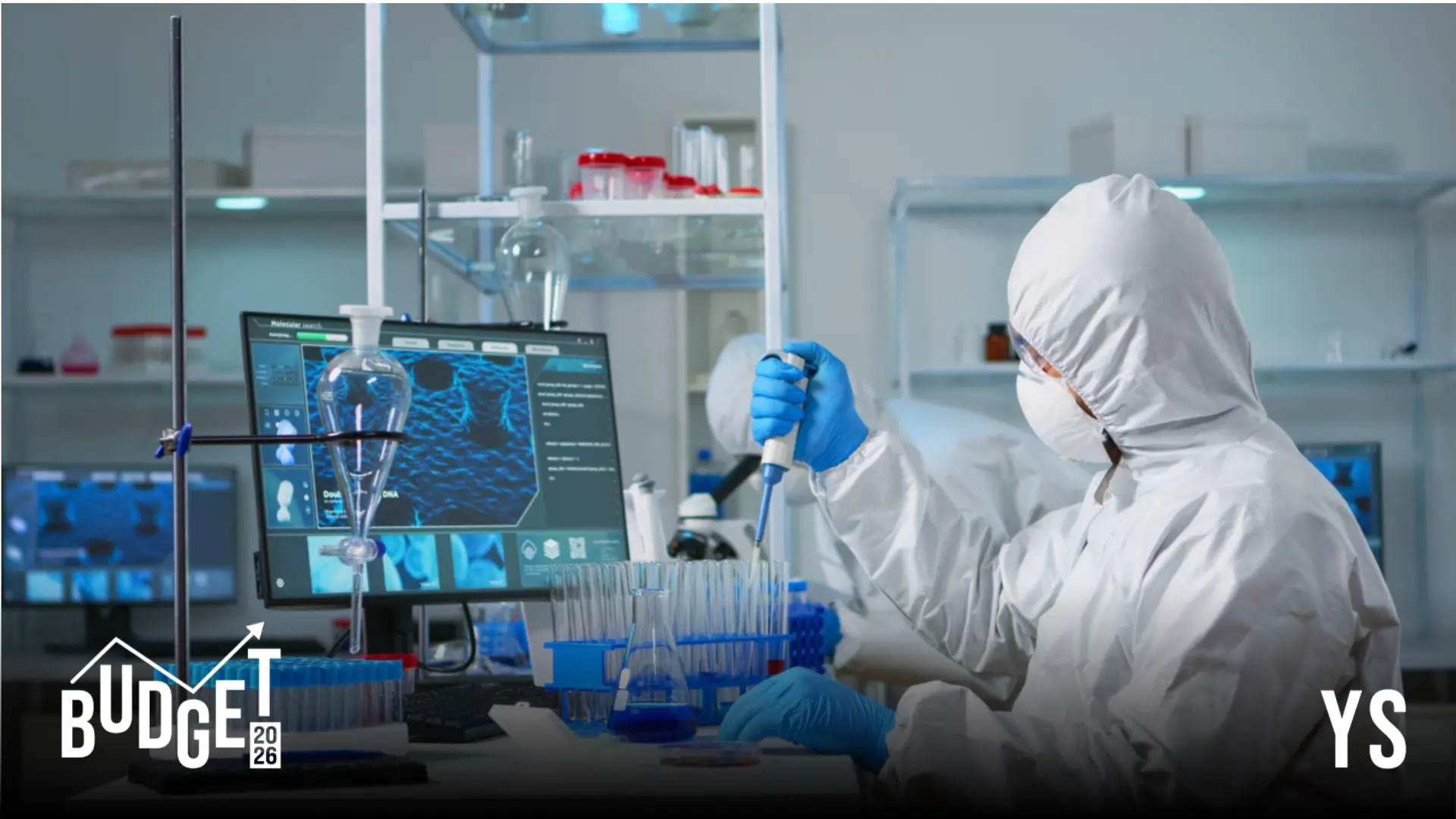

In the Union Budget 2026, Finance Minister Nirmala Sitharaman unveiled a new Rs 10,000-crore programme called “Biopharma Shakti” to strengthen India’s biopharmaceutical sector as the disease burden shifts toward non-communicable illnesses such as diabetes, cancer and autoimmune disorders.
“I propose the Biopharma Shakti with an outlay of Rs 10,000 crore over the next five years,” the finance minister told Parliament.
Biopharmaceuticals, or biologics, are advanced medicines derived from living cells and biological systems, rather than produced through conventional chemical synthesis. The segment has gained prominence as healthcare systems worldwide shift toward treating complex and chronic conditions that require more targeted therapies.
Sitharaman said the government would undertake targeted interventions across six priority areas, including manufacturing, strategic and frontier sectors, healthcare, and advanced technologies, as part of its broader industrial and innovation strategy.
The initiative reflects a broader government focus on expanding India’s capabilities in advanced biomanufacturing, research and scale-up of high-value biotech products, a segment that has become central as the nation’s health challenges evolve. India’s bioeconomy has seen rapid growth over the last decade, rising from around $10 billion in 2014 to more than $165 billion by 2024, with expectations to reach about $300 billion by 2030 as biotech innovation continues to expand.
Biopharma Shakti is likely intended to dovetail with existing government efforts to build biomanufacturing infrastructure, innovation platforms, and pilot facilities, supporting research translation from laboratories into products. Earlier policy measures, such as the BioE3 (Biotechnology for Economy, Environment and Employment) policy, also approved by the government, aim to promote high-performance biomanufacturing, bio-AI hubs and biofoundries to strengthen India’s biotechnology ecosystem.
The new funding allocation comes amid continued policy emphasis on self-reliance in health technologies and high-value drug production, aligning with India’s goals of reducing import dependence for complex biologic medicines and enhancing domestic research and development capacities.
India’s bioeconomy, encompassing biopharmaceuticals, bio-industrial products, agricultural biotech and related sectors has been steadily expanding. The number of biotech startups has surged over the past decade, and the sector’s contribution to the economy has grown substantially, driven by both public policy initiatives and private investment.
The Rs 10,000-crore Biopharma Shakti programme, as laid out in Budget 2026, marks a major fiscal
commitment at a time when biotechnology and health innovation are high on the government’s strategic agenda, reflecting long-term efforts to build capacity in areas of critical national importance.
Industry reaction: capital, capacity and credibility
Investors and industry leaders broadly welcomed the move, viewing it as a de-risking signal for long-gestation, capital-intensive healthcare innovation.
Ajay Mahipal, Co-founder and General Partner at HealthKois, said the Budget marked a structural shift in how healthcare is being positioned. With overall healthcare allocations crossing ₹1 lakh crore for the first time, Mahipal said initiatives such as Biopharma Shakti and the creation of more than 1,000 accredited clinical trial sites reduce uncertainty for long-term investors in deep science.
“The upgrading of NIPERs ( National Institute of Pharmaceutical Education and Research) and the strengthening of CDSCO (Central Drugs Standard Control Organisation) create a more predictable regulatory pathway,” he said, adding that customs duty exemptions on life-saving drugs and expanded allied healthcare training could support near-term resilience while longer-term innovation scales up.
Nikkhil K. Masurkar, CEO of ENTOD Pharmaceuticals, described Biopharma Shakti as a landmark step in boosting domestic biologics and biosimilars manufacturing. He pointed to parallel measures—clinical trial expansion, regulatory upgrades, and patient-focused duty exemptions—as improving India’s competitiveness, while noting that reinstating weighted R&D tax deductions could further accelerate private investment in high-risk innovation.
From a medtech perspective, Madhusudhan HK, Country Manager at medtech firm Aerolase, said rationalised import duties on advanced medical devices and critical medicines would help clinics deploy global-grade technologies more affordably. Streamlined approvals and clinical training incentives, he added, could accelerate adoption of advanced diagnostics and precision therapies.
The broader healthcare ecosystem also saw gains. Priyadarshi Mohapatra, Founder and CEO of CureBay, said the Budget reflected a shift towards prevention, early diagnosis, and long-term care—particularly relevant as chronic diseases spread beyond urban centres. Measures such as caregiver training, regional medical hubs, and digital integration, he said, strengthen access and continuity of care in under-served markets.
Shalini Shivdasani, Founder and CEO of Reaviva Holistic Health, said the focus on allied health professionals and non-communicable diseases acknowledged that India’s healthcare challenge is increasingly about sustained care rather than episodic treatment. She said the Budget’s emphasis supports integrated, patient-centric models combining medical, lifestyle and rehabilitative care.
Traditional medicine also received renewed attention. Abdul Majeed, Chairman and Managing Trustee of Hamdard Laboratories, said measures to upgrade AYUSH pharmacies, testing laboratories, and research capacity would help improve quality standards and public trust. He added that biologics and traditional systems could together play a role in preventive and long-term healthcare as disease profiles evolve.
From a regulatory and research standpoint, Sachin Joshi, Founder and Managing Director of PharmNXT, said pairing Biopharma Shakti with regulatory science reforms, expanded NIPER capacity, and a strengthened CDSCO could materially shorten development timelines while aligning India with global benchmarks.
Dr Saurabh Arora, Managing Director at Auriga Research, echoed that view, noting that the Budget’s repeated emphasis on quality upgradation, testing infrastructure. and skilled manpower would benefit not just biopharma but the broader healthcare manufacturing ecosystem. “Execution will now be the key differentiator,” he said.
Taken together, the Rs 10,000-crore Biopharma Shakti programme marks one of the government’s most significant fiscal commitments to advanced healthcare manufacturing, underscoring a long-term bet on biologics, regulatory credibility and innovation-led growth as India’s health and economic priorities converge.
The copy was updated with reactions from the healthcare industry.
Edited by Megha Reddy