


Small printing unit steadies family income in Gorakhpur district
In Piprapur, Gorakhpur, Nizamuddin Ansari runs a small printing press making promotional material and printed carry bags for local traders, shifting from seasonal embroidery to a steadier year-round livelihood.

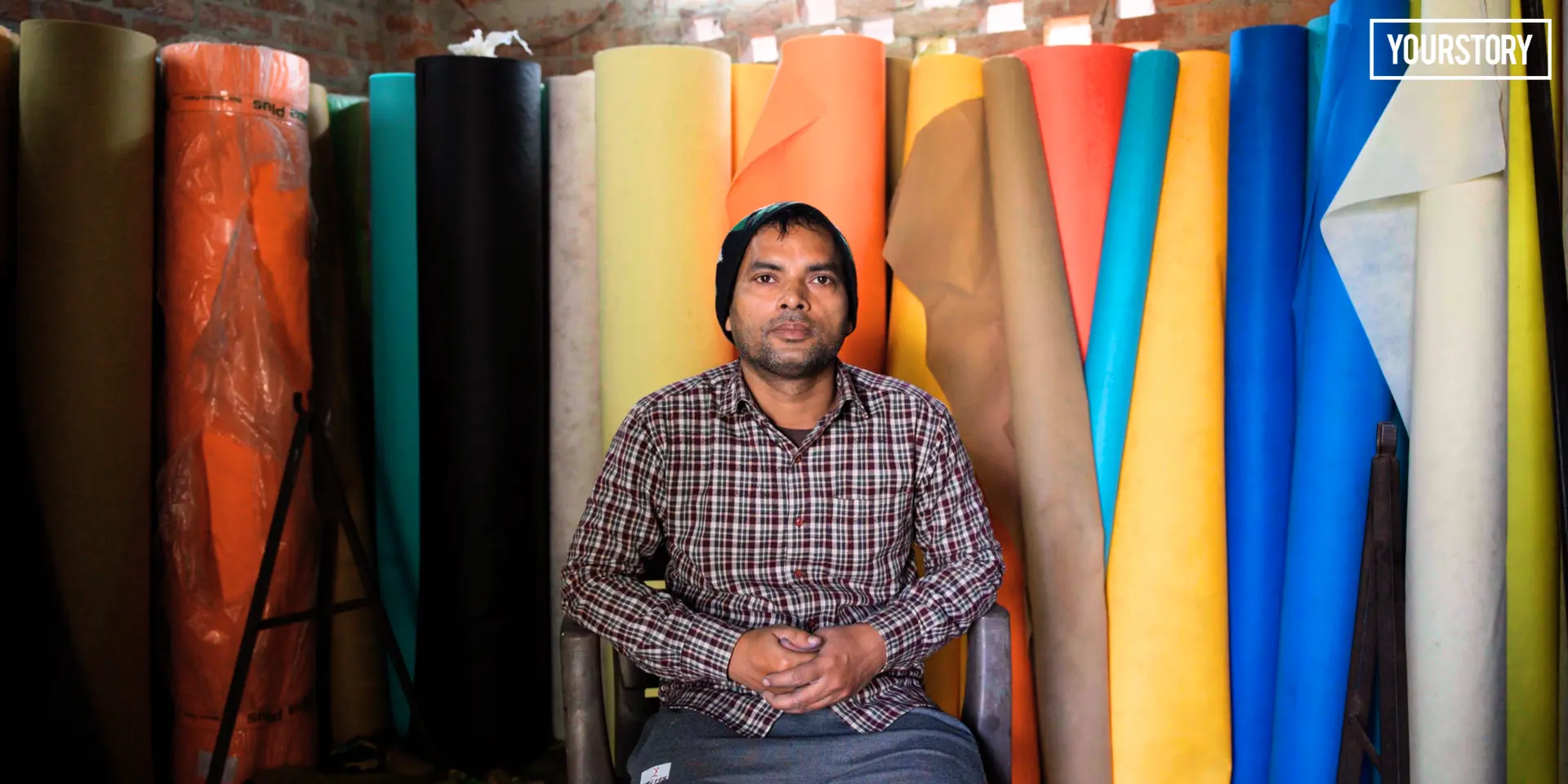

In Mohalla Piprapur, under Tiwaripur police station in Gorakhpur district, Nizamuddin Ansari runs a small printing press that produces promotional materials and printed carry bags for local traders. The unit handles only the printing work, while stitching and finishing outsourced to external workers. Colours and paint are sourced from shops, and the printed material is then supplied to shopkeepers.
Ansari says his journey began long before the printing unit took shape. After his father passed away in 2006, the family’s financial situation became uncertain. With five sisters and two brothers in the household, the responsibility to stabilise income fell early on the siblings. At the time, they were engaged in embroidery work done at home using a small machine, but the demand was seasonal and limited to three or four months a year.
Shifting from embroidery to printing
The irregular nature of embroidery made it difficult to support the family. Around 2010, Ansari and his brother began exploring the printing of publicity material as an additional source of income. They started on a small scale, learning the trade gradually, and building contacts. Over the years, the business expanded slowly, shaped more by persistence than by sudden growth.
As the family grew and both brothers married, financial needs increased. With children to support, the brothers began looking for ways to strengthen the unit, especially during peak seasons such as Holi and the wedding months, when demand for printed bags and promotional material rises.
It was during discussions with friends in July and August that Ansari began considering external financial support. He says he wanted assistance mainly for purchasing raw materials and improving operations. The business was running, but he felt it needed reinforcement to move beyond its limitations.
He eventually applied under the Mukhyamantri Yuva Udyami Vikas Abhiyan (CM YUVA) Yojana after learning about it through friends and local representatives. He chose the CM YUVA Yojana because it was interest-free and did not require him to enter into complicated financial arrangements. “We chose this because we wanted to avoid paying interest,” he says, which translates to, we wanted to avoid interest, so we chose this option.
Measured expansion and caution
The financial support helped him purchase raw materials in larger quantities and prepare for the upcoming festive demand. Ansari emphasises that while loans are available from the market, he preferred a route that did not add the burden of interest. He and his brother manage the printing work themselves, coordinating with outside workers for stitching when required.
He also advises others to gather information directly rather than rely on intermediaries, noting that clarity and caution are essential in financial matters.
For Ansari, the printing press represents more than a business. It marks a steady shift from uncertain seasonal earnings to a more predictable year-round trade. The progress has been gradual, built over years of manual work and careful decisions. In Gorakhpur district, what began as a modest attempt to supplement embroidery income has evolved into a stable family enterprise that now anchors their livelihood.
What is CM YUVA Scheme?
Under the leadership of Hon’ble Chief Minister of Uttar Pradesh, Yogi Adityanath Ji, the state government aims to transform youth from job seekers into job creators.
To achieve this vision, the Directorate of Industries and Enterprise Promotion, under the Department of Micro, Small & Medium Enterprises and Export Promotion, is implementing the ‘Mukhyamantri Yuva Udyami Vikas Abhiyan’ (CM YUVA) Yojana.
Under this scheme, young entrepreneurs are provided with up to Rs 5 lakh in 100% interest-free and collateral-free loans to start their industrial or service-based ventures. In addition, beneficiaries also receive a 10% margin money subsidy on the project cost.
CM YUVA is not just a financial assistance scheme; it also provides mentorship, guidance, market access, and essential resources to help youth become self-reliant entrepreneurs and generate employment opportunities for others.
Click here to know more about the CM YUVA Scheme.