


Kaushambi: inside a small unit making everyday namkeen and snacks
In Kaushambi, Sagundrala Devi runs a small namkeen unit where frying, masala mixing, and packing must finish the same day built on local demand, tight margins, and consistent output.

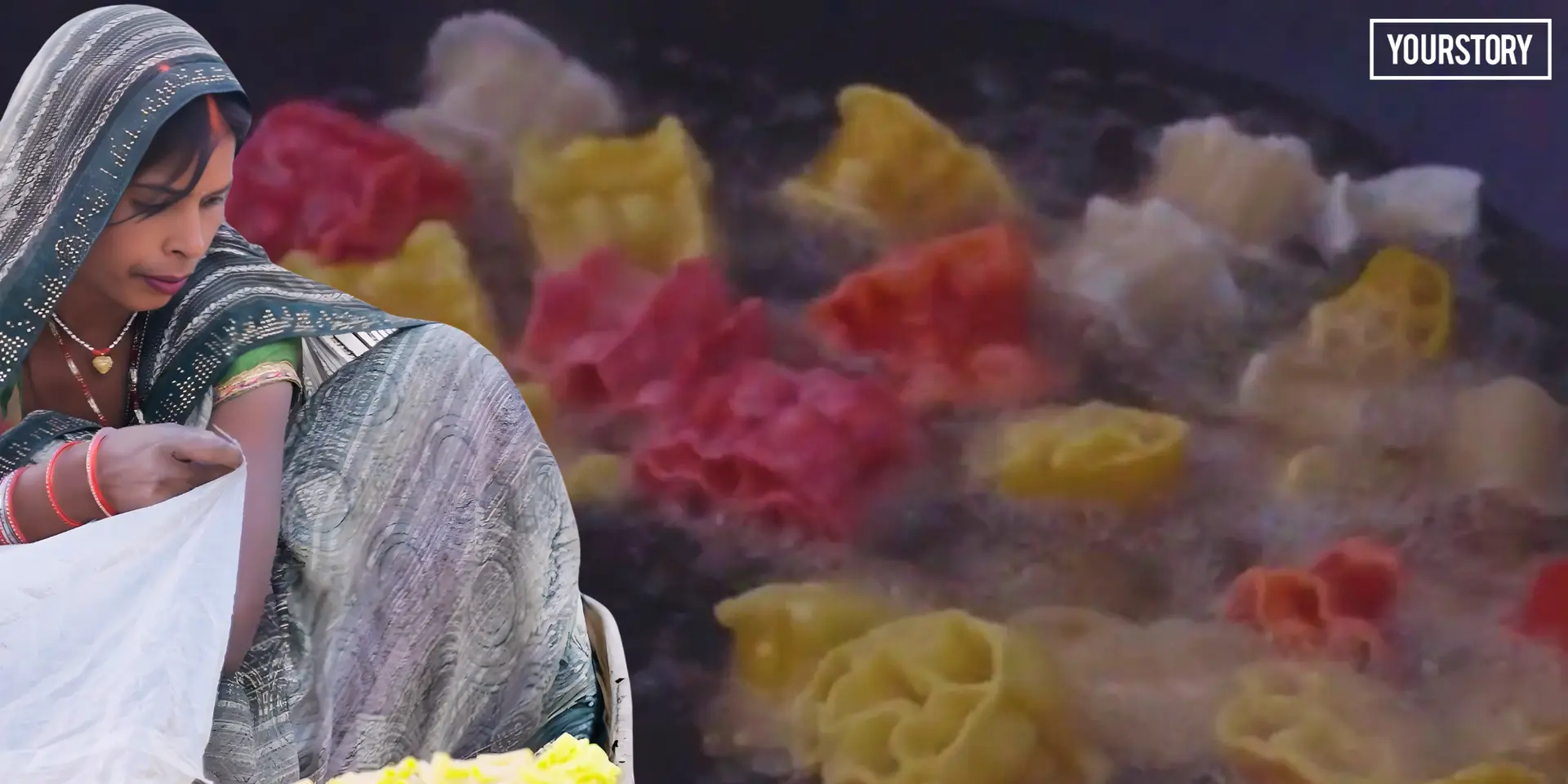

In Kaushambi, a small production room runs on a simple routine of dough, hot oil, and packing work that must be finished the same day. Shakuntala Devi, has set up a namkeen unit here, making everyday snacks familiar to local buyers— pulla, churri, katori, and pasta-shaped fried items. The work is not framed as a brand story or a big launch; it is a practical effort to keep production moving and cash flow steady.
Her work sits in the everyday economy of local snacks, where demand is steady but margins depend on consistency, oil prices, and whether production can keep pace with small orders. “We take it out of the oil, mix the masala, then pack it and sell,” she says, describing a process that moves quickly once the frying begins.
From borrowed starts to machines
Devi says she has been running the unit for about a year. The decision, she explains, came after her husband left for Dubai, where he has been for a year. With expenses to manage at home, she felt she needed an income stream that did not depend on waiting for money to come from outside. She describes herself as the sole earner in the household at present, and says she also hopes the unit can eventually support a few more people with regular work.
Starting, however, was not smooth. She recalls adjusting money from here and there in the early days, and trying to understand how to formalise the work. She applied for support through the Mukhyamantri Yuva Udyami Vikas Abhiyan (CM YUVA) Yojana and received a loan of ₹2,21,000. Alongside that, she says she added around ₹4,00,000 from home to purchase machines, bringing the total value of the equipment to around ₹6 lakh.
Even after machines arrived, the work needed time to settle into a rhythm. She mentions that preparing materials can take weeks, and that setting up steady production took longer than she expected. In the beginning, she says, she started small, investing about ₹30,000 to bring raw materials and start trial runs.
Work that keeps running
Inside the unit, the steps are practical and repetitive: dough is kneaded, the mix is fed into machines, shapes are cut, and batches are fried. After draining, the masala is mixed by hand, and the packets are sealed. Sales, she suggests, are still built through local circulation—small distribution and regular buyers—rather than any large market arrangement.
For Devi, the unit has become a way to manage uncertainty, with a routine she can control. The early months were about arranging money, learning the sequence of machines, and keeping the first batches saleable. Now, she measures progress more quietly: the unit runs, packets go out, and some income returns home regularly, easing the pressure that pushed her to begin in the first place.
What is CM YUVA Scheme?
Under the leadership of Hon’ble Chief Minister of Uttar Pradesh, Yogi Adityanath Ji, the state government aims to transform youth from job seekers into job creators.
To achieve this vision, the Directorate of Industries and Enterprise Promotion, under the Department of Micro, Small & Medium Enterprises and Export Promotion, is implementing the ‘Mukhyamantri Yuva Udyami Vikas Abhiyan’ (CM YUVA) Yojana.
Under this scheme, young entrepreneurs are provided with up to Rs 5 lakh in 100% interest-free and collateral-free loans to start their industrial or service-based ventures. In addition, beneficiaries also receive a 10% margin money subsidy on the project cost.
CM YUVA is not just a financial assistance scheme; it also provides mentorship, guidance, market access, and essential resources to help youth become self-reliant entrepreneurs and generate employment opportunities for others.
Click here to know more about the CM YUVA Scheme.