




Lanstitut
View Brand PublisherLanstitut is using language to unlock global healthcare jobs for Indian professionals
As countries face a severe shortage of nurses and healthcare workers, Delhi-based Lanstitut is tackling one of the biggest hidden barriers, language, using AI-driven training and ethical recruitment to enable global mobility at scale.


As global life expectancy rises, healthcare systems are struggling under a paradox. People are living longer, yet spending the same number of years, or more, in poor health. A McKinsey report, Heartbeat of Health: Reimagining the Healthcare Workforce of the Future, notes that while longevity has improved, the proportion of life spent battling chronic and infectious diseases has remained stubbornly unchanged.
At the heart of this crisis lies a severe workforce shortage. The World Health Organization estimates that the world could face a shortfall of more than 10 million healthcare workers by 2030, with some projections placing the gap as high as 78 million. Already, nearly 60% of the global population, around 4.5 billion people, lacks access to essential healthcare services. Without enough doctors, nurses, and caregivers, quality of care declines and preventable deaths rise.
One Bangalore-based organization believes the problem is not just about training more professionals, but enabling them to move. Founded in 2022, Lanstitut is a global healthcare talent mobility platform addressing one of the most overlooked barriers to migration: language.
The idea took shape after a personal crisis. One of the co-founders’ brothers, who had migrated to Malta, suffered a serious medical emergency. Due to long wait times and a shortage of healthcare workers, his first doctor’s appointment was scheduled nearly a month later. He eventually returned to India for treatment.
India has one of the world’s largest pools of skilled healthcare professionals, yet many are unable to work overseas because of non-clinical hurdles such as language fluency. “Without mastering local languages like German or Japanese, placement was simply not possible,” says Murshid Rahman, Co-founder, Lanstitut.
Coming from foreign-language backgrounds themselves, having studied French and Spanish at Delhi University, the founders recognised an opportunity. Drawing from similar stories across Europe, they built Lanstitut to deliver outcome-driven language training tailored specifically for healthcare professionals, enabling them to migrate and practice globally.
Diving deeper into the global healthcare crisis
According to Khubaib Co-founder & CEO, Lanstitut, the global nursing shortage is no longer a looming threat; it is an acute and visible crisis. Countries with limited healthcare workforces are being hit hardest, leaving large sections of their populations underserved and placing immense strain on already stretched systems. Germany and Japan, in particular, are facing severe shortages alongside rapidly ageing populations and shrinking younger workforces unable to keep pace.
This deep-rooted, structural challenge is compromising patient care, overburdening existing staff, and slowing economic growth.
“A healthy population is fundamental to any country’s long-term productivity and stability,” says Khubaib .
By 2030, an estimated 300,000 nursing roles are expected to remain unfilled globally, along with more than 150,000 vacancies in physiotherapy and allied healthcare professions, including pharmacists. Japan alone is projected to have 200,000 healthcare positions vacant by the end of the decade. Similar workforce gaps are emerging across France, Italy, other European Union nations, and several GCC countries.
Against this backdrop, Germany is a key pillar of Lanstitut’s global strategy. Its mounting healthcare workforce crisis, combined with clearly defined, policy-backed migration and professional recognition pathways, makes it an attractive destination for Indian healthcare professionals seeking stable, long-term international opportunities.
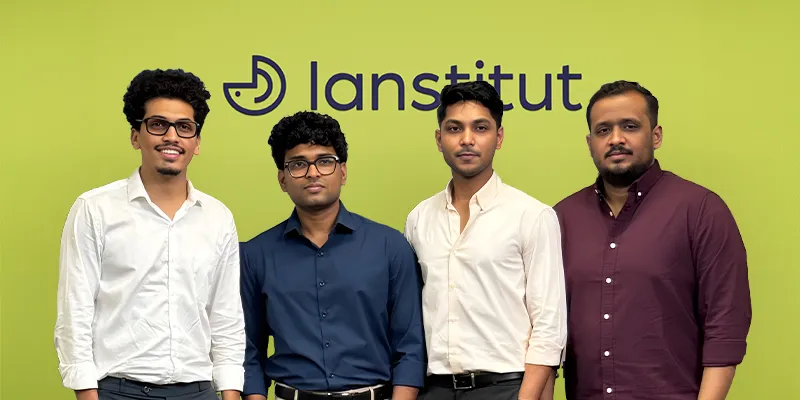
Lanstitut: facilitating healthcare migration with AI
Lanstitut’s mission spans the entire healthcare mobility journey, addressing workforce shortages at scale through an end-to-end approach. The organization works closely with candidates from onboarding to job readiness, combining technology-driven language learning with specialized medical terminology, cultural training, and regulatory guidance. The platform enables healthcare professionals to practise and master foreign languages in real-world contexts, helping them meet employer eligibility criteria and transition into international roles without career interruptions.
AI plays a central role in the process. It helps employers identify candidates with the most relevant profiles and the highest language fluency based on specific hiring needs. Lanstitut evaluates and benchmarks candidates to bring transparency to recruitment and enable outcome-driven hiring for both employers and professionals. This approach cuts the traditional eight to 10-month international hiring cycle by nearly half, reducing it to around four months.
“We follow a strictly ethical and transparent recruitment model. Through years of groundwork, Lanstitut has created a curated and verified pool of 400,000+ nurses and physiotherapists,” says Murshid Rahman, Co-founder & CBO, Lanstitut.
Unlocking the Lanstitut language model
At Lanstitut, language training is not optional; it is fundamental to international placement. Employers seek professionals fluent in local languages because communication directly affects patient safety and clinical outcomes. In this sense, Lanstitut functions as a finishing school, ensuring candidates are fully prepared to integrate into overseas healthcare systems and build sustainable, long-term careers.
In Germany, for example, access barriers extend beyond qualifications to include language proficiency, cultural adaptation, ethical recruitment processes, hospital matching, and post-migration support. Lanstitut addresses these challenges through intensive, outcome-driven German language training, enabling professionals to conduct real workplace-level conversations with confidence. Beyond language and cultural sensitivity training, the organization also provides regulatory guidance and on-ground support once candidates arrive in Germany, going well beyond basic relocation assistance.
To build awareness and access at scale, Lanstitut has partnered with over 250 nursing and physiotherapy colleges, conducting offline seminars across multiple states and cities. It also works closely with nursing associations and maintains a strong community presence on social media, reaching more than 50,000 healthcare professionals and generating up to five million views. Word-of-mouth referrals within the healthcare community continue to drive a significant share of candidate onboarding.
The impact of these programmes is tangible on both professional and personal fronts. Professionally, candidates gain international exposure, structured working hours, and the dignity of working within advanced healthcare systems. Financially, they earn salaries up to ten times higher than comparable roles in India.
On a personal level, the transition is often life-changing. Healthcare professionals can bring family members through spouse and dependent visas, access free education for their children, and enjoy a significantly improved work-life balance.
What’s next?
Over the next three to five years, Lanstitut is focused on scaling both its reach and its impact. The organization has begun onboarding physiotherapists for international recruitment and plans to expand into allied healthcare roles. It also aims to grow its global footprint beyond Germany, extending operations to multiple international markets.
Equally critical is building and attracting young healthcare talent from Indiafor roles both within the country and overseas. “By building structured training, technology-enabled learning, AI-driven recruitment processes, and ethical placement pathways, our long-term vision is to strengthen the global healthcare workforce at scale while creating sustainable career opportunities for the next generation within India and globally,” says Murshid Rahman.