


How a modest incense-making unit is finding space in Mahoba’s local economy
Starting with a stall at the Kajli fair, Bano tested demand, reinvested earnings, and built a routine around manual production and family-led sales, creating stable work without leaving home.

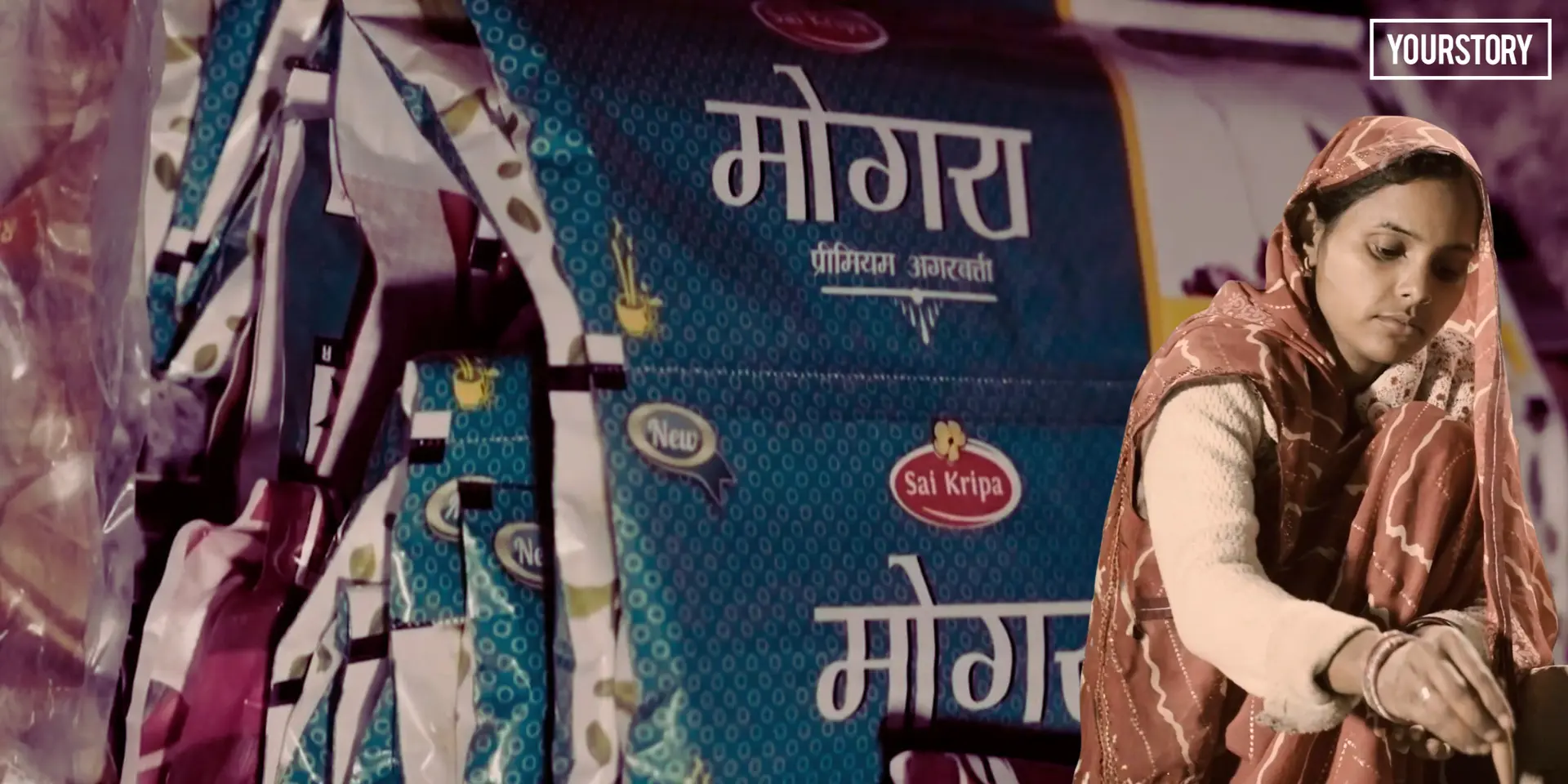

Nafiza Banu lives in Sijahri, the gram panchayat of Mahoba district, near Kabrai, where her days were earlier divided between household responsibilities and seasonal agricultural work. For long stretches of the year, there was little structured work at home. The idea of starting something on her own took shape gradually, driven less by ambition and more by the sense that unused time could be put to better use.
Today, she runs a small home-based unit, producing agarbatti, dhoopbatti and diyas. The work is simple in scale and rooted in everyday religious use. Products are prepared and packed at home, then sold in nearby markets. “When there is free time at home, it feels right to do something that could support the household,” she says.
Learning the work
Banu did not have prior experience in manufacturing or trade. Before starting the unit, she attended a local training programme on making incense sticks, dhoop, samrani cups, and a variety of diyas, including those made from clay and cow dung powder. Training was held in the village, and attended by around 35 women, though only a few chose to pursue the work afterward.
The process, she explains, requires attention to material ratios. Agarbatti and dhoop use different mixes of charcoal powder, bark powder, flour and other binding materials, with bamboo sticks as the base for incense. Colour and fragrance are added, depending on the product. The work is done manually, which limits output, but keeps costs manageable at an early stage.
Starting small
Banu began production in August, around the time of the Kajli fair, where she set up a stall to test local demand. She also participated in other melas, supplying products and gaining confidence that there was steady interest. Initial investment was a challenge, as household savings were limited. Support came through the Mukhyamantri Yuva Udyami Vikas Abhiyan (CM YUVA) Yojana, which helped her secure a small loan to purchase basic equipment and raw materials.
Her husband plays a central role in the operation. While she handles production and packing at home, he takes care of selling the products in local markets. Earlier, he depended on daily wage work. Now, both are involved in the same activity, allowing them to plan work and income together.
The loan enabled the purchase of packing machines, weighing tools, moulds for diyas and dhoop, and initial stocks of powders and fragrances. Over time, earnings are reinvested to ensure a steady supply of raw materials.
Looking ahead
Demand currently comes from Mahoba town and nearby villages, with some sales in surrounding markets. During festivals like Diwali, Banu has hired a few workers for short periods to manage increased orders. She hopes to bring two or three more women into regular work if production stabilises.
Reflecting on the shift, she says, “Now there is no need to go and work at other people’s places, our work runs from our own home.” The work has not transformed life overnight, but it has introduced routine, shared responsibility, and a sense of control over income. The unit has become a modest but steady source of livelihood, anchored in local demand and familiar skills.
What is CM YUVA Scheme?
Under the leadership of Hon’ble Chief Minister of Uttar Pradesh, Yogi Adityanath Ji, the state government aims to transform youth from job seekers into job creators.
To achieve this vision, the Directorate of Industries and Enterprise Promotion, under the Department of Micro, Small & Medium Enterprises and Export Promotion, is implementing the ‘Mukhyamantri Yuva Udyami Vikas Abhiyan’ (CM YUVA) Yojana.
Under this scheme, young entrepreneurs are provided with up to Rs 5 lakh in 100% interest-free and collateral-free loans to start their industrial or service-based ventures. In addition, beneficiaries also receive a 10% margin money subsidy on the project cost.
CM YUVA is not just a financial assistance scheme; it also provides mentorship, guidance, market access, and essential resources to help youth become self-reliant entrepreneurs and generate employment opportunities for others.
Click here to know more about the CM YUVA Scheme.