



Why Letting Go of Control Can Improve Your Success
Epictetus’ philosophy teaches us to focus on what we can control and accept the rest, offering a powerful framework for resilience in uncertain times.

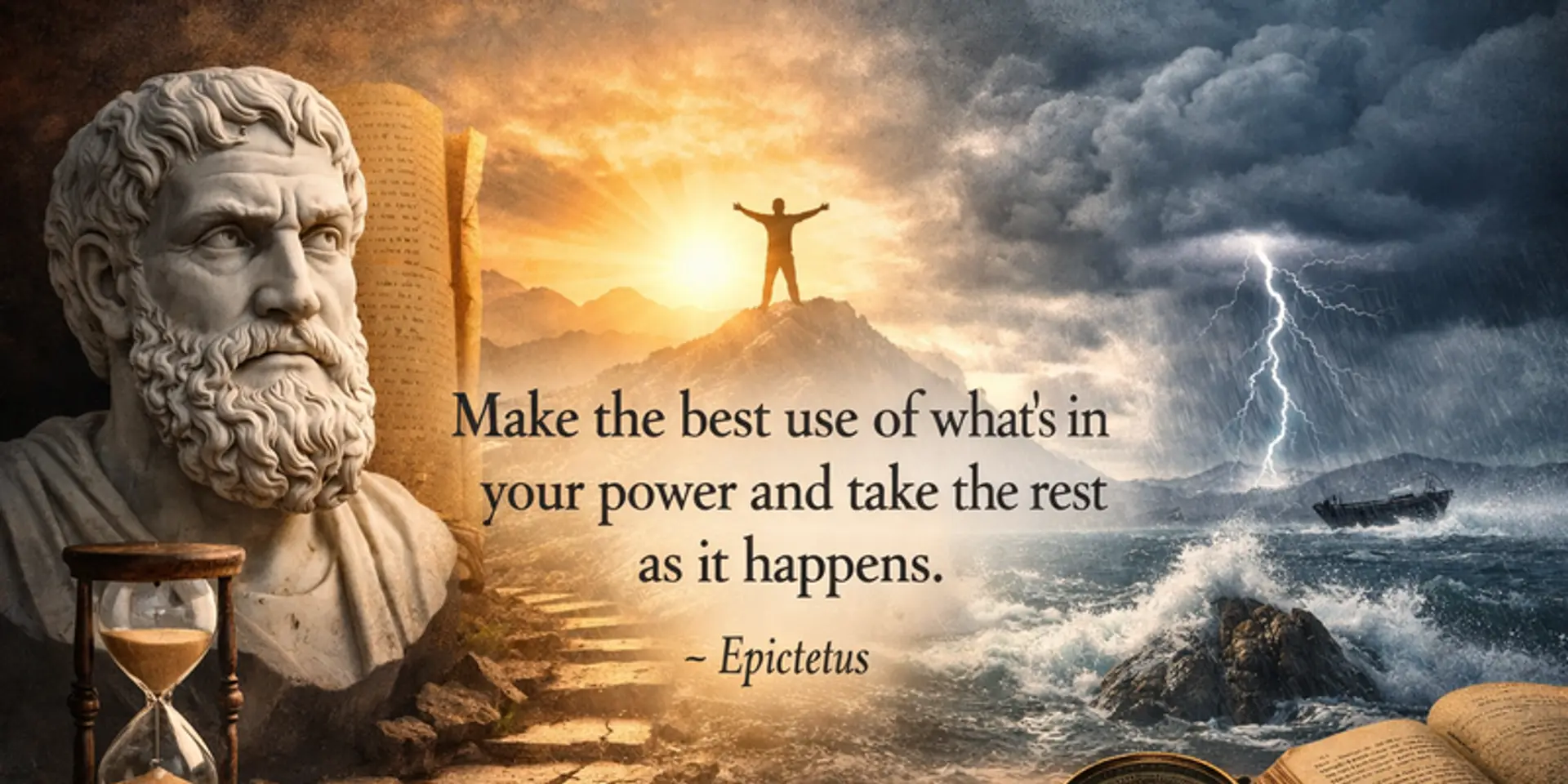

Make the Best Use of What’s in Your Power — And Let the Rest Happen
In an age driven by control — control over careers, finances, reputation, timelines and outcomes — the ancient Stoic philosopher Epictetus offered a surprisingly modern piece of wisdom: “Make the best use of what’s in your power, and take the rest as it happens.”
At first glance, the statement appears simple. Yet, its relevance has only deepened in today’s world of constant uncertainty.
The illusion of control
Much of modern stress stems from an attempt to control what is fundamentally uncontrollable — market conditions, other people’s decisions, sudden disruptions, or even the pace at which success arrives.
We plan extensively, set targets, build systems and chase predictability. But outcomes rarely follow scripts.
Epictetus’ philosophy separates life into two clear domains:
- What we can control
- What we cannot
Our effort, attitude, preparation and response belong to the first category. External outcomes — recognition, timing, approval or unforeseen setbacks — fall into the second.
The mistake lies in investing emotional energy into both.
The power of focused effort
Making the best use of what is within our control does not mean passive acceptance. It demands disciplined action.
For a student, it means preparing thoroughly rather than obsessing over exam results.
For an entrepreneur, it means refining the product instead of worrying about market reactions.
For a professional, it means improving skill rather than fearing competition.
This mindset redirects attention from anxiety to agency.
When effort replaces worry as the centre of focus, productivity improves and decision-making becomes clearer.
Instead of asking, “Will this work?”, the question shifts to, “Have I done my best with what I can influence?”
Accepting outcomes without defeat
The second half of Epictetus’ insight — “take the rest as it happens” — is often misunderstood as resignation. In reality, it reflects emotional resilience.
Acceptance is not the absence of ambition. It is the refusal to let outcomes dictate self-worth.
A rejected proposal does not negate preparation.
A failed attempt does not erase learning.
An unexpected setback does not cancel progress.
By accepting outcomes without excessive resistance, individuals conserve energy for the next step rather than losing momentum to frustration.
Relevance in modern life
In volatile environments — whether in business, careers or personal growth — this philosophy provides stability.
It encourages:
- Action without paralysis
- Planning without obsession
- Ambition without anxiety
In practice, this translates into a healthier approach to uncertainty. One continues to strive, but without tying identity to results beyond one’s control.
A framework for resilience
Ultimately, Epictetus’ advice offers a pragmatic framework for navigating complexity.
Do the work you can.
Prepare with intent.
Respond with clarity.
And when outcomes unfold differently than expected — adjust, rather than despair.
Success, then, becomes less about controlling events and more about mastering response.
In a world that constantly urges us to manage everything, this Stoic reminder restores balance: focus on effort, accept outcomes and keep moving forward.