


Azamgarh silk saris: A Loom Network Shaped by Skill, Sequence, and Shared Work
In Mubarakpur, Azamgarh district, silk saris are produced through a coordinated network of specialised artisans. From yarn preparation and dyeing to pattern design and weaving, each stage forms a structured chain that transforms silk threads into finished ceremonial textiles.

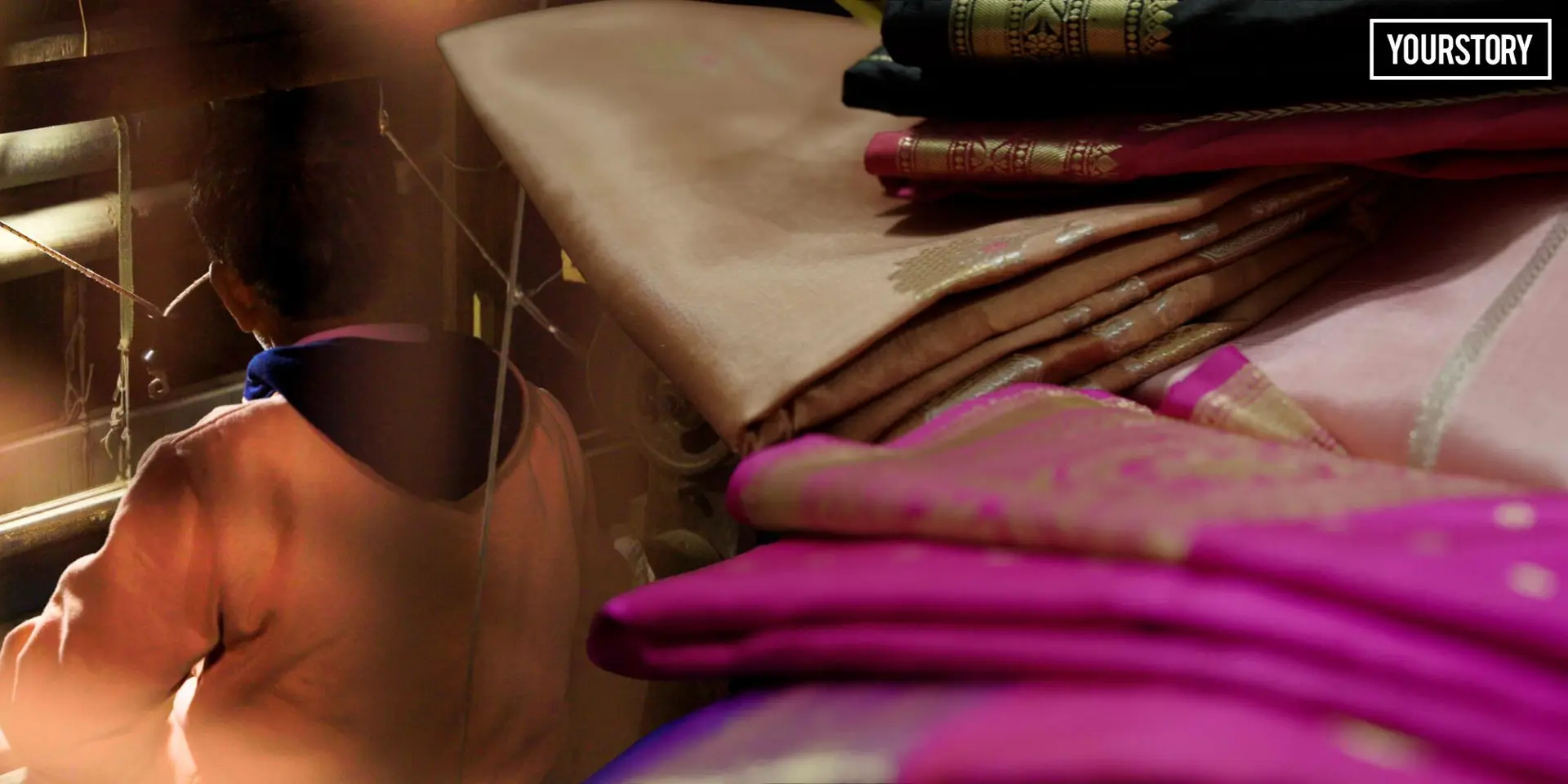

In Mubarakpur, a town in Azamgarh district of Uttar Pradesh, silk saris move through a clearly defined chain of hands before they reach the market. No single artisan completes the product alone. One source brings in the silk, another prepares it, a separate dyer handles colour, design specialists set the pattern, and weavers finally translate yarn into cloth.
Mehtab Ahmad of Mohalla Pura Sufi explains that this structure is not new. His father, Sageer Ahmad, was part of the same trade. Growing up around looms, Mehtab saw how the work followed a fixed rhythm—steady, specialised, and organised around cost and timing. Each role fits into the next, and delay at one stage affects the entire chain.
From silk yarn to woven sari
The process begins at the market, where raw silk is procured. It is handed to a preparatory worker who rewinds and sets the yarn for production. The material is then weighed carefully. For a single sari, approximately 320 grams of bana (weft yarn) is measured before moving forward.
Colouring is handled independently. The yarn is first scoured to clean and soften it, then dyed to match the required shade. Only after drying does it return to the weaving side.
Design preparation follows a similar system of division. Graph-setting and pattern planning are managed by specialists. Another artisan prepares the patta or border work. Once these elements are ready, weaving begins. The loom integrates all prior steps—yarn preparation, colour choice, and pattern setting—into the final fabric.
Styles produced and market positioning
Saris woven in Mubarakpur are frequently marketed under the broad “Banarasi” label due to design similarities and buyer recognition. The range includes resham booti, antique-style patterns, chunri booti, jaal designs, fancy motifs, and multiple boota variations. Chanderi-inspired designs are also produced in response to market demand, offering familiar aesthetics at comparatively accessible price points.
Affordability is closely linked to the local cost structure. Labour rates in Mubarakpur are lower, which keeps the retail price competitive. However, this also narrows margins for artisans. Earnings per sari may amount to only a few hundred rupees, and any weaving defect can reduce the value significantly.
Market exposure and continuity
Participation in ODOP-linked exhibitions in cities such as Noida, Lucknow, and Delhi has helped improve direct buyer visibility. When customers encounter the saris at fairs, repeat orders often follow, building connections that extend beyond the event; visibility increases when traders or retail buyers return after exhibitions, or when saris enter metropolitan retail channels.
For Mehtab and others in Mubarakpur, continuity depends on consistent demand that acknowledges the layered work behind each sari. The weaving chain is not only a tradition—it is a coordinated system of livelihoods that relies on timing, skill, and sustained market linkage.