


Barabanki’s Handloom Products: Where Loom-Based Flexibility Meets Market Demand
Barabanki’s handloom sector is evolving through design flexibility, custom production, and direct market access, enabling weavers to move beyond local systems into wider domestic markets.

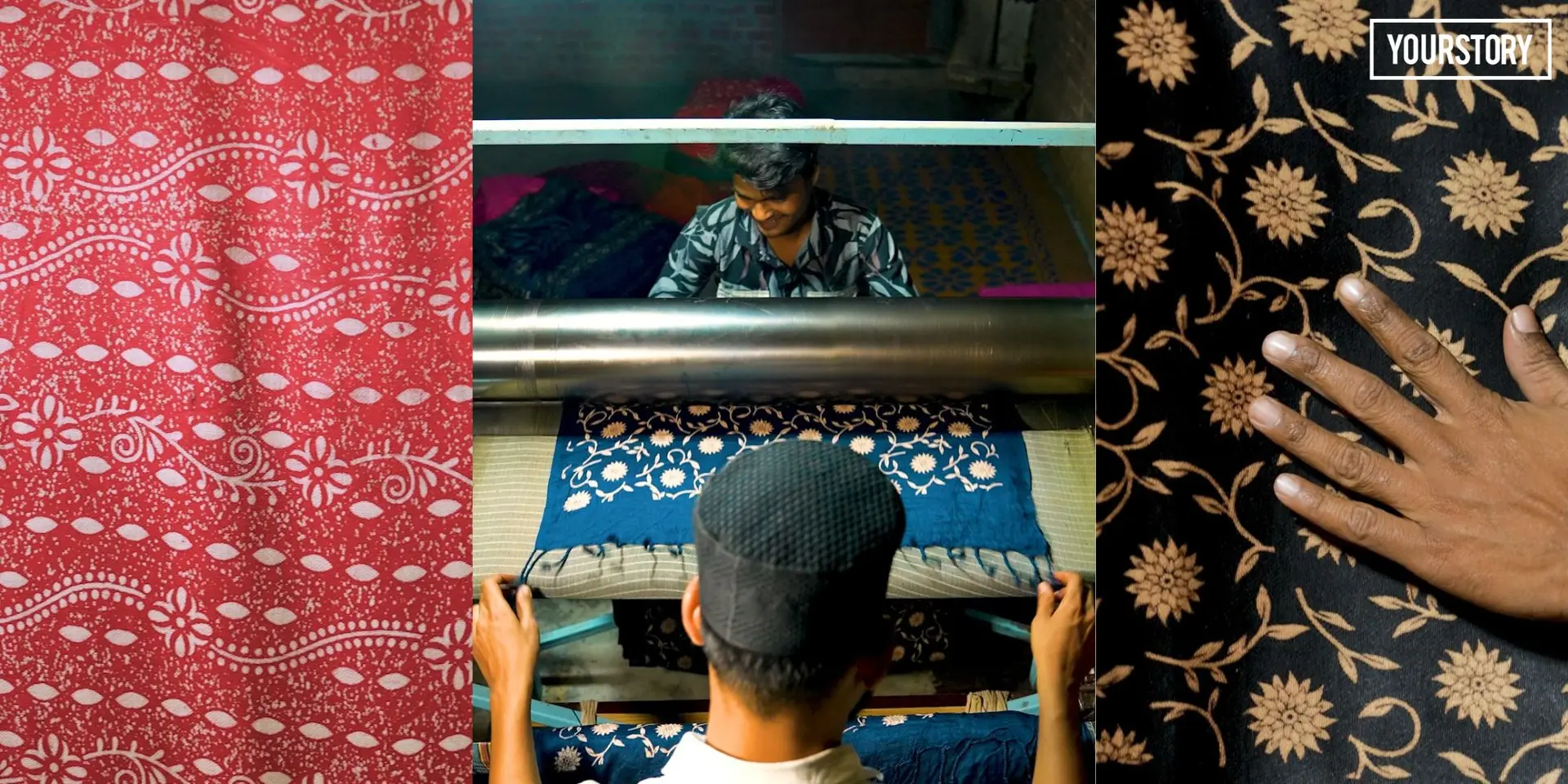

In Barabanki, handloom products are produced within a demand system shaped by fabric preference, design variation, and buyer-led specifications rather than a fixed product template. Items such as stoles, among other woven textiles, are developed as lightweight, versatile products that move across seasons depending on material feel, size requirements, and design adaptability.
In this segment, repeat demand depends on a unit’s ability to offer variety while maintaining consistency in loom-based production. The emphasis lies not only on design diversity but also on the reliability of execution across different materials and dimensions.
The production ecosystem is anchored in traditional weaving practices rather than factory-scale manufacturing. Yarn preparation, loom setup, pattern translation, and finishing are carried out in a structured sequence, with output moving either through ready stock or order-based production. This allows units to balance standard inventory with customised requirements.
A key transition in recent years has been the shift in market access. Where earlier production remained tied to local intermediaries, handloom units are increasingly connecting directly with buyers and expanding into wider domestic markets.
One such artisan-entrepreneur is Mohammad Azeem Ansari from Zaidpur, who runs H. Ansari Handloom. Representing a family engaged in weaving across generations, he formally took charge of the unit in 2011. The business reflects continuity in loom-based production while gradually expanding its operational scale.
Under the One District One Product (ODOP) Programme, handloom products are the notified focus for Barabanki. Ansari attributes part of the unit’s expansion to financial assistance under the programme, which supported increased working capacity and enabled larger production runs.
The product range includes multiple woven items, with stoles forming a key segment alongside other handloom outputs. Variants such as pashmina-style, soft-finish, and rayon-based fabrics are produced in both standard sizes and customised dimensions, allowing the unit to remain responsive to varied market requirements. Viscose-based materials and handloom-specific designs are highlighted as distinguishing features.
The shift in the business, according to Ansari, lies less in weaving techniques and more in scale and reach. With improved access to capital and market platforms, the unit has moved beyond localised sales to serve a broader domestic market.
Flexibility remains central to operations. Standardised production ensures continuity, while custom orders allow adaptation to buyer-specific needs. This dual approach keeps loom activity aligned with real-time demand.
Participation in exhibitions, including those in Lucknow, has further enabled direct engagement with buyers, reducing dependence on traditional intermediary channels.
In Barabanki’s handloom sector, sustainability depends on how effectively loom production aligns with changing market requirements. When financial support, design adaptability, and direct market access converge, family-run weaving units can expand from local systems into broader market networks.