



Chandauli’s Zari Zardozi: Metallic Threads Shaping Festive Textiles
In eastern Uttar Pradesh’s Chandauli district, Zari Zardozi continues to define festive fashion. Combining digital design mapping with intricate hand embroidery, artisans craft metallic motifs that bring depth, texture, and brilliance to ceremonial textiles.

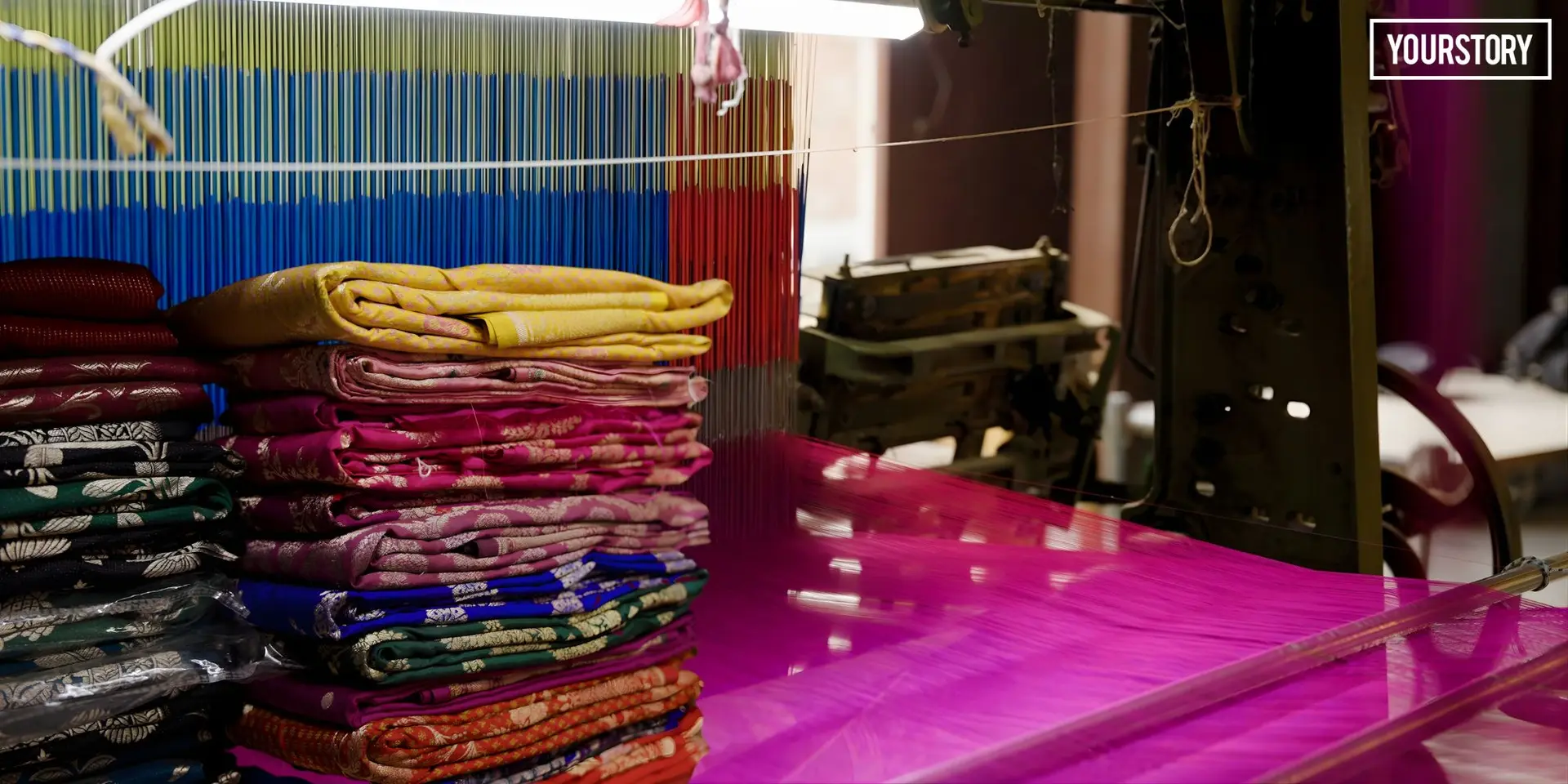

Across weddings, festivals, and ceremonial gatherings, metallic thread work continues to define the visual language of celebration. Borders shimmer under light, motifs rise with texture, and fabric surfaces gain depth through gold and silver-toned detailing. In eastern Uttar Pradesh, particularly in Chandauli, this effect is closely associated with Zari Zardozi — the district’s notified ODOP product — where metallic thread is not merely decorative but central to textile identity.
While zari weaving integrates metallic yarn inside the loom structure, Zari Zardozi builds its richness through detailed surface work. Using fine metallic threads, sequins, beads, and structured patterns, artisans layer designs onto fabric to create dimension and weight. The result is textile ornamentation that stands apart for its density, finish, and visual prominence.
In the textile cluster near Varanasi and extending into Chandauli, units engaged in zari-based production have gradually transitioned in response to market shifts. Among them are workshops that began with small hand-operated systems and later adopted mechanised support for base fabric production, digital design mapping, and quicker sampling cycles. The ornamental finishing, however, continues to rely on skilled hands capable of controlling thread tension, spacing, and motif precision.
From Digital Design to Ornamental Finish
The production journey begins with design conceptualisation. Earlier, pattern creation required manual graph plotting and extensive sampling before final approval. This process often stretched timelines, limiting how quickly new collections could respond to market demand.
Today, digital design systems allow motifs to be created, modified, and visualised before execution. Patterns are mapped for placement, scale, and repeat alignment. Once the base fabric is prepared — whether silk blends, georgette, velvet, or other occasion-wear materials — the Zardozi process begins.
Artisans stretch the fabric onto frames and mark outlines of motifs. Metallic zari threads are then couched, looped, twisted, or layered to build raised designs. Depending on the aesthetic, elements such as dabka, nakshi, sequins, and beads may be integrated to enhance reflectivity and structure. The precision lies in uniform stitch density and controlled thread layering so that motifs retain clarity across the surface.
The finished output spans multiple categories. Beyond sarees, Zari Zardozi detailing appears on lehenga panels, dupattas, bridal suits, sherwani fabrics, waistcoat (sadri) materials, and ceremonial textiles. Demand cycles influence which categories move faster, but the underlying craft remains consistent — metallic thread shaping identity.
Scale, Adaptation, and Market Rhythm
Like many textile-linked enterprises in eastern Uttar Pradesh, production capacity has fluctuated over the years. Units that once expanded workforce strength during periods of strong festive demand have had to recalibrate staffing in response to slower buying cycles and shifting retail patterns. Workforce numbers and machine utilisation now closely mirror order flows.
Technology has reduced design turnaround time, yet ornamental finishing still anchors employment within artisan clusters. The integration of digital design systems with hand-executed Zardozi has created a hybrid model — faster concept development combined with traditional surface craftsmanship.
Support extended under the ODOP framework has contributed to capacity augmentation and formal visibility for Chandauli’s Zari Zardozi sector. By aligning craft identity with district recognition, the product category has gained structured branding beyond local markets.
In Chandauli, metallic threads do more than embellish fabric — they anchor a district’s textile narrative. Each motif reflects a layered process: digital planning, base preparation, and patient hand-finishing that transforms fabric into ceremonial attire.