



Government of Assam | Assam Startup
View Brand PublisherThis deeptech venture is building indigenous AI for geophysical exploration in Assam
With its patented platform Vidarshan, Aorvis is applying AI to subsurface intelligence in civil engineering and mineral exploration. The venture reflects how deeptech innovation from Assam is beginning to scale beyond the region.


India’s startup ecosystem has seen a steady rise in deeptech ventures, though most have focused on familiar sectors such as healthcare, fintech, or consumer technology. Civil engineering and geophysical sciences, which are critical to infrastructure development, have largely remained outside the spotlight.
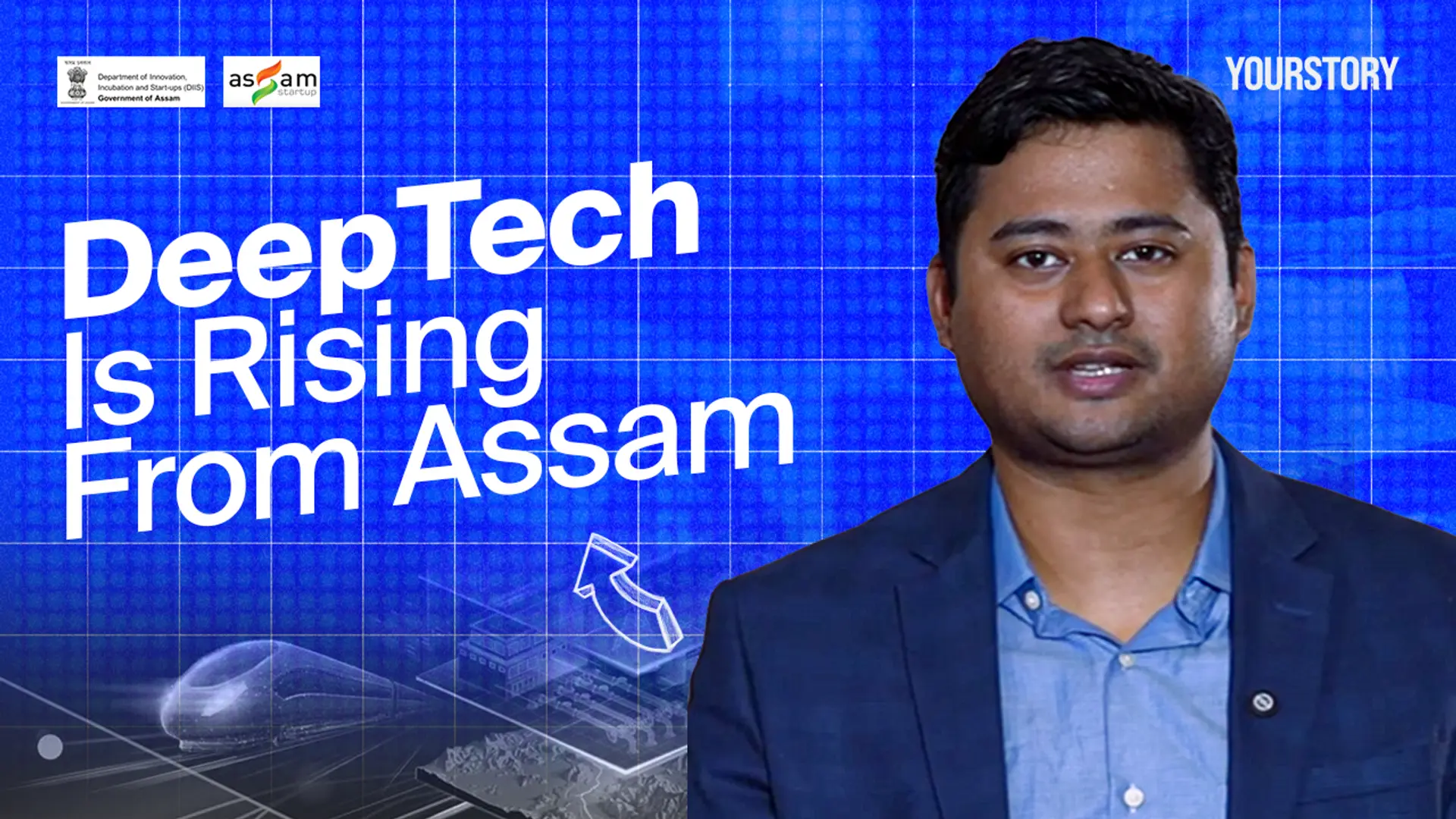
In Assam, Reepjyoti Deka, Founder of Aorvis Technologies, is attempting to change that by building indigenous solutions that integrate artificial intelligence into subsurface exploration.
The founder’s journey
For Deka, the journey began with curiosity and a deep interest in technology. “I’m a techie, and my interest in deep tech led me to start this venture. As we explored different problem statements, we noticed a clear gap. AI and deeptech solutions had not really entered civil engineering or geophysical domains,” he says.
Discussions with university professors and industry experts reinforced the importance of subsurface intelligence.
“Understanding the subsurface is extremely important. That is the technology we are working to build,” he explains.
This work led to Vidarshan, a patented technology designed to create a digital twin of the underground.
“Vidarshan can detect anomalies in three-dimensional models. What makes it unique is the integration of AI within the geophysical domain,” Deka says.
Watch now
Building indigenous innovation
Globally, most sensors and analytical software used in geophysical projects are developed outside India and rely on traditional, non-AI approaches. Aorvis set out to offer an indigenous alternative.
“What we are developing in India is a fully indigenous solution. Vidarshan is a software suite that enables AI-assisted interpretation of geophysical data; the big-data computation and related technologies are all built here,” Deka explains.
The technology has already seen real-world deployment.
“North East Frontier Railway used our integration in the Imphal–Jiribam project. We identified water seepage zones and how they were affecting the tunnel at intervals of about 15 to 20 metres,” he says. The technology helped engineers locate water pockets, drill, pump out the water, and stabilize the tunnel with silica. “This reduced costs and helped restart construction that had been stalled for years.”
Government support
Like many early-stage deeptech ventures, Aorvis initially struggled to execute its proof of concept.
“One of our main challenges was getting a proof of concept implemented. At that stage, we were looking for recognition as well as financial support,” Deka recalls.
Support arrived through the Assam government’s startup ecosystem. “We were recognized at Advantage Assam and signed an MoU with the District Industries Centre. After validation by Startup Assam, we received financial assistance and were able to successfully deliver the NF Railway project,” he says.
Beyond funding, the ecosystem provided access and responsiveness. “The government has been very supportive. We had multiple discussions with IAS officers and even met the Chief Secretary of Assam. There is real ease of doing business. Most things we need are just a phone call away,” he adds.
The road ahead
Looking forward, Aorvis plans to publicly launch Vidarshan in the coming year and strengthen its presence across the region.
“Over the next three to five years, we expect to become stable across the Northeast and then expand beyond India. Our goal is to be pioneers in applying AI to mineral exploration and subsurface interpretation,” the founder says.
Deka’s journey reflects a broader shift in Assam’s startup landscape, one where deeptech innovation is emerging from unexpected sectors and supported by a growing ecosystem that helps ideas move from proof of concept to real-world impact.