



The Hidden Truth About Growth: You Must Lose to Live
Real growth is not about adding more to your life, but letting go of what no longer fits. Here’s why symbolic “deaths” are essential to truly living.

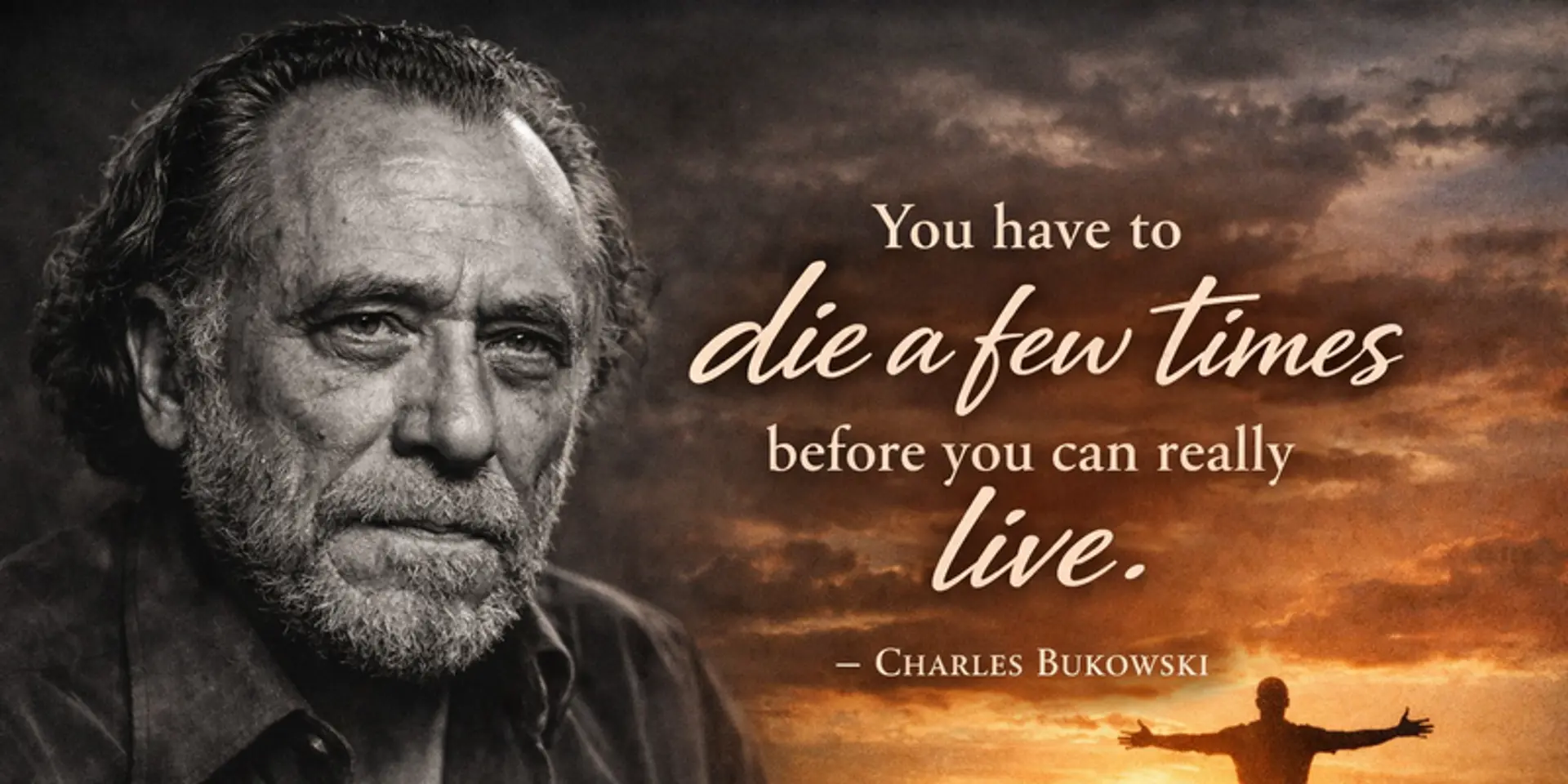

You have to die a few times before you can really live – Charles Bukowski
The uncomfortable truth about growth
There is a quiet truth about life that most people only understand after years of trial and error. Growth is not always about gaining something new. More often, it begins with losing something familiar. The version of you that exists today is not built to carry you through every phase of your life. At some point, it will have to change. And that change rarely feels comfortable.
When Charles Bukowski wrote, “you have to die a few times before you can really live,” he captured a reality that is both unsettling and deeply accurate. He was not speaking about physical death, but about the many internal endings we experience as we evolve. These are the moments when an identity, belief, or way of living quietly stops working.
When who you were no longer fits
These symbolic “deaths” often arrive without warning. A career that once felt exciting begins to feel restrictive. A relationship that once gave meaning starts to feel distant. Even your own ambitions can shift in ways you did not anticipate. What once defined you slowly becomes something you outgrow.
The difficulty lies in recognising this shift. Familiarity has a powerful hold. Even when something is no longer right, it still feels safe because it is known. Letting go of that familiarity can feel like losing a part of yourself. In many ways, it is. But that is precisely what creates space for something new to emerge.
Why letting go feels like failure
One of the biggest reasons people resist change is the fear of starting over. Walking away from something you have invested time, energy, or emotion into can feel like failure. Society often reinforces this idea, celebrating consistency and long-term commitment while overlooking the courage it takes to pivot.
But staying in a version of life that no longer aligns with you comes at a cost. It leads to stagnation, quiet dissatisfaction, and a sense of being stuck. The discomfort of letting go may be intense, but it is temporary. The regret of not evolving can last much longer.
The role of endings in new beginnings
Every ending, no matter how difficult, carries the potential for renewal. When an old identity fades, it allows you to reassess what truly matters. You begin to see your priorities more clearly, make more intentional choices, and build a life that feels more authentic.
This is why many people look back at their most challenging periods as turning points. What felt like loss in the moment often becomes the foundation for growth later. The job that did not work out leads to a more fulfilling path. The relationship that ended teaches you what you truly need. The failure that once felt defining becomes a lesson that shapes your resilience.
Living requires constant reinvention
To truly live is to accept that you will not remain the same. Each phase of life demands a different version of you. Holding on too tightly to who you were can prevent you from becoming who you are meant to be.
Bukowski’s words remind us that these cycles of change are not something to fear, but something to understand. You will outgrow parts of your life. You will face moments where everything feels uncertain. And you will be forced to let go of things you once believed were permanent.
But these are not endings in the traditional sense. They are transitions. They are the moments that push you forward, even when it does not feel like progress.
In the end, living fully is not about avoiding these internal “deaths.” It is about recognising them as necessary. Because every time a version of you fades, it makes room for a version that is more honest, more aware, and more alive.