


Etawah’s Everyday Weaves: A Loom Economy Driven by Daily-Use Textiles
Etawah’s weaving sector is driven by steady demand for daily-use fabrics like gamchas, lungis, and bedsheets, supported by family-run units and structured production systems under the ODOP initiative.


In Uttar Pradesh’s Etawah district, textile weaving is anchored in the steady demand for everyday-use fabrics rather than occasional or decorative purchases. Products such as gamchas, angocchas, lungis, bedsheets, shawls, and suiting materials continue to move through routine household consumption and regional trade channels. Here, demand is shaped by functionality—absorbency, durability, and affordability—rather than seasonal design trends.
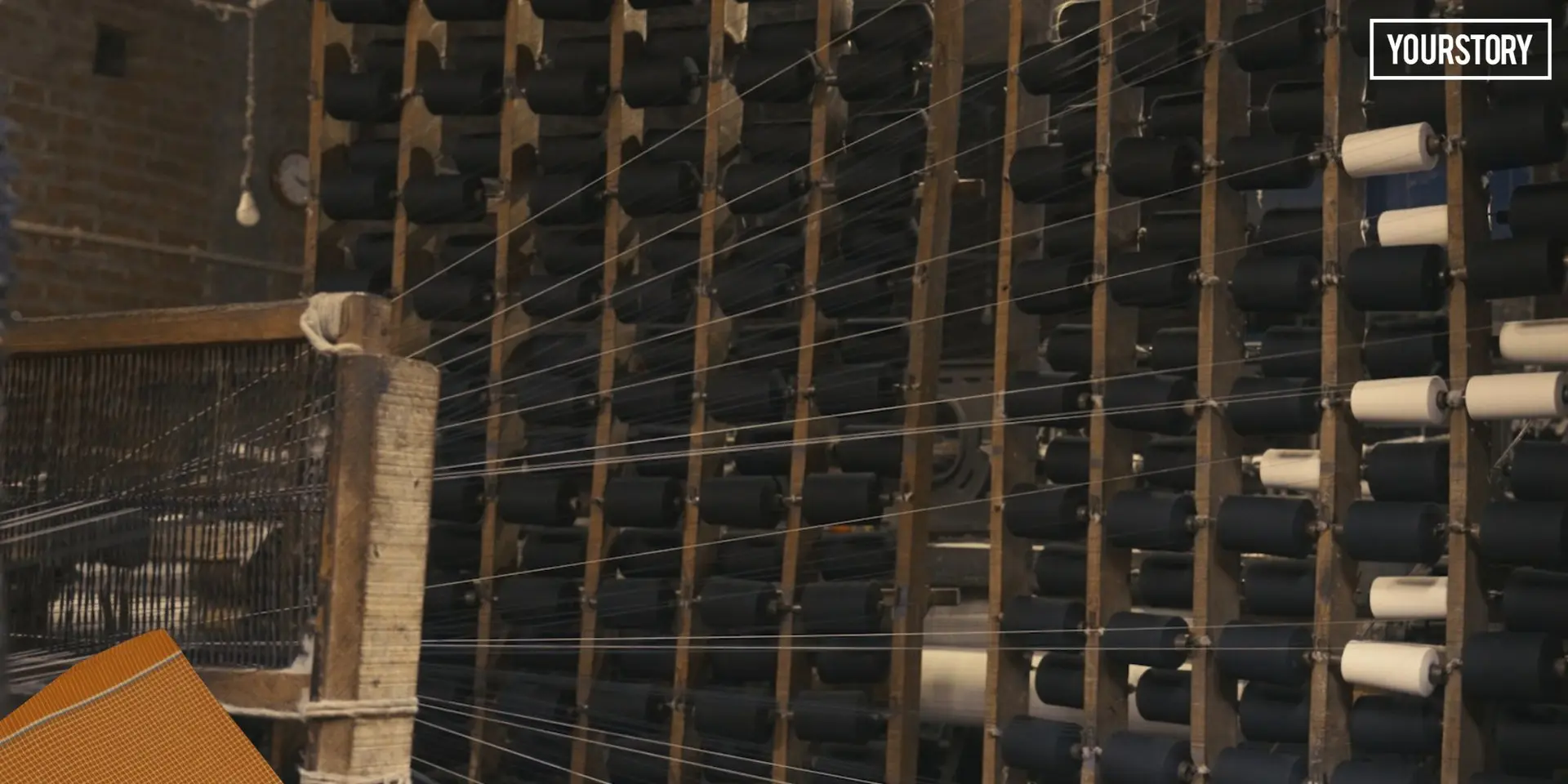
The production ecosystem follows a structured sequence: yarn preparation, dyeing (where required), warp-setting, loom weaving, and dispatch. Both handloom and powerloom operate within this system, often managed by family-run units that handle multiple stages of production internally. What sustains the sector is not dependence on a single high-value product, but a consistent output of utilitarian textiles catering to everyday needs.
Under the One District One Product (ODOP) initiative, weaving units in Etawah have gained access to financial assistance, enabling them to strengthen infrastructure and expand capacity.
Sartaj Ahmad, a weaver from Etawah, represents this continuity of craft. A third-generation artisan, he learned weaving from his father and has remained engaged in the trade since childhood, working within the same family-led production framework.
Among his range of products, the gamcha stands out as a core item. Its production begins with cotton yarn. For coloured variants, the yarn undergoes dyeing before being dried and wound into rolls. These are then arranged on the tana machine during warp-setting to form a beam, which is subsequently mounted onto the loom for weaving into finished cloth.
This process extends across other products as well, including shawls, lungis, bedsheets, angocchas, and suiting fabrics. The unit’s output is therefore distributed across a range of daily-use textiles rather than concentrated in a single category.
Ahmad’s market linkages extend beyond Etawah to cities such as Agra, Mathura, Aligarh, Jalesar, and parts of Rajasthan. However, the trade remains largely domestic, moving through intercity wholesale and retail networks rather than export channels.
With support received under ODOP, Ahmad added two machines and increased material capacity within his unit. For weaving enterprises operating on consistent demand cycles, such enhancements improve production continuity and help maintain steady supply across markets.
In Etawah’s weaving sector, the rhythm of work depends on how efficiently each stage—from dyeing and drying to warp-setting and loom operation—remains aligned. When this flow is maintained, family-run units are able to consistently supply essential textiles that continue to serve everyday markets.