



India puts its best startups forward in a push for global innovation clout
A high-profile gathering at the Indian Institute of Technology Bombay this week brought together investors, academics, and policymakers ahead of a planned international showcase in France.

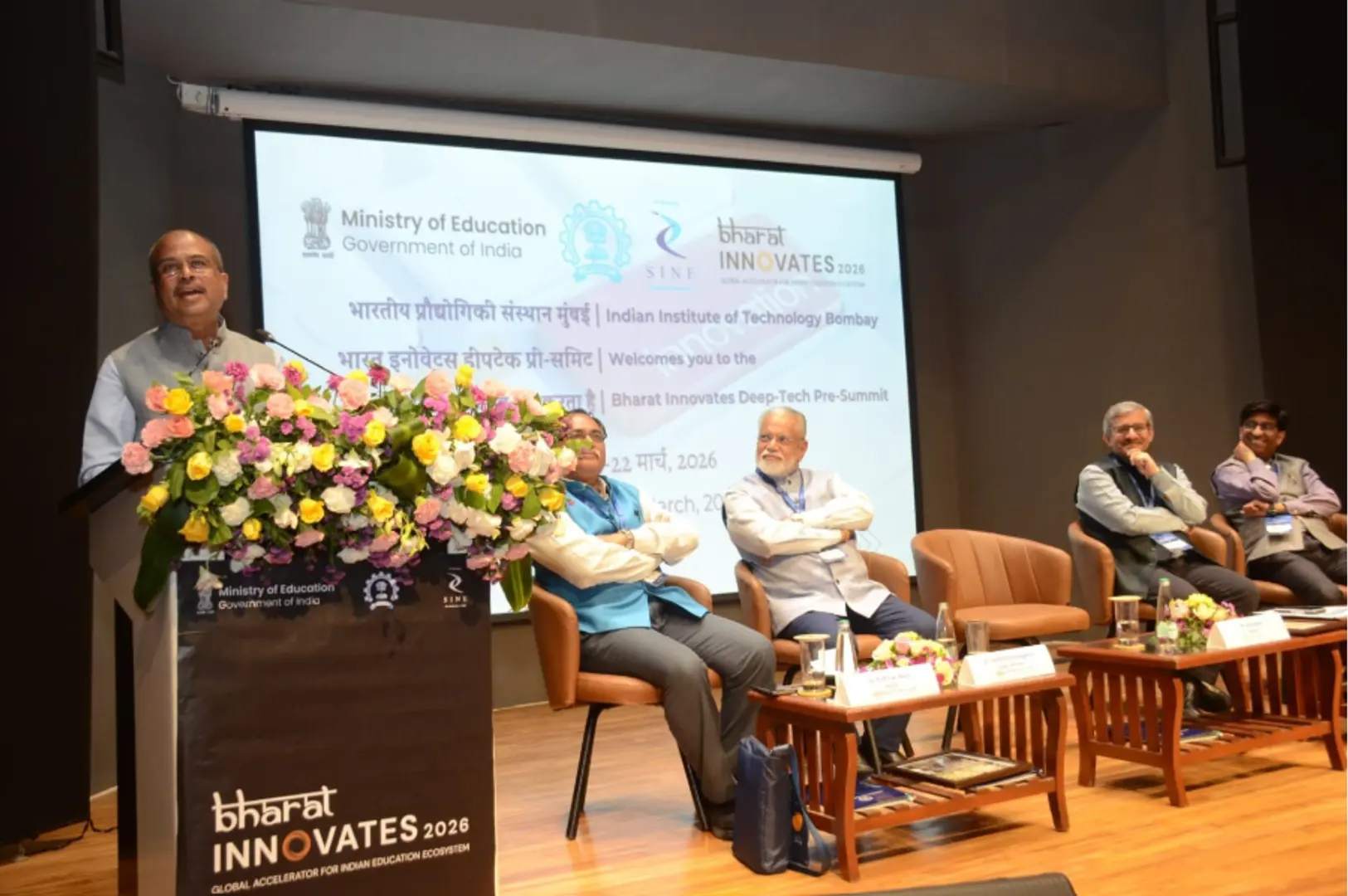

India's education ministry is betting on deeptech startups to cement the country's ambitions as a global innovation hub. A high-profile gathering at the Indian Institute of Technology Bombay this week brought together investors, academics, and policymakers ahead of a planned international showcase in France.
Union Education Minister Dharmendra Pradhan presided over the event, which drew around 175 investors and industry leaders for a round-table. The event also featured pitch sessions from 137 startups selected from more than 1,100 applicants nationwide. The companies spanned sectors including semiconductors, biotechnology, artificial intelligence, clean energy, and advanced manufacturing.
"Innovation must move from labs to markets to create real impact," said Pradhan, at the closing session of the Bharat Innovates Deep-Tech Pre Summit. He positioned India as capable of developing scalable, cost-effective solutions not only for domestic needs but also for developing nations across the Global South.
The gathering served as a warm-up act for Bharat Innovates 2026, a government-led showcase slated for Nice, France, where Indian startups are expected to woo international partners and investors.

The event arrives at a moment of cautious optimism for India's deeptech sector. Indian deeptech startups raised $1.65 billion in 2025, a sharp rebound from $1.1 billion in each of the two previous years, though the figure trails behind the $147 billion funding raised by United States and the $81 billion by China, according to data from research firm Tracxn.
The gap with global peers is stark, and the structural hurdles are significant. India currently imports 90-95% of its semiconductor and electronics components, leaving hardware startups exposed to supply-chain disruptions from China and Taiwan.
Tata Electronics' semiconductor fabrication facility in Dholera began equipment installation in late 2025; the first commercial chips are expected by late 2026. While India ranked sixth globally in patent filings in 2025, the commercial exploitation of those patents remains far below that of leading innovation economies.
The initiative reflects the broader push by the Indian government to translate the country's research output into commercially viable ventures. Officials emphasised the need for sustained private investment to help early-stage companies grow, while pledging continued policy support and institutional backing.
Senior figures including K. Radhakrishnan, former chairman of the Indian Space Research Organisation and the current board chair at IIT Bombay, attended the closing ceremony alongside top officials from the Department of Higher Education and the Department of Science and Technology.