



India’s ghee king; Girish Mathrubootham on Emergent revenue debate
GRB Dairy Foods is on course to achieving Rs 1,400 crore in annual revenue. It sells ghee, sweets, and snacks, in over 40 countries. More importantly, it has never taken a single rupee from any outside investor.


Hello,
Nasa plans to launch the Artemis II mission in a few days. This will be the first human moon mission in 50 years.
Behind the Artemis programme is years of work and an estimated cost of $93 billion to date. Why is the United States investing so much time and money on sending humans back to the moon, after the Apollo mission? Here’s why the voyage matters.
Meanwhile, Indian cricketing legend MS Dhoni has invested in Kuku, a mobile-first, AI-driven storytelling platform. He has also come on board as the brand ambassador of microdrama app, Kuku TV.
Kuku, which was started by three IIT alumni, has an array of storytelling apps: Kuku TV for microdramas, Kuku FM for audio storytelling, and Guru for edutainment. The company also recently expanded into theatrical releases.
Is storytelling the new engine of connection in the digital age?
Elsewhere, there’s a cool new sport to break monotony and return to childhood, even if briefly—a Formula One-style office chair competition where participants complete as many laps as they can in two hours around a street circuit.
Tsuyoshi Tahara founded the race in 2010 in Kyoto, drawing inspiration from a childhood teacher who scolded him for playing with an office chair. Since then the sport has caught the imagination of people across cities in Japan. How about you? Are you thinking about it as you swivel in your chair?
In today’s newsletter, we will talk about
- India’s ghee king
- Girish Mathrubootham on Emergent revenue debate
Here’s your trivia for today: What are Easter Island's famous statues called?
In-focus
India’s ghee king
G.R. Balasubramaniam never finished school. He was sent away from his village at 13 to work in a relative’s butter business. He spent 14 years building up that business, and then found himself in a situation where he had to set up something on his own. He then started his own venture with Rs 3,000 in a 10-by-20-foot rented shop, with no plan, no connections, and a wife to support.
That venture is now GRB Dairy Foods. It is on course to achieving revenues of ₹1,400 crore. It employs 2,500 people and sells ghee, sweets, snacks, and spices in over 40 countries. More importantly, it has never taken a single rupee from any outside investor.
Key takeaways:
- During his early years, Balasubramaniam noticed something that others in the business had not thought about. Butter did not last and went bad quickly. The hotels and sweet shops that bought butter were only buying it to convert it into ghee anyway, often badly.
- Balasubramaniam thought what if he did the conversion himself? What if he bought the butter, made the ghee at home, and sold the finished product directly to hotels, sweet shops, and households? He had the skill. His wife helped with production. The response was immediate. And the rest, as they say, is history.
- Today, GRB exports to more than 40 countries, including Singapore, Australia, the UAE, and markets across Southeast Asia, the Middle East, and North America. Revenue crossed Rs 1,000 crore last year. This year, Balasubramaniam is targeting Rs 1,400 crore.
Startup metrics
Girish Mathrubootham on Emergent revenue debate
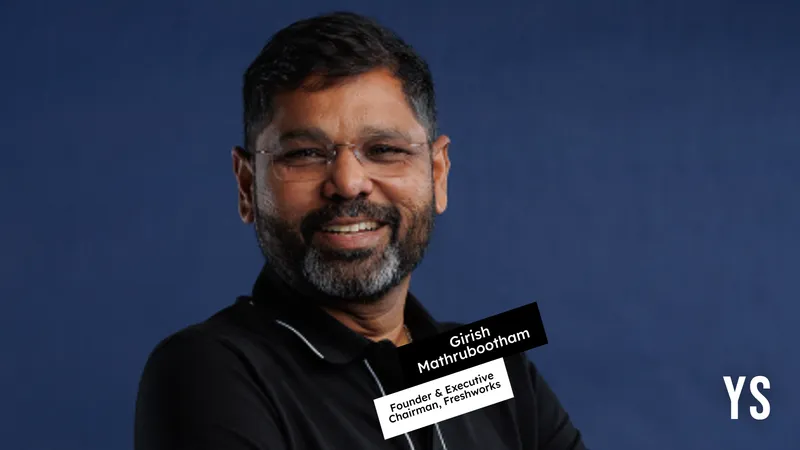
Freshworks founder Girish Mathrubootham has stepped into a public debate about the reported revenue of AI startup Emergent, urging people to be cautious about judging private company numbers from the outside. Mathrubootham’s Together fund is an early investor in Emergent.
In a post on X, he wrote, “A private company does not need to disclose any numbers and nobody should care about those numbers except the founders, investors in the company and employees… For outsiders who don’t have all the details, we should assume that founders know the best about their business and let them execute.”
Key takeaways:
- The debate centres around Emergent’s claim that it reached $100 million in ARR (annualised revenue run rate, in this case) in eight months. In modern AI companies, revenue can include subscriptions, usage fees and deployment charges, which makes the metric more complex than traditional software subscriptions.
- The claim faced scrutiny when some analysts and reports questioned whether Emergent’s ARR was calculated in the traditional SaaS way (annual recurring revenue) or as an annualised run rate. Annualised run rate means taking one month’s revenue and projecting it for a full year, which can make numbers look larger if revenue is growing quickly.
- The Emergent debate is not only about one startup’s numbers. It is about how revenue is defined in the new AI software industry, and whether traditional startup metrics still apply in the same way.
News & updates
- Currency impact: The Euro dipped against the dollar on Monday amid increasing concerns of impact of the Iran conflict. Meanwhile, the dollar has benefitted from a safe-haven bid from the conflict, Reuters reported.
- Crisis response: From fuel rations to free buses, different countries are responding to the rising oil prices in different ways. The BBC gives the rundown of what’s been done so far across the world.
What are Easter Island's famous statues called?
Answer: Moai
We would love to hear from you! To let us know what you liked and disliked about our newsletter, please mail [email protected].
If you don’t already get this newsletter in your inbox, sign up here. For past editions of the YourStory Buzz, you can check our Daily Capsule page here.