



From stitched panels to travelling stalls: Jhansi’s soft toy production chain
Jhansi’s soft toy industry has evolved into a distributed production network where home-based workers, small manufacturing units, and self-help groups collaborate to create handcrafted toys that reach markets across India through fairs and exhibitions.

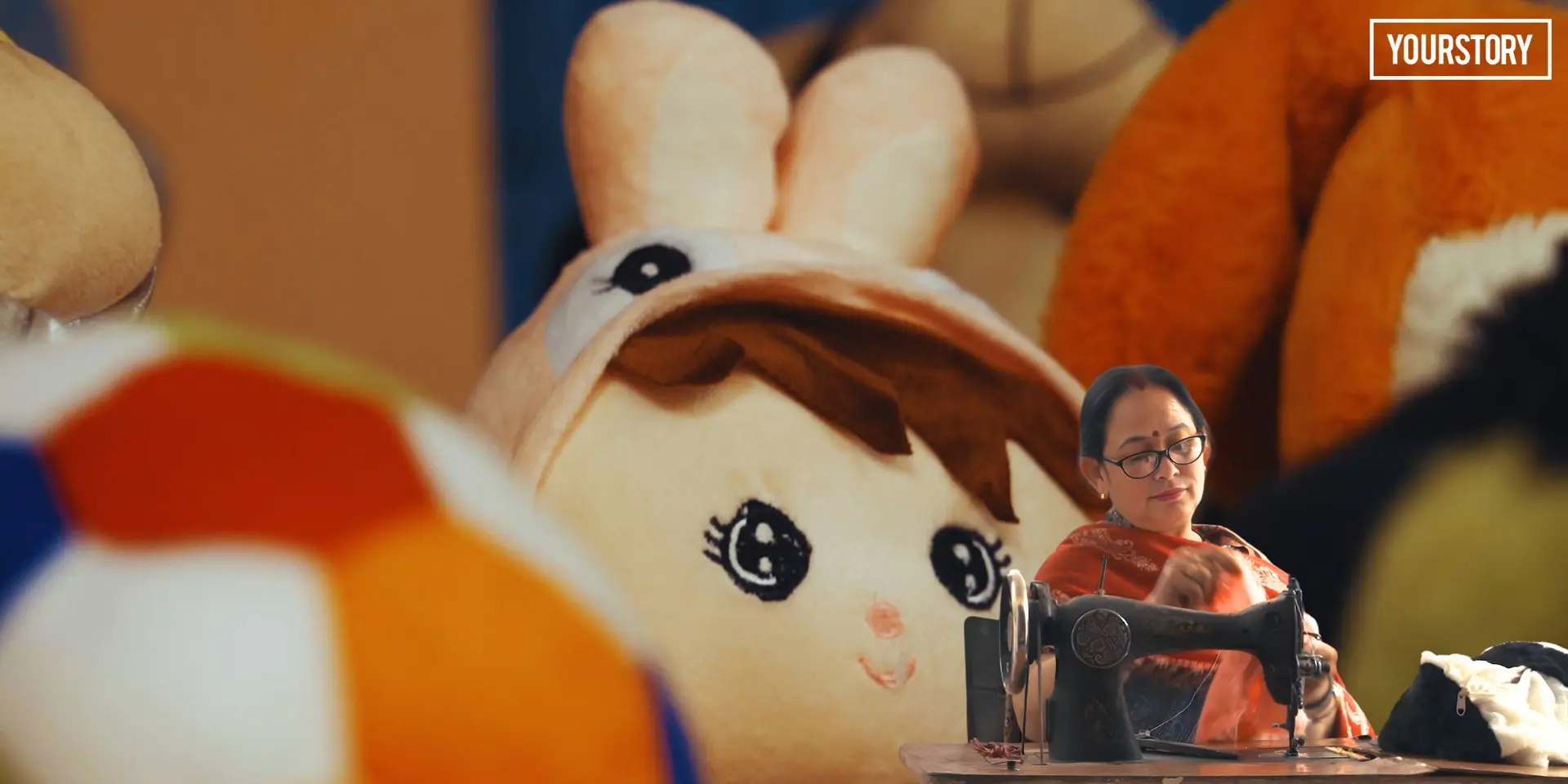

Soft toys occupy a familiar place in homes across the world. Plush animals, cartoon characters, and decorative cushions are commonly bought as gifts for children, festival purchases, or small additions to household décor. In Jhansi district of Uttar Pradesh, this everyday product has developed into a locally organised manufacturing activity, and Soft Toys are recognised as a notified product under the One District One Product (ODOP) programme.
In Jhansi, the soft toy trade does not operate through a single large factory. Instead, it functions through a distributed production chain where different stages of work are handled by different sets of workers. Fabric cutting, stitching, fibre filling, embroidery detailing, and finishing are carried out across small units and home-based workspaces. This structure allows production to continue at a steady pace while also enabling flexible work arrangements for many participants in the supply chain.
One such enterprise is run by Aruna Sharma, who manages a soft toy manufacturing unit in the district. Her operation combines a small in-house team with a wider network of home-based workers. Around ten women are directly employed at the unit, while a broader structure operates through 26 self-help groups involving nearly 260 women who participate in periodic work such as fibre filling and finishing tasks. Much of this work can be done from home, allowing women to contribute to production while managing household responsibilities.
Through the ODOP programme, the enterprise was able to access credit support that helped strengthen the unit’s operations. The initiative has also enabled participation in exhibitions and trade platforms, providing opportunities to present Jhansi’s soft toys to buyers beyond the local market.
The making of a soft toy begins with design. A concept is first sketched on paper and then converted into a pattern that can be used for cutting fabric pieces. Once the fabric components are cut, they are stitched together to form the shape of the toy, leaving openings for stuffing. Fibre filling is then packed carefully to achieve the required firmness and balance. After the stuffing stage, the openings are closed and the toy moves through finishing and quality checks.
Design complexity varies from one product to another. Some toys rely mainly on clean seams and accurate proportions, while others require embroidery or surface detailing for facial expressions and decorative elements. In certain cases, embroidery work is arranged through specialised units in Delhi, after which the components return to Jhansi for final assembly and preparation for sale.
The market for Jhansi’s soft toys is closely linked with fairs, exhibitions, and high-footfall retail environments. These platforms allow manufacturers to sell directly to consumers while also introducing their products to new buyers. Units from the district regularly participate in events across India, including programmes held in Siddharthnagar, exhibitions at Pragati Maidan in New Delhi, and cultural fairs such as Surajkund Mela and Taj Mahotsav.
Through this network of design work, stitching units, self-help group participation, and travelling exhibition stalls, the soft toy industry in Jhansi operates as a coordinated local ecosystem. The system connects home-based workers, small manufacturing units, and retail platforms, enabling a steady flow of handcrafted toys from the district to markets across the country.