


Kannauj’s Agarbatti (incense sticks) & Dhoopbatti (incense cones) Industry: Scaling Everyday Demand Through Efficient Production
Kannauj’s agarbatti and dhoopbatti sector thrives on daily consumption, combining traditional methods with machine-assisted production to meet steady domestic and export demand.

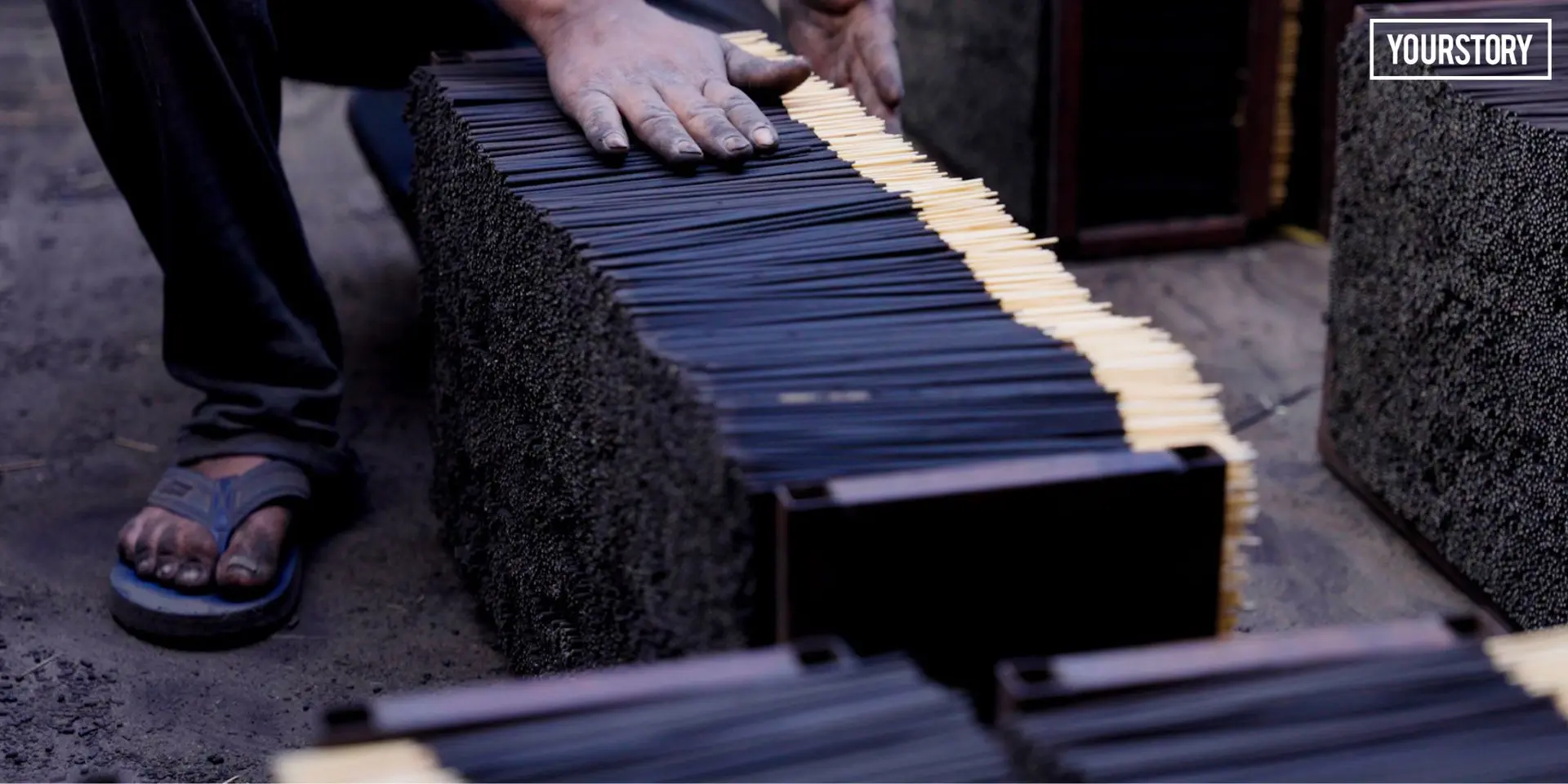

In Uttar Pradesh’s Kannauj district, agarbatti and dhoopbatti production forms a steady, consumption-driven industry rooted in everyday use. Unlike seasonal products, incense sticks are used daily across households, shops, and places of worship, making consistency in supply, fragrance, and burn quality essential to sustaining demand.
Recognised under the One District One Product (ODOP) programme, Agarbatti & Dhoopbatti products from Kannauj represent a traditional yet evolving sector where production efficiency plays a key role in meeting large-scale demand.
The manufacturing ecosystem is structured across multiple stages — material preparation, stick formation, drying, and packaging — rather than a single continuous process. Key raw materials include wood charcoal, sawdust, bark-based powders, and bamboo sticks, all of which are processed and combined to create the base incense product.
Over time, the industry has transitioned from predominantly manual production to machine-supported operations. This shift has enabled higher output volumes while also expanding employment opportunities across different stages of production. Much of the output continues to move as unbranded bulk supply, entering wider distribution networks where it is packaged and marketed under various labels.
Tariq Ali, an entrepreneur based in Kannauj, represents this evolving landscape. With around two decades of experience, he entered the agarbatti trade independently, starting with limited resources and gradually scaling operations through consistent market engagement.
The production process at his unit begins with preparing the base mixture — a blend of charcoal powder, wood dust, and natural binding materials. This mixture is then applied onto bamboo sticks to form incense sticks, followed by drying and packaging. Each stage is handled separately, with specific workers assigned to tasks such as mixing, rolling, drying, and packing.
Among these, material preparation remains one of the most labour-intensive stages, involving continuous handling and exposure to fine dust during blending and sifting processes.
The scale of operations has expanded significantly over the years. From an initial workforce of 25–30 individuals in a largely manual setup, the unit is now connected to 100–150 workers through machine-assisted production systems. The products are supplied across domestic markets and have also reached international buyers.
Currently operating largely as a bulk supplier, the unit provides unbranded incense sticks to distribution networks. However, with growing capacity and market exposure, the business is gradually exploring the possibility of establishing its own brand presence.
In Kannauj, the agarbatti and dhoopbatti sector continues to be shaped by how efficiently natural materials move through each stage of production. When this sequence remains consistent, the industry is able to sustain its role in meeting everyday demand — reinforcing its place within the district’s ODOP-driven economic landscape.