


Kanpur Dehat’s Aluminium Utensils: A Production Chain Driven by Material, Machines, and Market Demand
In Uttar Pradesh’s Kanpur Dehat, aluminium utensil manufacturing sustains a strong micro-industrial ecosystem, with entrepreneurs like Anurag Malviya scaling operations through disciplined sourcing, efficient production, and ODOP support.

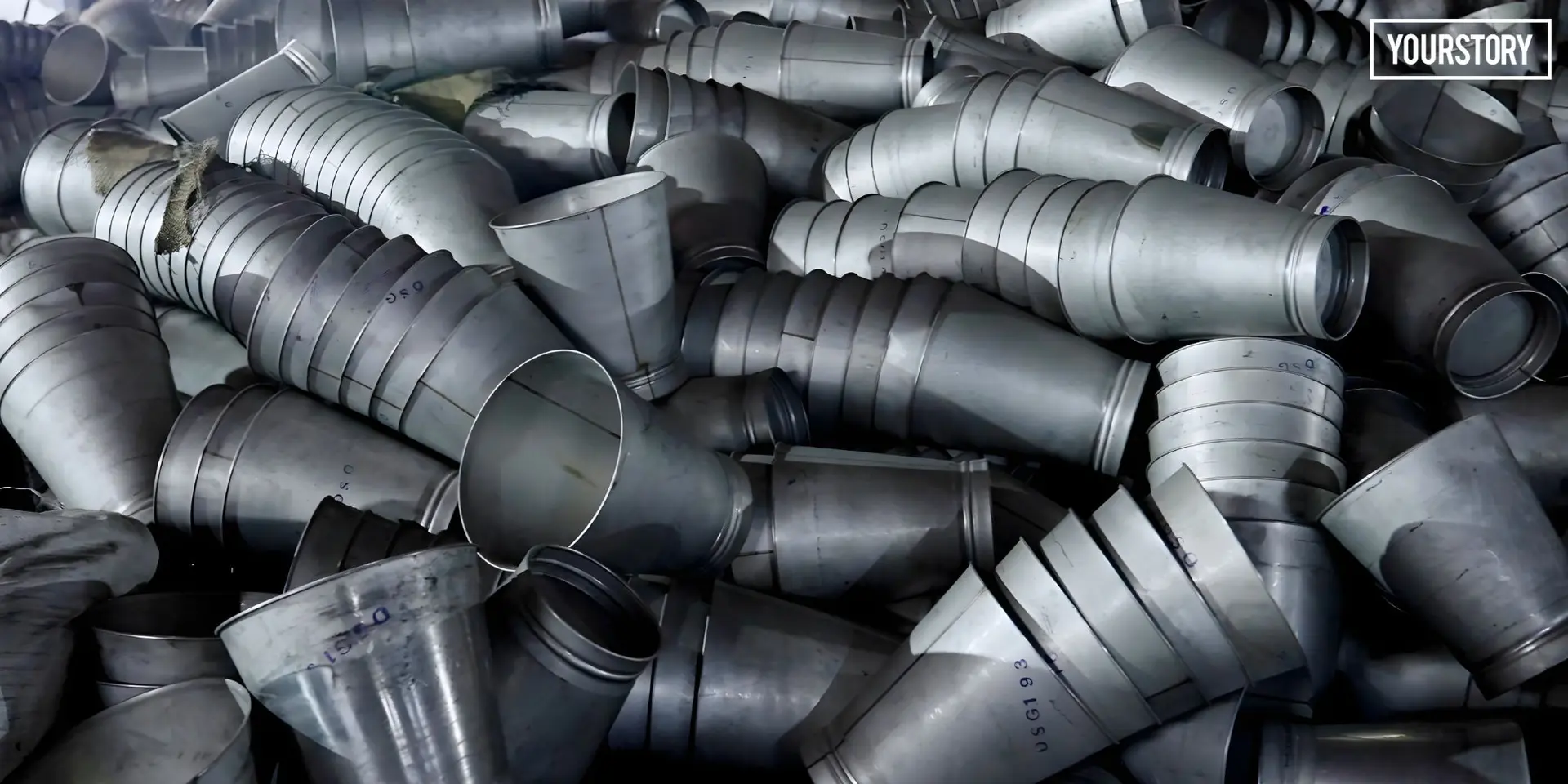

In Kanpur Dehat, Uttar Pradesh, aluminium utensils are not just everyday household items—they represent a functioning micro-industrial ecosystem. From sheet sourcing to fabrication, polishing, and final dispatch, the sector sustains a network of operators, welders, polishers, transporters, and market intermediaries. While the finished products quietly serve kitchens, eateries, and catering setups, the processes behind them keep the district’s production cycle in constant motion.
Among the entrepreneurs shaping this ecosystem is Anurag Malviya, proprietor of Savitri Industries. Established in 2012 with a single machine, the unit has steadily scaled operations and now runs with approximately six machines, producing a wide range of aluminium utensils. The portfolio includes bottles, tanks, plates, catering tubs, bhagone, milk pots, and storage containers—manufactured in line with evolving market demand and order cycles.
Building a Manufacturing Base Through Sourcing Discipline
Without prior experience in aluminium utensil manufacturing, Malviya entered the segment with determination to build an independent enterprise. Backed by an MBA and limited exposure to industrial operations through his family’s iron business, his early years were marked by groundwork—understanding machinery, identifying dependable suppliers, and ensuring consistency in raw material procurement.
He actively travelled across markets such as Ahmedabad and Jodhpur to establish supplier networks. Initial challenges included limited trust from suppliers due to his newness in the trade. However, persistence led to stable sourcing channels, improved timelines, and consistent product quality. Family support also played a critical role during this formative phase, helping sustain operations until market credibility was established.
From Sheet to Finished Product
Each product category follows a defined production process. Taking aluminium tanks as an example, the workflow begins with sheet cutting using a shearing machine, followed by welding, shaping, and beading. The base is then fitted, after which the product undergoes polishing, design marking, packing, and dispatch.
The unit’s primary market lies within Uttar Pradesh, with strong demand across Kanpur, Lucknow, Gorakhpur, Sitapur, Lakhimpur Kheri, and other regions of Purvanchal, along with occasional supplies to Uttarakhand. A key differentiator for the unit is its focus on producing lighter, easy-to-handle utensils. This enables faster logistics, easier handling, and flexible order sizes for buyers—enhancing overall market responsiveness. Operational discipline, particularly in timely delivery and quick resolution of complaints, further strengthens buyer relationships.
Growth Through ODOP Support and Market Shifts
The One District One Product (ODOP) programme has contributed to the unit’s expansion by enabling access to subsidies for machinery and providing exposure through training programmes and exhibitions. These platforms have helped refine market understanding and align product offerings with demand trends.
Post COVID-19, the shift in consumer preference away from plastic and back towards metal utensils has further strengthened demand in this segment, creating new opportunities for growth.
Looking ahead, the unit plans to introduce aluminium water *matkas*, particularly targeting demand in Bundelkhand, while continuing to expand its range of high-demand products.
For Kanpur Dehat, aluminium utensils represent more than a product category—they reflect a district-level manufacturing ecosystem where sourcing, fabrication, and market linkages come together to sustain livelihoods and drive local industry forward.