



Kanpur Dehat’s plastic products: Local manufacturing supporting irrigation and utility networks
Kanpur Dehat’s plastic manufacturing units produce PVC pipes and utility products used in irrigation, gardening, and water management. Supported by the ODOP programme, these enterprises connect local production with wider agricultural and utility markets.

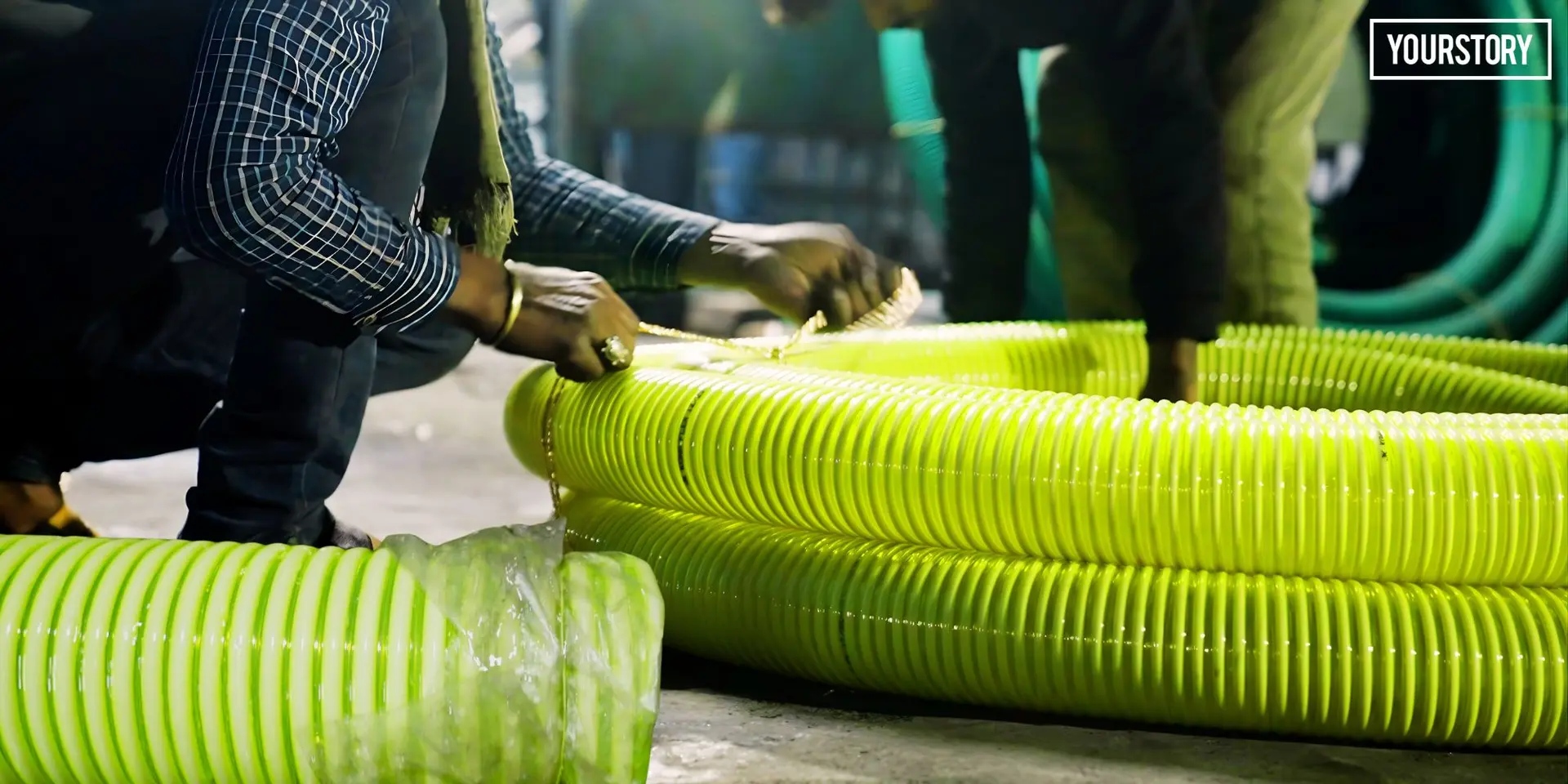

Across farms and settlements, plastic utility products play a quiet but essential role in everyday operations. From irrigation systems in agricultural fields to flexible pipes used in gardens and cleaning equipment, plastic-based components support the movement and management of water in both rural and urban environments.
In Uttar Pradesh’s Kanpur Dehat district, plastic products are the notified category under the One District One Product (ODOP) programme. Within this category, a range of plastic-based items—particularly PVC pipes and related utility products—are manufactured and supplied for agricultural, domestic, and infrastructural use. These products form part of a local manufacturing ecosystem that connects raw material suppliers, technicians, production units, and distribution networks.
Among the manufacturers in the district is a unit operated by Jagpreet Singh, which produces PVC section pipes and garden pipes. The enterprise reflects a gradual transition from raw material trading to local manufacturing. Singh’s family had earlier been associated with the supply of PVC granules, and the establishment of a manufacturing unit marked an expansion into product development within the district.
The production process begins with PVC-based inputs that are prepared and combined to achieve the required flexibility and strength. These materials are processed and shaped into continuous pipe sections designed for suction and water flow applications. The resulting products are used widely in irrigation systems, where pipes help draw water from canals, ponds, or tube wells into agricultural fields.
Flexible garden pipes produced in the unit serve a range of domestic and institutional uses. Such pipes are commonly used for watering gardens, cleaning surfaces, and supporting small-scale water distribution systems. Through these products, plastic manufacturing units in Kanpur Dehat contribute to everyday water management practices in both rural and urban settings.
The presence of manufacturing activity also supports employment and skill development within the district. Workers are engaged in production, finishing, quality checks, and packaging before the products move into the distribution chain. Finished pipes are supplied through dealer networks that connect local manufacturers with retailers and end users in multiple regions.
The ODOP programme has played a supportive role in strengthening this manufacturing base. Through training programmes and technical guidance, local entrepreneurs have received exposure to improved production practices and product standards. These interventions have helped emerging units build confidence in manufacturing processes and enhance the quality of their products.
Participation in district-level exhibitions and promotional initiatives under ODOP has also provided visibility to local manufacturers. Such platforms create opportunities to connect with farmers, traders, and institutional buyers who rely on durable and affordable plastic products for agricultural and utility purposes.
Through these efforts, Kanpur Dehat’s plastic product units have gradually expanded their reach beyond the district. PVC pipes and related items produced locally are now supplied across different regions through dealer networks, linking district-level manufacturing with wider markets.
The plastic products sector in Kanpur Dehat reflects a combination of local enterprise, technical skills, and institutional support. Under the ODOP framework, manufacturers have been able to strengthen production capabilities and bring district-made plastic utility products to a broader market.