



Inside Lalitpur’s Hosiery Products Manufacturing Trade
In Uttar Pradesh’s Lalitpur district, hosiery units are turning fabric rolls into thousands of everyday garments daily. Supported by the ODOP programme, small manufacturers are supplying steady volumes to markets across Madhya Pradesh.

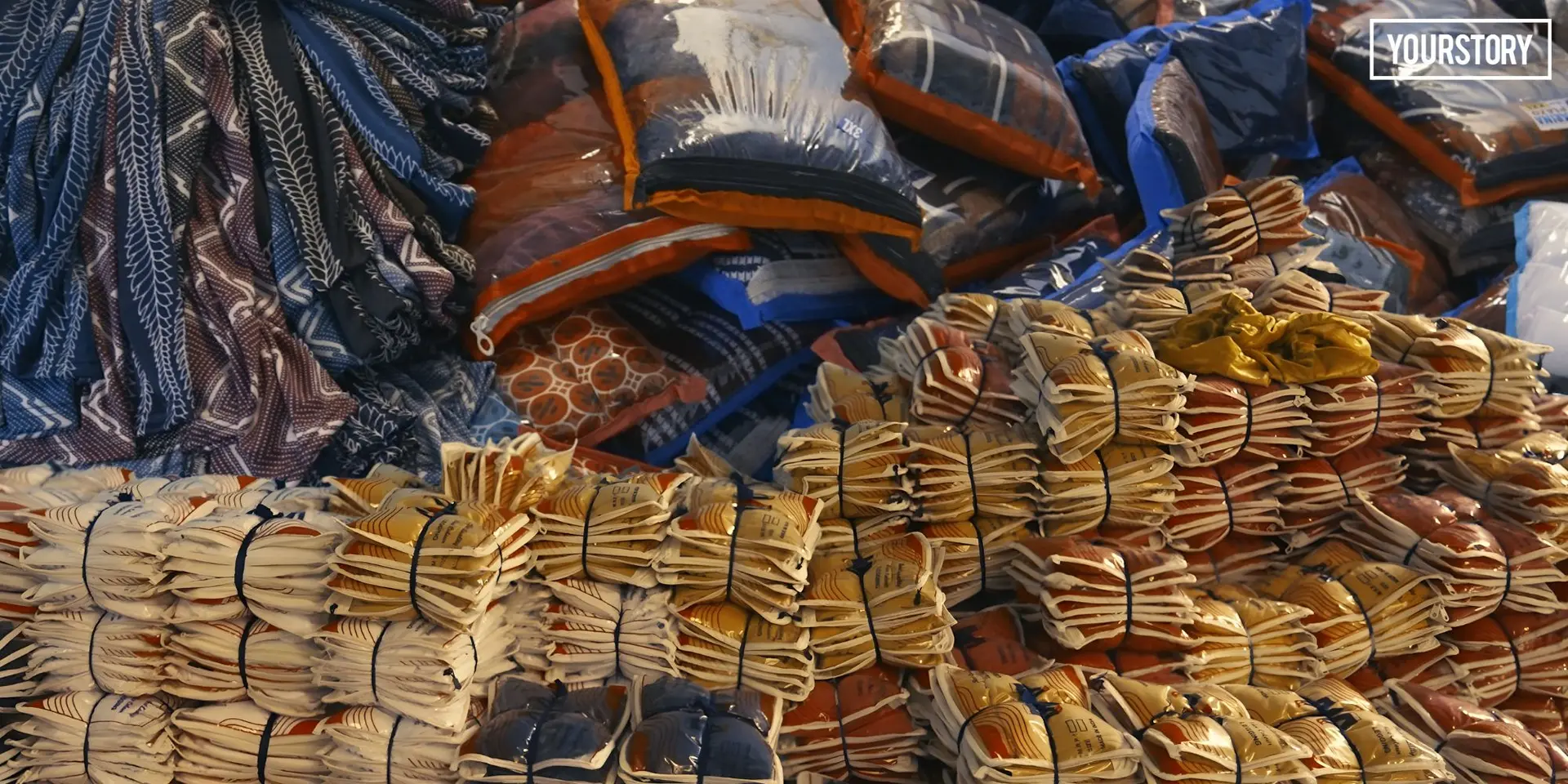

In Uttar Pradesh’s Lalitpur district, hosiery is less about seasonal fashion and more about everyday essentials produced in steady volumes. Leggings, palazzos, salwars, lowers, and schoolwear leave small stitching floors as finished pieces, built for wholesalers who depend on regular dispatch rather than occasional supply.
The district’s hosiery identity lies firmly in value addition. Fabric is sourced from larger textile markets, while the local work focuses on conversion—fast cutting, continuous stitching, and systematic packing—so that ready garments can move quickly through established trade routes.
Under Uttar Pradesh’s One District One Product (ODOP) framework, Lalitpur’s hosiery ecosystem has gradually become easier to formalise. Artisans and small manufacturers have gained improved access to credit, machinery support, and district-level exhibitions that connect producers with bulk buyers.
Deepak Chaurasia runs a hosiery manufacturing unit in Lalitpur and describes the business as entirely machine-led, built around maintaining a steady daily output. He has been part of the hosiery trade for around five to six years, after previously running a paan shop for nearly two decades.
While the paan shop provided stable earnings, it offered limited room for expansion. His transition into hosiery began gradually as he observed the trade and learned how small manufacturing units functioned. Over time, he started acquiring machines and experimenting with production.
A marketing trip to neighbouring Madhya Pradesh strengthened his decision. Demand in the region appeared consistent, with wholesalers regularly sourcing garments for local markets.
“In the beginning, the stock didn’t sell. Then I learned what to make for each season,” he says, recalling how trial, unsold inventory, and gradual market understanding shaped his current production cycle.
He attributes the growth of his unit partly to support received under the ODOP programme, including a loan of ₹25 lakh and assistance in procuring machines and basic equipment. Participation in ODOP-linked exhibitions also helped introduce his products to visitors and officials, where finished garments were displayed as samples for potential buyers.
From raw fabric to daily dispatch
Raw material arrives from several textile hubs, including Ludhiana, Surat, Ahmedabad, Kanpur, and Delhi, typically in fabric rolls intended for rapid conversion. Cutting is done in stacked lots rather than individually, allowing large batches—often 20–25 dozen pieces at a time—to be prepared quickly so stitching lines can continue without interruption.
The unit currently operates eight machines, with an estimated output of around 2,000 pieces per day, depending on the product mix. The process emphasises speed and consistency: cutting in bulk, stitching continuously, packing efficiently, and ensuring that finished stock moves out without long storage periods.
Most of the finished garments are supplied to markets across Madhya Pradesh, where the unit has built a repeat network of buyers. Cities such as Sagar, Bhopal, Tikamgarh, Katni, Jabalpur, and Satna form part of this regular dispatch circuit, alongside smaller quantities sold locally.
As production increased, the workforce expanded from a few helpers to around 15–16 workers, reflecting how hosiery units typically grow—machine by machine, and then with additional hands for stitching, finishing, and packing.
For Chaurasia, the work now feels more scalable than his earlier trade. The unit runs on planning—understanding seasonal demand, maintaining the right product mix, and supplying markets that absorb garments in steady quantities.
In Lalitpur, hosiery manufacturing rests on a simple economic truth: everyday clothing demand rarely disappears. When the product mix stays aligned with market needs and supply routes remain reliable, the machines keep running—and the local manufacturing cluster continues to find its rhythm.