



Mathura’s Thakur Ji Poshak: Handmade garments sustaining a women-led enterprise
Entrepreneurs like Seema Chhaparia have turned this devotional craft into a growing women-led enterprise, employing local workers and expanding production for retail and wholesale demand.

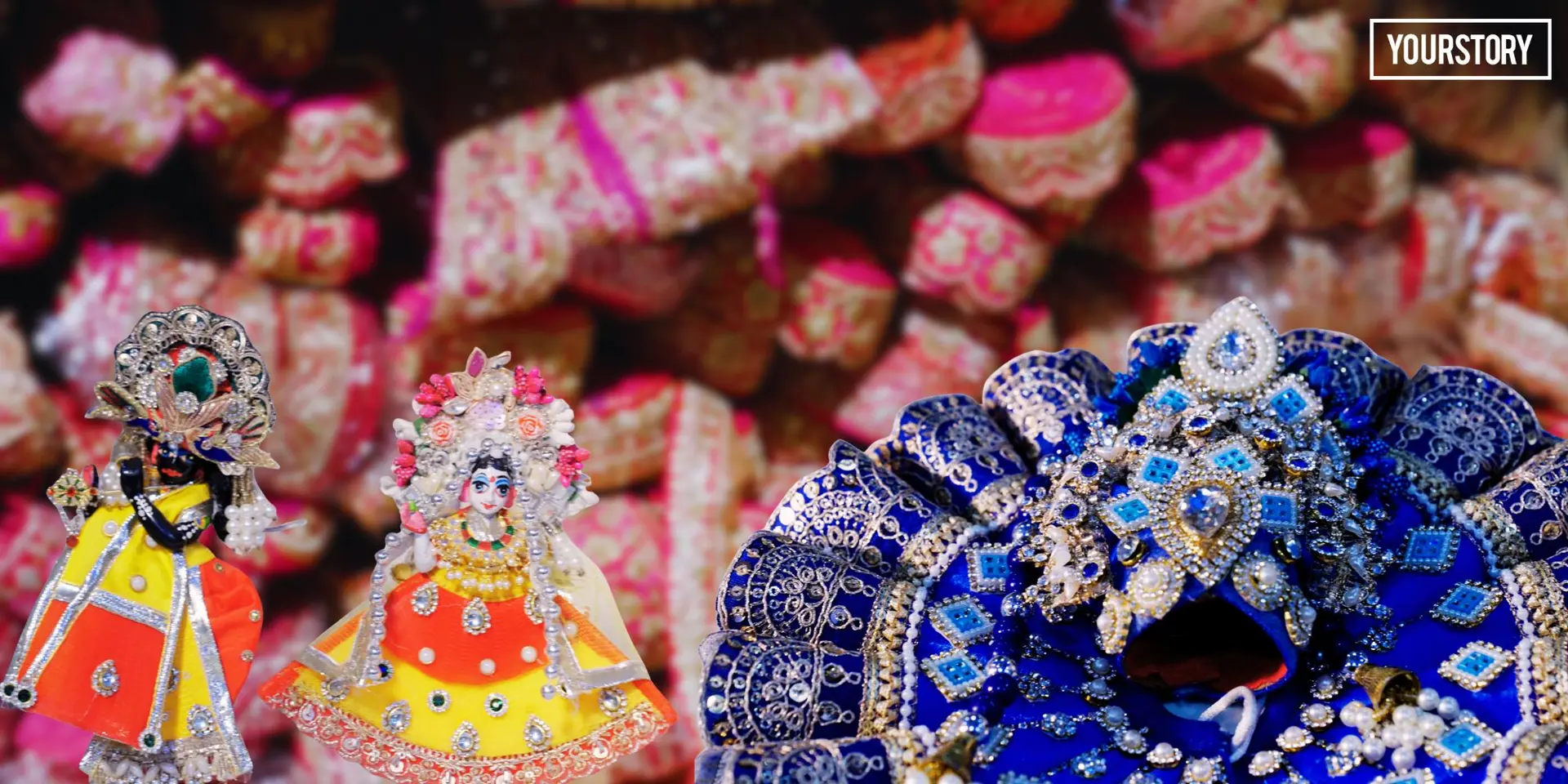

In Uttar Pradesh’s Mathura district, handcrafted garments for deities—known locally as Thakur Ji ki Poshak—form an important part of the region’s devotional economy. These carefully stitched garments are purchased by temple-linked shops and wholesalers and are used to adorn deities in temples and homes. Demand follows religious traditions, festival seasons, and everyday worship practices, creating a steady market for artisans engaged in this craft.
Recognised under the One District One Product (ODOP) Programme, Thakur Ji ki Poshak has been notified as one of Mathura’s district products. The craft combines elements of tailoring and decorative design, where fabrics, lining materials, and embellishments are assembled into ready garment sets that can be displayed and sold through temple markets and devotional product stores.
Mathura has developed a strong base for this specialised stitching work because the production process allows tasks to be divided across multiple artisans. Cutting, stitching, finishing, and decorative detailing are often handled by different workers, enabling units to maintain design consistency while producing garments in batches for retail and wholesale markets.
One such enterprise is NK Chhaparia Creations, run by Seema Chhaparia, whose journey into the craft began during the COVID-19 pandemic. Seeking a creative activity that could be started from home with limited resources, she began experimenting with making small batches of poshak garments. Initially, she shared the pieces within her family and later began promoting them through online platforms and local markets.
Although shops were initially cautious due to reduced customer traffic during the pandemic period, small orders gradually started coming in. As demand increased, Seema hired a tailor and later expanded her team by adding workers for finishing and decorative work to maintain consistent production.
Her first significant wholesale order came in 2021, when she received a request for 18 pieces, marking an important step in scaling the enterprise. Over time, the unit gradually expanded its operations to meet repeat demand from wholesale buyers.
The production process begins with preparing a buckram base, which is cut according to the required garment size. A lining layer is then added to maintain structure and durability. Fabrics and net are selected and layered to achieve the desired colour combination before the garment is stitched and finished using sewing machines. Decorative bootis and embellishments are then added, and the garments are carefully packed for dispatch.
With support received through financial assistance, including a loan of ₹14 lakh, Seema Chhaparia was able to acquire land and establish a dedicated workspace for her enterprise. Today, NK Chhaparia Creations operates with an all-women workforce of around 40 members, contributing to both local employment and the continued production of Mathura’s traditional devotional garments.
Despite the specialised nature of the craft, demand remains closely tied to regular buyers and steady supply. Enterprises such as this highlight how Mathura’s notified ODOP product Thakur Ji ki Poshak continues to support local entrepreneurship while preserving a craft deeply connected to the district’s spiritual heritage.