



Mau’s textile products: Powerloom weaving and finishing that connect local units to distant markets
Mau’s textile industry combines powerloom weaving, embroidery and finishing to produce sarees that travel to markets across India. Through a network of small units and skilled workers, yarn is transformed into finished textile products supplied to wholesalers and retailers nationwide.


Across weddings, festivals, and everyday wardrobes in many parts of India, sarees remain a widely used garment. Behind every saree displayed in a shop lies a production chain that begins with yarn and moves through weaving, finishing, and packaging before reaching wholesalers and retailers. In several textile centres, this chain involves multiple specialised steps carried out by different units.
In Uttar Pradesh’s Mau district, textile products are the notified category under the One District One Product (ODOP) programme. Within this category, the district’s textile ecosystem includes powerloom weaving, embroidery work, and finishing activities that together produce sarees and other fabric-based products for markets across the country.
At the centre of this ecosystem are powerloom units where the weaving of saree fabric takes place. The process begins with yarn preparation. Threads are arranged as warp and weft and carefully set on the loom to create the structure of the fabric. Once the loom is ready, weaving begins and produces saree fabric at a steady pace, forming the base textile that later moves into finishing stages.
One of the units linked to this production chain is Janki Enterprises, located in an industrial estate in Mau and operated by partners including Sushil Kumar Agrawal. Units such as this operate as part of the district’s broader textile network, where weaving, design work, embroidery, and packaging are handled across interconnected stages before the finished product enters the selling layer.
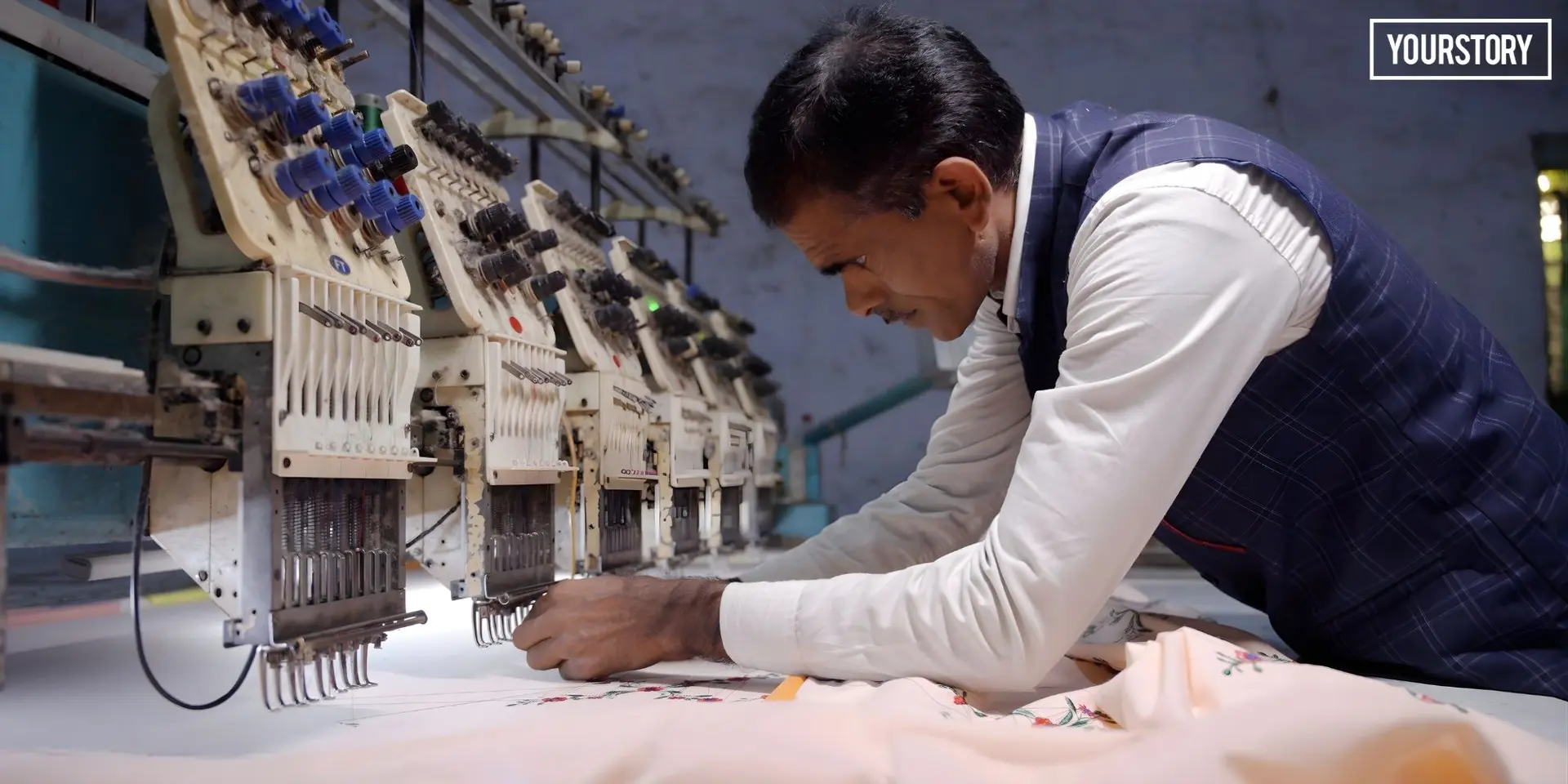
After weaving, the saree moves into value-added processes that enhance both appearance and durability. Embroidery is one of the most visible finishing steps. Machine-based embroidery is carried out on woven sarees, with designs selected according to the intended market segment and style preference. These patterns add decorative detail and help differentiate the product in the retail market.
Following embroidery, sarees pass through additional finishing processes. These steps help improve the feel and fall of the fabric while ensuring that the surface remains stable during regular use and washing. Units also check for consistency in design and finishing so that batches of sarees maintain a uniform look before they are packed.
Packaging forms the final stage before the products move into the distribution chain. Finished sarees are folded carefully and packed, often in boxes, and then supplied to traders and wholesalers. From Mau, these textile products travel through trading networks to reach retailers in various parts of India.
Markets for textile products from Mau extend beyond the state of Uttar Pradesh. Sarees produced in the district are supplied to regions including Maharashtra, Tamil Nadu, Andhra Pradesh, Kerala, Assam, and West Bengal. Through this distribution network, textiles woven in Mau find their way into shops and wardrobes across diverse markets.
The textile sector in Mau reflects a production system where weaving, embroidery, finishing, and packaging operate through a connected chain of workers and small units. Through this network, yarn is transformed into finished textile products that move from local looms to distant markets across the country.