



Rampur’s Zari Patchwork: A Handcrafted Identity Built on Artisan Networks
Built on precision, collaboration, and heritage, Rampur’s Zari Patchwork reflects how traditional crafts adapt to modern markets while sustaining skilled artisan communities.

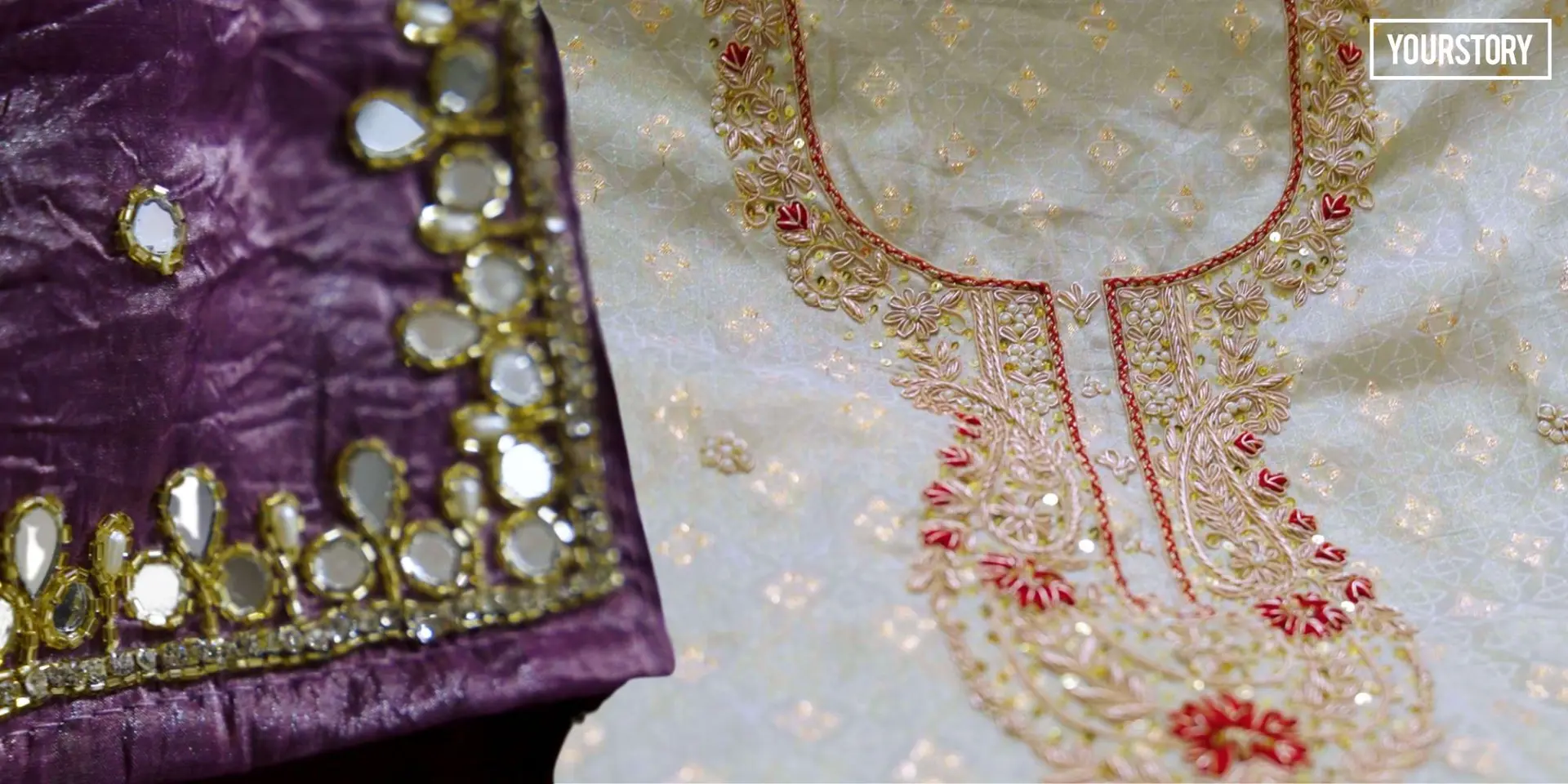

In Rampur, Uttar Pradesh, Zari Patchwork stands as one of the district’s notified products under the One District One Product (ODOP) programme. The craft represents a specialised form of hand embroidery where zari elements are developed as separate decorative patches and later applied onto garments and textiles.
Unlike continuous surface embroidery, Zari Patchwork allows flexible design placement. Intricate motifs are first created independently using traditional techniques such as kasab, dabka, naqshi, tilla, and moti work. These finished patches are then carefully stitched onto suits, saris, lehengas, shararas, and other festive garments.
At the centre of this ecosystem is Navnish Gupta, who runs Rampur Haskala Private Limited. With nearly four decades of association with handwork, he describes Zari Patchwork as a craft that has evolved with market demand while preserving manual precision.
A Craft with Historical Roots and Modern Adaptation
Rampur’s embroidery tradition traces back to earlier courtly influences, where detailed hand embellishment symbolised luxury and status. Over time, the format shifted from heavy ornamentation toward more adaptable and wearable expressions.
Zari Patchwork reflects this shift. Instead of working directly on the garment base, artisans prepare motifs separately, allowing designers to customise layout, scale, and density according to contemporary tastes. This flexibility has made the craft relevant in both traditional bridal wear and modern occasion outfits.
Skill, Structure, and Artisan Continuity
The strength of Rampur’s Zari Patchwork lies in its distributed artisan network. Different neighbourhoods specialise in different techniques, creating a collaborative production system rather than a single-unit model.
Gupta emphasises that hand control remains central. Fine detailing requires steady hands and experience built over years. While machine-made alternatives exist, buyers still seek handcrafted patches for their texture, finish, and visible depth.
ODOP recognition has strengthened the product’s public identity, giving Zari Patchwork a clearer positioning beyond local markets. For Gupta, the future depends on sustaining artisan income, encouraging younger learners, and maintaining the balance between tradition and evolving design demand.